-
by sayum
29 August 2026 6:23 AM







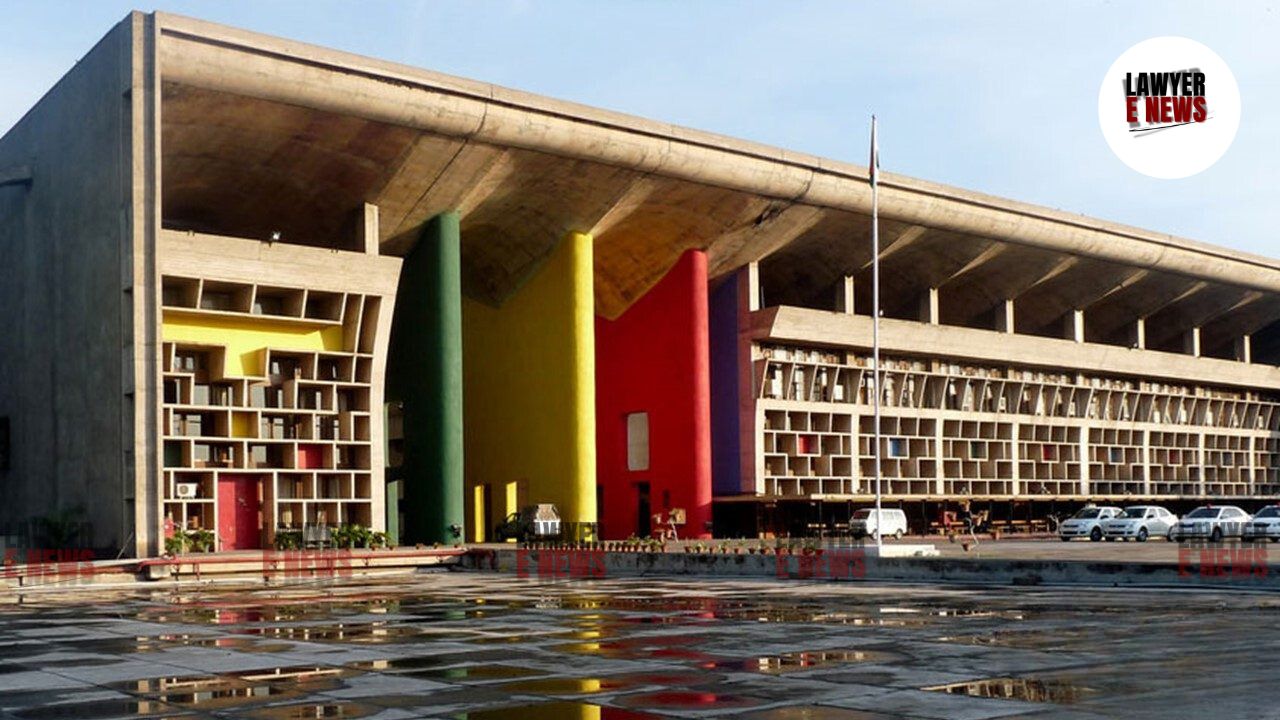
"The practice of entertaining the writ petition by the High Courts in exercise of power under Article 226 of the Constitution of India without exhausting the alternative remedy available under the law has been strongly deprecated by the Hon’ble Supreme Court of India." Punjab and Haryana High Court, in a significant ruling dated August 18, 2026, held that borrowers cannot invoke the extraordinary writ jurisdiction under Article 226 of the Constitution of India to bypass the efficacious statutory remedy available under Section 17 of the SARFAESI Act before the Debt Recovery Tribunal.
A Division Bench comprising Justice Jasgurpreet Singh Puri and Justice Sanjiv Berry emphasized that "when a statutory forum is created by law for redressal of grievances, a writ petition should not be entertained, ignoring the statutory dispensation."
The petitioners availed credit and overdraft facilities totaling ₹37,00,000 from Axis Bank secured by mortgaging their residential house in Fatehabad. Following default, the loan account was classified as a Non-Performing Asset on May 1, 2025, triggering statutory recovery proceedings under Section 13(2) and Section 13(4) of the SARFAESI Act, followed by an order under Section 14 passed by the District Magistrate, Fatehabad. Apprehending imminent physical dispossession of their residence scheduled for August 21, 2026, the petitioners filed a writ petition seeking to quash the recovery notices and possession orders.
The primary question before the court was whether a writ petition under Article 226 of the Constitution is maintainable against SARFAESI recovery proceedings when an alternative statutory remedy under Section 17 is available before the Debt Recovery Tribunal. The bench was also called upon to determine whether disputed factual contentions regarding the validity of an NPA classification and non-communication of reasons under Section 13(3-A) can be examined by the High Court in writ jurisdiction.
SARFAESI Act Is A Specialized Code Providing Adequate Remedy Before DRT
Writing for the Bench, Justice Sanjiv Berry observed that Parliament in its wisdom enacted the Securitisation and Reconstruction of Financial Assets and Enforcement of Security Interest Act, 2002, to regulate securitization and create a comprehensive mechanism for debt recovery. The Court underscored that Section 17 of the Act explicitly provides an avenue for any aggrieved person, including a borrower, to challenge measures taken under Section 13(4) before the jurisdictional Debt Recovery Tribunal within forty-five days.
The bench noted that maintainability of a writ petition under Article 226 when a specialized statutory remedy exists under Section 17 of the SARFAESI Act is no longer res integra. Citing established precedents, the Court held that it is inappropriate for the High Court to exercise discretionary writ jurisdiction when a specialized statutory mechanism has been specifically tailored to address such grievances.
Disputed Factual Questions Concerning NPA Classification Cannot Be Examined In Writ Jurisdiction
Addressing the petitioners' specific grievances that the bank failed to decide their objections under Section 13(3-A) and arbitrarily classified their account as an NPA, the Court held that such matters require factual determinations that cannot be entertained under Article 226. The bench stated that questions relating to the declaration of the account as NPA and compliance with Section 13(3-A) involve disputed questions of fact which can only be properly adjudicated by the Debt Recovery Tribunal.
"So far as, the arguments advanced by learned Counsel for the petitioners qua the declaration of the account as NPA, the decision on the representation filed by the petitioners under Section 13(3-A) of the Act, issuance of notice under Section 13(4)... are concerned, the same involves a lot many questions of facts to be decided, which we are afraid cannot be looked into while invoking the extraordinary jurisdiction of this Court."
Specialized Tribunals Alone Must Examine Factual Matrix And Merits
The Court relied heavily on the Supreme Court's ruling in Southern Electricity Supply Co. of Orissa Ltd. v. Sri Seetaram Rice Mill (2012), which established that while statutory remedies do not create an absolute constitutional bar, High Courts must exercise circumspection. The interest of the administration of justice is best served when writ courts confine themselves to primary questions of jurisdiction, leaving the merits of assessment and factual matrices entirely to specialized tribunals.
Reaffirming the principle laid down in Nivedita Sharma v. Cellular Operators Association of India (2011), the bench highlighted that when a specialized statutory forum is created by law for redressal of grievances, invoking writ jurisdiction ignoring that statutory framework undermines the legislative scheme.
Four Narrow Exceptions To The Rule Of Alternate Remedy Reiterated
The bench referred extensively to the landmark decisions in Whirlpool Corporation v. Registrar of Trade Marks (1998), Harbanslal Sahnia v. Indian Oil Corporation Ltd. (2003), Radha Krishan Industries v. State of H.P. (2021), and South Indian Bank Limited v. Naveen Mathew Philip (2023) to delineate the exceptional boundaries of writ maintainability. The Court reiterated that the rule of exhausting statutory remedies is one of policy, convenience, and discretion rather than an absolute rule of law.
The bench noted that the High Court may exercise its extraordinary jurisdiction despite an alternative remedy only in four well-recognized contingencies: where the petition is filed for the enforcement of fundamental rights under Part III, where there is a failure of natural justice, where the order or proceeding is wholly without jurisdiction, or where the vires of an Act is challenged.
"In the present case the petitioners have not been able to make out a case to bring the instant writ petition within any of the well recognized exceptions carved out in the aforesaid judgments."
Finding that the petitioners failed to bring their case within any of the recognized exceptions and had improperly bypassed the statutory forum, the High Court held that the writ petition was not maintainable. Consequently, the Division Bench dismissed the petition, directing the borrowers to pursue their remedies under Section 17 before the Debt Recovery Tribunal.
Date of Decision: 18 August 2026