-
by sayum
27 July 2026 3:39 PM







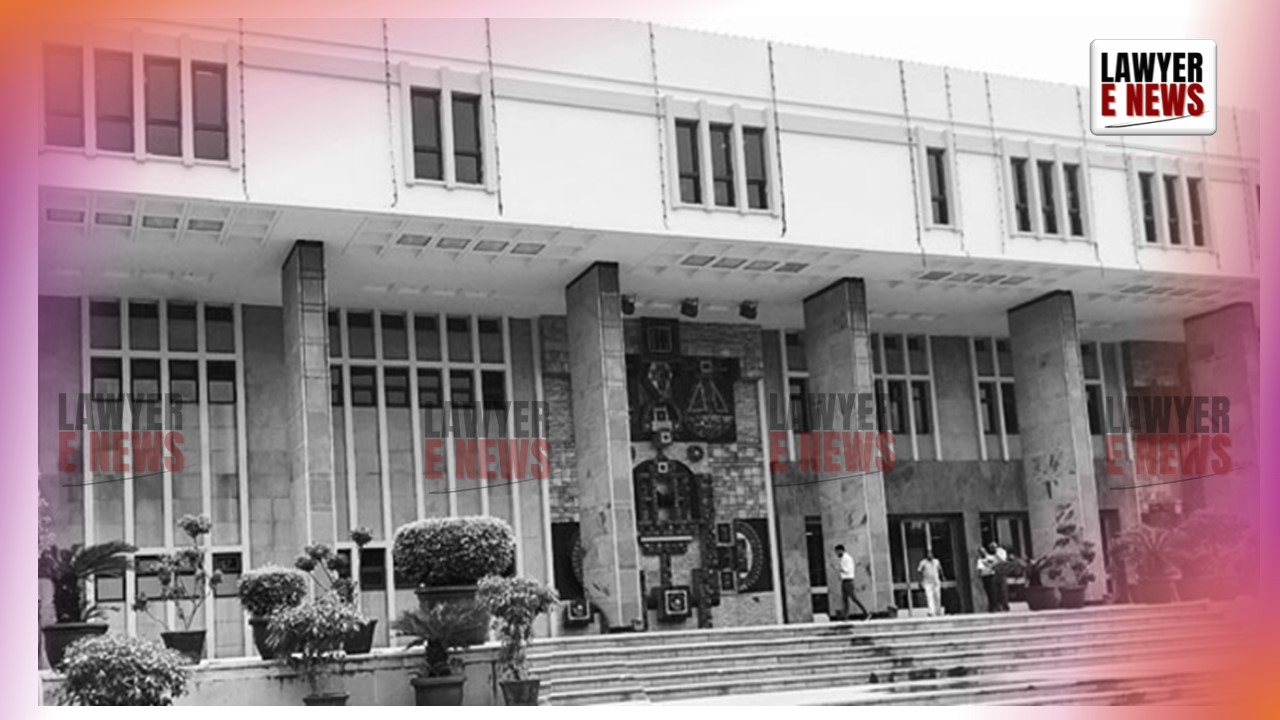
"Complete chain of circumstance should be fully established and mere suspicion cannot take place of proof." Delhi High Court, in a significant ruling, held that multiple dying declarations cannot form the sole basis for a murder conviction if they are mutually inconsistent, procedurally flawed, and unsupported by circumstantial evidence. A bench of Justice Navin Chawla and Justice Ravinder Dudeja acquitted a man accused of burning a woman to death, observing that when circumstantial evidence fails to establish a complete chain, the benefit of the doubt must be granted to the accused.
Appellant Mohd. Ayub was convicted by the Trial Court under Section 302 of the Indian Penal Code, 1860, and sentenced to life imprisonment for allegedly pouring kerosene on the deceased and pushing her onto a burning stove. As all three purported eyewitnesses turned hostile during the trial, the conviction was based primarily on two dying declarations and circumstantial evidence. Ayub appealed the conviction, arguing that the dying declarations were fabricated and that he had actually sustained burn injuries while attempting to save the deceased.
The primary question before the court was whether mutually contradictory dying declarations, recorded without medical certification of fitness, could solely form the basis of a murder conviction. The court was also called upon to determine if the circumstantial evidence presented by the prosecution established a complete chain pointing exclusively to the guilt of the appellant.
Caution Required For Dying Declarations
The court restated the settled legal principles under Section 32 of the Indian Evidence Act, 1872, noting that while a dying declaration can form the sole basis of conviction, it must inspire absolute confidence. Citing Supreme Court precedents in Irfan v. State of Uttar Pradesh and Sanjay Kumar Sharma v. State of Bihar, the bench emphasized that courts must exercise caution when declarations suffer from inconsistencies or procedural infirmities. The bench observed that the court must first satisfy itself that the dying declaration is reliable and truthful before placing any reliance upon it.
Flaws In The Medical Legal Certificate
Analyzing the first dying declaration recorded in the Medical Legal Certificate (MLC) by the attending doctor, the court expressed severe doubts regarding its authenticity. The document described the appellant as "her new lover," which the bench noted appeared to be the personal observation of the doctor or an informant, rather than the deceased's own words. Furthermore, the doctor admitted during the trial that he wrote the word "kerosene" based on a smell he noticed, not because the victim uttered it.
"We, therefore, have our doubt if this can be regarded as a dying declaration of the deceased."
Improbable Details In Police Statement
The court then scrutinized the second statement recorded by the Investigating Officer under Section 161 of the Code of Criminal Procedure, 1973. The judges highlighted that the statement contained unusually detailed particulars, including the precise parentage and address of the appellant. The bench found this inherently improbable for a person suffering from 90 percent burn injuries. Additionally, the prosecution failed to prove that the deceased was medically fit to make such a statement, nor was any Judicial Magistrate involved in the recording process.
Mutually Inconsistent Versions
A critical factor in the acquittal was the presence of three materially conflicting versions of the incident. While the MLC stated that the appellant poured oil from a stove, the police statement claimed he poured kerosene from a can and pushed her. Compounding the prosecution's evidentiary woes, a "Brief Facts" document prepared by the same Investigating Officer revealed a third version. It recorded that a scuffle occurred causing the deceased to fall onto the stove, and that the appellant suffered burns while trying to extinguish the fire.
Incomplete Chain Of Circumstantial Evidence
Dealing with the circumstantial evidence, the court held that the mere presence of the appellant at the spot was insufficient to establish his culpability. The bench noted that the appellant's defence—that he was trying to save the victim—was corroborated by the burn injuries on his own person and the statements of hostile eyewitnesses. The court pointed out severe lapses in the investigation, including an unaccounted matchbox found in a sealed pullanda and an unrecorded liquor bottle, which fractured the chain of circumstances.
"The incriminating circumstances should be such as to lead only to hypothesis of guilt and must exclude every other possibility of innocence of the accused."
Concluding that the prosecution failed to prove its case against the appellant beyond a reasonable doubt, the High Court set aside the Trial Court's judgment of conviction and sentence. The court acquitted the appellant, granting him the benefit of the doubt, and directed that his personal bond and surety be discharged.
Date of Decision: 16 April 2026