-
by sayum
26 October 2026 4:04 PM







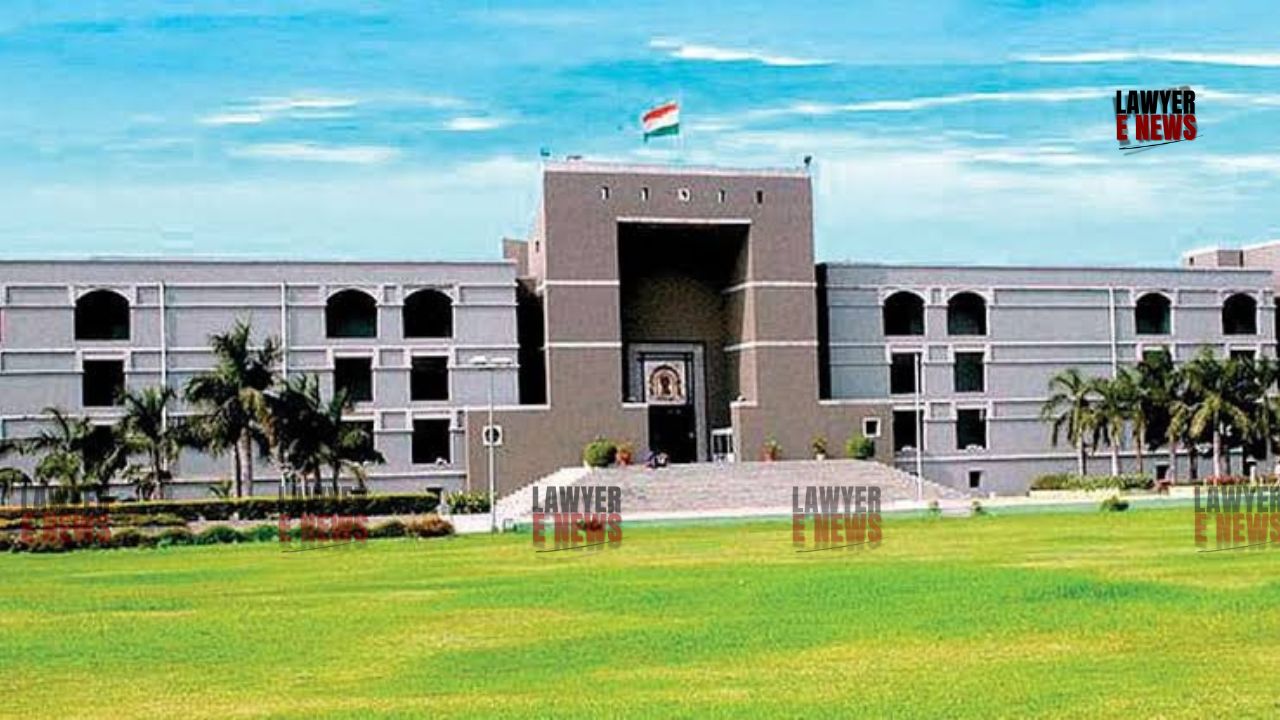
"A beneficial piece of legislation would necessarily entail the benefit to be passed on to the claimant in the absence of any specific bar to the same." Gujarat High Court, in a significant ruling dated 25 September 2026, held that insurance companies are liable to satisfy compensation awards for gratuitous passengers involved in accidents in goods vehicles, with the subsequent right to recover the amount from the vehicle owner.
Justice J.C. Doshi, presiding over a bench that dealt with multiple appeals under Section 173 of the Motor Vehicles Act, 1988, emphasized that claimants should not be deprived of compensation due to technical breaches of insurance policy terms. The Court notably observed that when a vehicle is used for purposes antithetical to the policy, the "pay and recover" principle serves to balance the interests of the innocent third-party victims and the insurer’s contractual liability.
The matter arose from a tragic road accident in 2010 involving a truck that turned turtle, resulting in 14 fatalities. The deceased were travelling in the truck along with their goods. While the Insurance Company contested its liability by citing the "gratuitous passenger" status of the deceased—contending that the carriage of passengers in a goods vehicle violated the policy terms—the claimants sought compensation. The Motor Accident Claims Tribunal (MACT) had previously adjudicated these claims, leading to the current appeals challenging the quantum of compensation and the liability of the insurer.
The primary legal issues before the Court were whether the insurance company could be directed to satisfy the award despite a breach of policy conditions regarding the nature of the passengers, and whether the amendment to the Act introducing Section 164, which provides for fixed compensation, applies retrospectively to accidents that occurred prior to its enactment.
Applying The Principle Of Pay And Recover
The Court meticulously examined the liability of the insurer in cases where passengers are carried in goods vehicles. Relying on the Supreme Court’s precedents in Shamanna v. Oriental Insurance Co. Ltd. and Manuara Khatun v. Rajesh Kr. Singh, the Court reiterated that while the insurer may not be strictly liable for gratuitous passengers, the benevolent object of the Motor Vehicles Act necessitates an order of "pay and recover." The Court noted that even if the use of a goods vehicle for passengers is antithetical to the insurance contract, the innocent third-party victims must not suffer, and the insurer must first satisfy the award and subsequently recover it from the owner.
Liability Of Insurer To Satisfy Award
The Court affirmed that the procedure for recovery is streamlined, holding that the insurer is not required to file a separate suit. Instead, it may initiate proceedings before the executing court, as if the dispute between the insurer and the insured was a matter determined by the Tribunal. This approach prevents unnecessary litigation and ensures that the claimants obtain the relief they are entitled to without further delay.
Retrospective Application Of Section 164
On the issue of the amendment to the Act, the Court addressed the applicability of Section 164, which replaced Section 163A to provide a fixed compensation of Rs. 5,00,000/- in death cases. Referring to the Supreme Court ruling in New India Assurance Co. Ltd. v. Urmila Halder, the Court held that the amendment to this beneficial piece of legislation must be given retrospective effect. The Court observed that the amendment pertains to the computational mode and modality of compensation, and therefore, it applies even to accidents occurring before the amendment came into force.
"The insurance company shall first satisfy the award, and shall be entitled to recover the said amount of compensation from the owner of the offending vehicle by executing this order."
Court Enhances Compensation Modality
The Court, in its final order, partly allowed the appeals and modified the Tribunal's judgment. It directed that the appellants be entitled to a fixed compensation of Rs. 5,00,000/- in each matter, along with interest at the rate of 9% per annum from the date of the claim petition until realization. The liability to pay this amount remains joint and several upon the opponents, with the insurance company specifically tasked to satisfy the award first, maintaining its statutory right of recovery from the vehicle owner.
Date of Decision: 25 September 2026