
-
by sayum
25 October 2026 3:59 PM







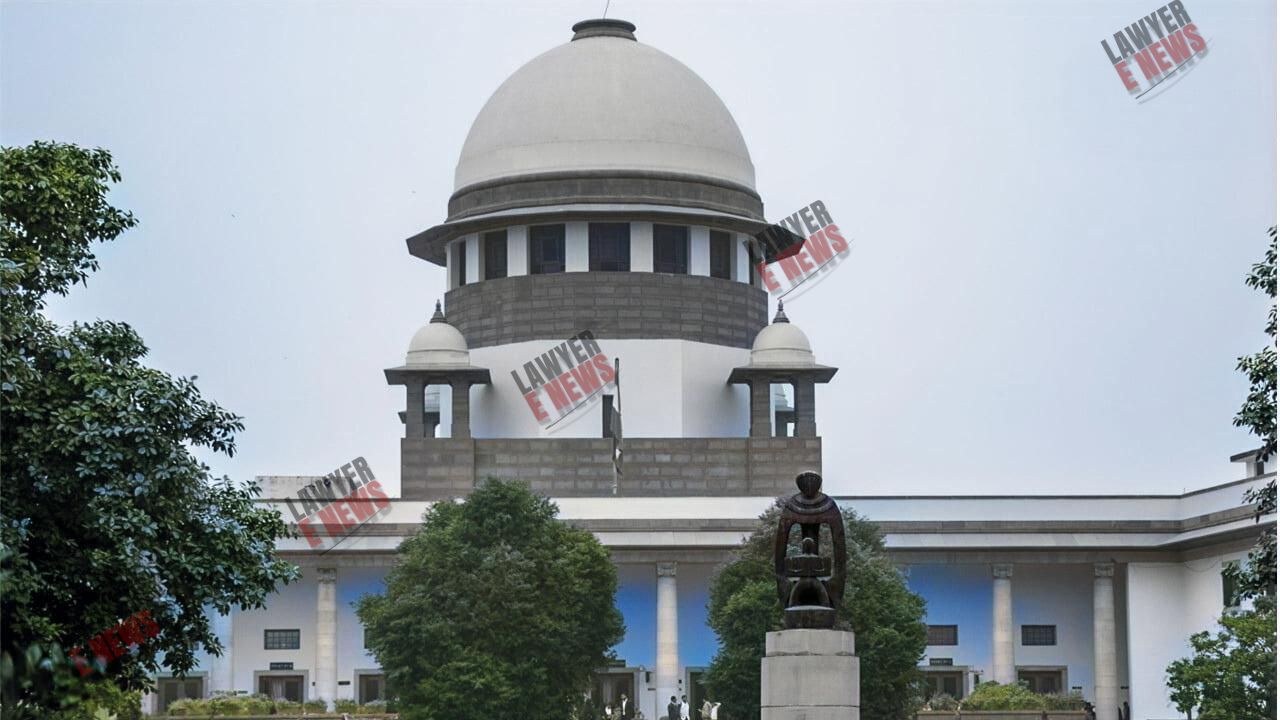
"In a nutshell, neither the incriminating circumstances were proved beyond reasonable doubt nor they constituted a chain so far complete as to exclude all hypothesis consistent with the innocence of the accused" Supreme Court, in a significant ruling dated October 01, 2026, held that in cases resting on circumstantial evidence, the recovery of incriminating articles at the instance of an accused remains inconsequential unless it is established beyond reasonable doubt that such articles are directly linked to the commission of the crime.
A bench of Justices Manoj Misra and Vijay Bishnoi observed that where the prosecution fails to establish a complete chain of circumstances, mere recoveries or DNA evidence of prior presence in a premises cannot substitute for proof of guilt.
Prosecution’s Failure To Establish Chain
The matter reached the Apex Court against an acquittal order passed by the Himachal Pradesh High Court. The prosecution’s case centered on the homicidal death of a woman and her minor son, alleging that the accused, a step-sister, committed the murders to usurp property. The state relied upon the "last seen" theory, the recovery of a mobile and keys at the accused's instance, and DNA evidence from bloodstains at the scene.
Questioning The Reliability Of Witnesses
The primary legal issue was whether the prosecution had succeeded in proving the chain of circumstances to exclude all hypotheses of innocence. The Court heavily scrutinized the credibility of the witnesses, particularly the "last seen" witness, whose deposition was marked by significant improvements over his previous statements recorded under Section 161 of the CrPC. The Court noted that the delay in reporting the missing persons, despite the witness residing in the vicinity, created a serious doubt regarding the veracity of the prosecution's narrative.
Investigational Lapses In Evidence Collection
The bench emphasized that the role of an investigating officer is to collect evidence and not to create it. The court found that the testimonies of a taxi driver and a hotel worker, meant to establish the accused's presence at the crime scene, appeared "contrived" and set up for the purpose of investigation. The Court observed that the lack of explanation as to why these witnesses were contacted without any prior lead cast a shadow on the entire recovery process.
"The answer to the question as to why, when and in what circumstances the witness statement was recorded during investigation becomes an important tool in assessing the credibility of that witness."
Absence Of Linkage In Recoveries
Regarding the recovery of keys and the door lock, the Court found the evidence insufficient to satisfy the requirements of criminal jurisprudence. The witnesses to the seizure of the lock could not identify it as the specific lock that had secured the door of the deceased's house. The Court held that without evidence proving that the lock produced in court was the one actually broken to gain entry, the recovery of keys at the instance of the accused lost its evidentiary value.
"The recovery of keys at the instance of the accused-respondent is rendered inconsequential."
Limitations Of DNA Evidence
The bench further addressed the forensic evidence, noting that the DNA profile of the accused matched bloodstains found on a cabinet at the crime scene. However, it clarified that such presence only indicated the accused had visited the house at some point, not necessarily on the date of the incident. Since the accused was a regular visitor to the house, the possibility of the blood being spilled during a prior visit could not be ruled out, especially as no blood was found on the victims' clothing.
Critical Investigational Omissions
The Court expressed deep concern over the failure of the investigating agency to exhibit the Call Detail Records (CDR) of the deceased's mobile and the failure to collect tower location data. It remarked that the suppression of such vital information, which could have pinned down the locations of the mobile phones, created a strong impression that the prosecution was withholding critical evidence that could have demolished their case.
Final Verdict On Circumstantial Proof
Ultimately, the Court concluded that the prosecution failed to elevate its case from the level of suspicion to the level of legal proof. Reiterating the principles laid down in Sharad Birdhichand Sarda v. State of Maharashtra, the bench dismissed the appeal, holding that the prosecution’s case was riddled with gaps that precluded any firm conclusion of guilt.
Date of Decision: 01 October 2026