-
by sayum
25 October 2026 3:59 PM








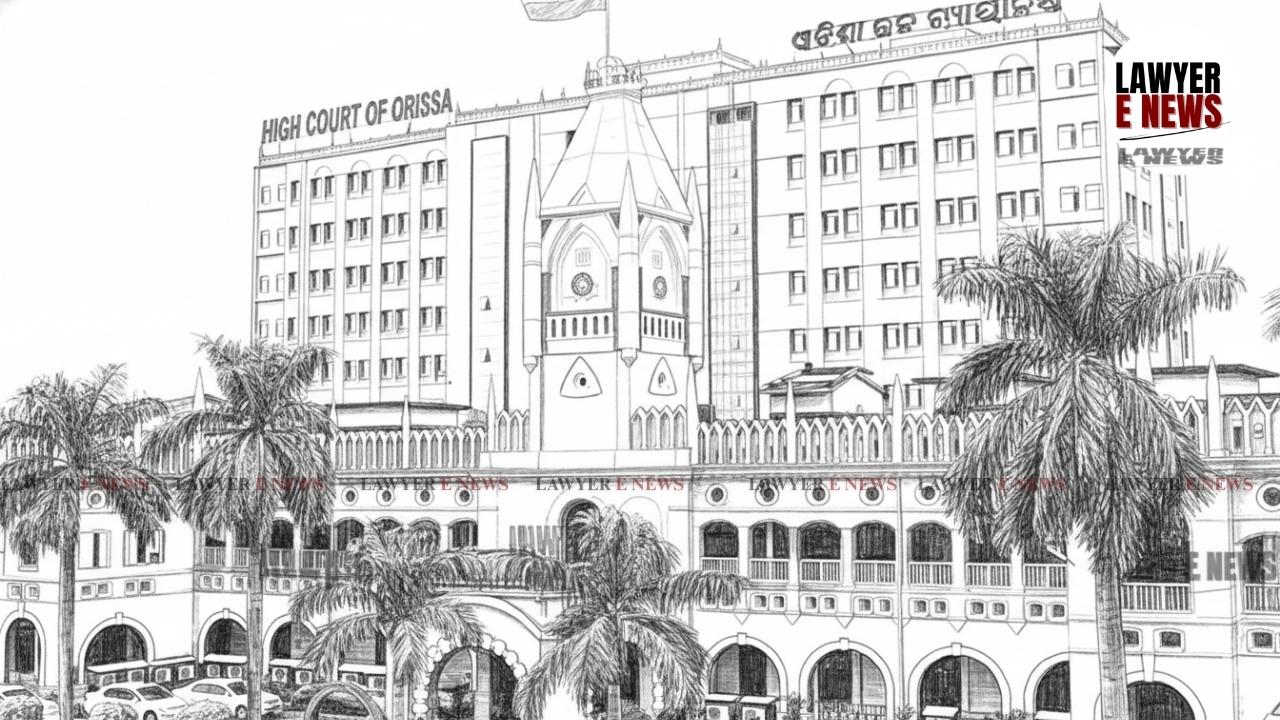
"The very basis of the writ jurisdiction rests in disclosure of true, complete and correct facts. If the material facts are not candidly stated or are suppressed or are distorted, the very functioning of the writ courts would become impossible." Orissa High Court, in a ruling dated September 16, 2026, held that a petitioner who suppresses material facts—specifically the pendency of criminal and departmental proceedings—is disentitled to any relief under Article 226 of the Constitution of India.
A bench presided over by Justice Murahari Sri Raman observed that such conduct constitutes an abuse of the judicial process, warranting the dismissal of the petition without adjudication on the merits.
The petitioner, a retired Assistant Block Education Officer, sought to quash an order rejecting his claim for "duty pay" salary for the period between January 1, 2016, and March 17, 2016. The authorities had denied the claim on the grounds that the petitioner had remained on unauthorized absence and was facing a departmental proceeding and a criminal case concerning the alleged production of fake educational certificates. Despite the petitioner’s assertions of illness, he failed to produce leave applications or medical records, leading the authorities to reject his representation.
The court was primarily tasked with determining whether a public servant is entitled to regularization of a period of unauthorized absence and consequential salary when serious allegations of fraud and the production of fake educational certificates are sub judice. Additionally, the court addressed the threshold of the duty of disclosure required from a litigant invoking writ jurisdiction, particularly when material facts regarding pending disciplinary and criminal matters are omitted.
Duty Of Absolute Disclosure In Writ Proceedings
The Court emphasized that the writ jurisdiction is rooted in the "clean hands" doctrine. Litigants have an absolute obligation to disclose all relevant facts, and any attempt to mislead the court through suppression of material information renders the petition liable for immediate dismissal.
"The obligation to approach the Court with clean hands is an absolute obligation and has repeatedly been reiterated by this Court. A litigant who attempts to pollute the stream of justice or who touches the pure fountain of justice with tainted hands is not entitled to any relief, interim or final," the Court stated, drawing upon the Supreme Court’s precedents in Kishore Samrite v. State of U.P. and Kusa Duruka v. State of Odisha.
Fraud Vitiates All Solemn Acts
The bench noted that the allegations against the petitioner involved the production of forged B.A. and B.Ed. degrees, which led to his initial appointment and subsequent promotion. Quoting Badami v. Bhali, the court reiterated that fraud unravels everything and that no judicial act obtained through deceit can be allowed to stand.
"It is a settled proposition of law that a judgment or decree obtained by playing fraud on the court is a nullity and non est in the eyes of law. Such a judgment/decree—by the first court or by the highest court—has to be treated as a nullity by every court, whether superior or inferior," the Court observed.
Absence Of Documentation For Leave Claims
The Court scrutinized the petitioner's claim of medical leave, noting that he failed to produce any formal application or medical certification for the period of his absence. Under the Odisha Service Code and the Odisha Leave Rules, 1966, leave is not an inherent right, and unauthorized absence cannot be converted into "duty pay" without the competent authority's sanction.
"Mere acknowledgement of a leave application would not amount to approval or sanction of the leave. Nothing is available on record to suggest that the petitioner was granted leave by the competent authority," the Court noted, further observing that the petitioner had provided conflicting versions regarding the specific dates of his leave in his pleadings.
Doctrine Of Approbate And Reprobate
The Court invoked the doctrine of "approbate and reprobate," noting that the petitioner had previously secured an order from the High Court staying the departmental proceeding until the conclusion of his criminal trial. Having secured the benefit of such protection, he could not now turn around and claim an entitlement to salary for the period of absence that was directly linked to the very charges under investigation.
"It is unjustified to reap the benefit of protection against culmination of the departmental proceeding... at one time and claiming that the petitioner is entitled to duty pay salary for the period he remained absent from duty without grant of approval or application for leave," the Court remarked.
Dismissal Of The Petition Finding the petition to be a classic case of suppression and abuse of process, the Court dismissed the writ petition. It mandated that the petitioner must cooperate with the pending criminal trial and subsequently participate in the departmental proceedings once the criminal case is finalized, allowing the authorities to conclude the disciplinary matter in accordance with the law.
Date of Decision: 16 September 2026