
-
by sayum
24 October 2026 7:15 PM







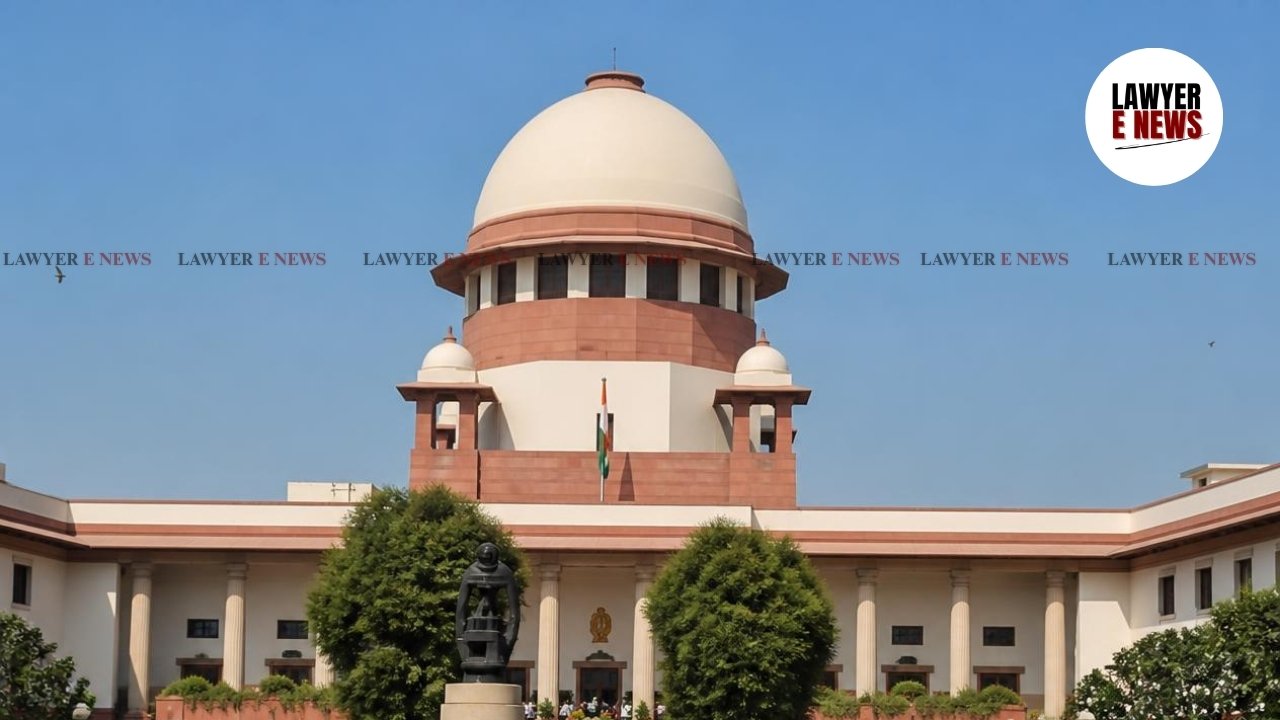
"The police machinery cannot be utilised for the purpose of holding the husband at ransom so that he could be squeezed by the wife at the instigation of her parents or relatives or friends." Supreme Court of India, in a significant judgment dated September 24, 2026, has articulated critical safeguards to prevent the misuse of the Protection of Children from Sexual Offences (POCSO) Act in the context of matrimonial litigation.
A bench comprising Justice J.B. Pardiwala and Justice K.V. Viswanathan observed that a troubling trend of invoking heinous sexual offences as a "pressure tactic" in divorce or custody battles is on the rise, which necessitates judicial intervention to protect the sanctity of both the POCSO Act and the institution of marriage.
Court Expresses Concern Over Misuse of POCSO Act
The bench underscored that while the POCSO Act is a vital piece of legislation intended to shield children from abuse, it is increasingly being weaponized to settle personal scores. The Court noted that in such cases, the minor child is often involuntarily caught in the crossfire of warring parents, who use the child as an instrument to gain legal or financial advantages.
Threshold Conditions for New Safeguards
The Court clarified that the newly mandated safeguards apply specifically when two threshold conditions are met. Firstly, an offence under the POCSO Act must be alleged against a parent or a family member residing under the same roof. Secondly, a pre-existing matrimonial dispute must be evident between the parents, indicating a strained relationship where allegations are likely to be exaggerated.
Police Duty To Verify Before Coercive Action
In cases meeting these threshold conditions, the Court held that the police must exercise extreme caution before resorting to arrest. The investigating officer is obligated to satisfy themselves regarding the genuineness of the complaint rather than acting in haste. The Court emphasised that the power to arrest, under Section 35 of the Bharatiya Nagarik Suraksha Sanhita (BNSS), is a discretionary power that must be exercised with proper justification.
Engagement of Expert Services Aiding Investigation
To address the "informational deficit" and potential for malice in such disputes, the Court directed that the investigating agency shall engage an expert in child and adolescent psychiatry or clinical psychology. This expert, preferably from the register maintained by the District Child Protection Unit (DCPU), will assist in evaluating the child victim. The resulting report will aid the police in determining whether there is a "reason to believe" that an offence has been committed.
Report Is A Tool, Not A Controller Of Discretion
The Court clarified that the findings of such an expert are not binding on the investigating officer, nor should they be the sole basis for a chargesheet or closure report. Instead, the report serves as a valuable tool for the police to exercise their statutory discretion diligently. The investigation must remain consistent with the law, ensuring that innocent parties are not subjected to the social stigma and trauma of arrest without credible material.
Court Rejects Mechanical Application of POCSO
The bench further observed that the Special Courts, when dealing with private complaints under Section 33 of the POCSO Act, must also exercise caution. The Court held that taking cognizance is not a routine exercise and requires a judicial application of mind to the overall circumstances. If the Special Court deems the complaint as having been filed to settle matrimonial scores, it may opt to order a police investigation rather than immediately issuing summons to the accused.
"The institution of family constitutes the core of human society. Domestic relationships, such as those between family members, are guided by deeply ingrained social values and cultural expectations. These relationships are often viewed as sacred, demanding a higher level of respect, commitment, and emotional investment compared to other social or professional associations."
Quashing of Baseless Proceedings
In the specific facts of the case before it, the Court noted that the FIR registered against the father was a clear instance of using the POCSO Act to gain leverage in a long-standing custody battle. Finding the allegations untrustworthy and lacking independent corroboration, the Court invoked its powers to quash the proceedings, stressing that allowing the trial to continue would constitute a gross abuse of the process of law.
Directions for Implementation
To ensure the effective implementation of these guidelines, the Supreme Court directed the Registrar Generals of all High Courts and Chief Secretaries of all States to transmit the judgment to every criminal court and police station. The Court emphasised that these safeguards apply to all ongoing investigations where no chargesheet has been filed, and to private complaints where summons have not yet been issued.
Final Disposal and Re-integration Conclusively, the Court disposed of the civil appeal by quashing the criminal proceedings against the father and directing that the legal custody of the minor child rest with him. The bench ordered a structured re-integration process for the child to be overseen by a committee of experts, including representatives from the CBI and NIMHANS, to ensure the child's psychological well-being during the transition.
Date of Decision: 24 September 2026