-
by sayum
27 August 2026 3:32 PM







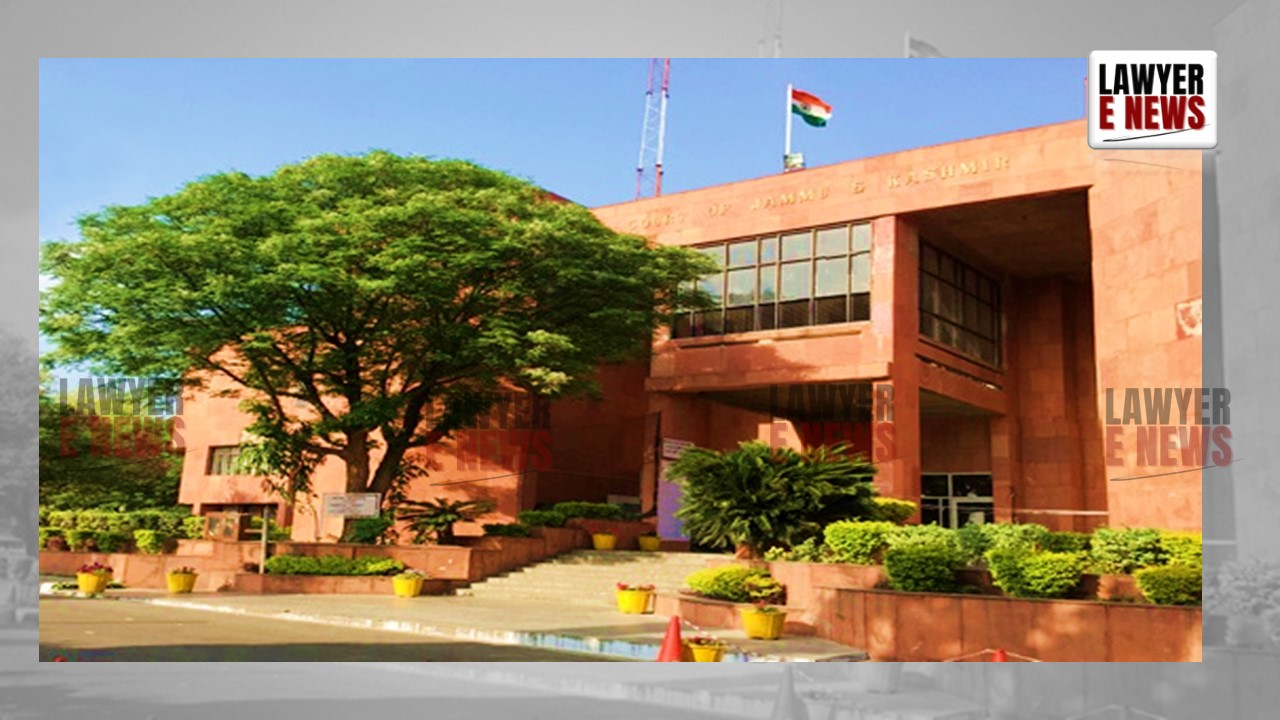
"It is a settled proposition of law that if a candidate is wrongly excluded from the appointment due to arbitrary action of the appointing authority in a same selection process, he is entitled to the notional seniority from the date, similarly situated persons were appointed." High Court of Jammu & Kashmir and Ladakh, in a significant ruling, held that a candidate wrongfully denied appointment due to the arbitrary actions of the state is entitled to notional seniority and all consequential benefits, including coverage under the Old Pension Scheme (OPS).
A division bench comprising Justice Sindhu Sharma and Justice Shahzad Azeem observed that penalizing a meritorious candidate for the administrative lapses of the appointing authority would constitute a gross violation of the right to equality under Article 14 of the Constitution of India.
The respondent, Raghu Singh Jandla, applied for the post of Junior Engineer (Electrical) Grade-II under the RBA category in 2007-08, securing higher merit (59.54 points) than the last selected candidate (58.34 points). However, the authorities excluded him on the erroneous ground that his category certificate was submitted after the cut-off, despite him possessing a valid certificate under earlier rules. Following a 2014 High Court direction, he was finally appointed in July 2014, whereas his counterparts had been appointed in August 2009, leading him to seek notional seniority and coverage under the Old Pension Scheme instead of the New Pension Scheme (NPS).
The primary question before the court was whether a candidate, whose appointment was delayed solely due to the fault of the appointing authority, is entitled to notional seniority from the date similarly situated candidates were appointed. The court was also called upon to determine if such a candidate is entitled to the benefit of the Old Pension Scheme if the original selection process concluded before the NPS was implemented on January 1, 2010.
Wrongful Denial Of Appointment Cannot Prejudice Meritorious Candidates
The Court emphasized that when a candidate participates in the same selection process but is denied appointment on erroneous grounds, the subsequent rectification by a court must restore the candidate to their rightful position. The bench noted that the respondent was found eligible and meritorious by the court in 2014, and his appointment was a direct result of that judicial correction.
"Such candidate, of course is to be treated as part of the original appointment for seniority purposes and consequential benefits, because wrongful action of the appointing authority, cannot be used to prejudice a candidate for none of his fault," the bench observed.
Notional Seniority As An Equitable Exception To Rule 24
The Court addressed the state’s argument regarding Rule 24 of the J&K Civil Services (Classification, Control and Appeal) Rules, 1956, which generally determines seniority from the date of first substantive appointment. The bench clarified that while this is the general rule, notional fixation of seniority acts as an equitable exception to preserve the integrity of the common select list.
Court Safeguards Right To Equality Under Article 14
The bench held that arbitrary denial or delay caused by the appointing authority violates the fundamental right to equality. It reasoned that once a denial is rectified through judicial process, seniority must be determined based on the original merit position in the common select list. To do otherwise would be to penalize the candidate for a lapse committed entirely by the state.
"The delay caused in offering the appointment to a meritorious candidate and which was found to have been attributable solely to the appointing authority, in that event, penalizing a selected candidate would amount to rewarding to the lapse of the appointing authority," the Court remarked.
Reliance On Supreme Court Precedents
The Court placed heavy reliance on the Supreme Court’s rulings in Sanjay Dhar v. Jammu & Kashmir Public Service Commission (2000) and C. Jayachandran v. State of Kerala (2020). In these cases, the apex court had established that if an appointment is wrongfully denied, the beneficiary is entitled to deemed appointment and seniority consistent with their placement in the original merit list.
Entitlement To Old Pension Scheme (OPS)
Regarding the pension controversy, the Court held that since the respondent is entitled to notional appointment from August 22, 2009, he must be governed by the rules prevalent on that date. Since the New Pension Scheme (SRO-400 of 2009) only came into effect on January 1, 2010, the respondent is legally entitled to be covered under the Old Pension Scheme.
"Once, it is found that the applicant is entitled to the notional seniority from the date, the similarly situated appointees have been given, in that event, no fault can be found with the findings of the Tribunal in holding applicant entitled to Old Pension Scheme," the bench concluded.
The High Court dismissed the petition filed by the Union Territory of Jammu & Kashmir and upheld the Central Administrative Tribunal's order. The Court directed the authorities to reckon the respondent’s appointment notionally from 2009, re-fix his seniority, grant consequential promotions, and ensure his enrollment in the Old Pension Scheme with a refund of any wrongful NPS deductions.
Date of Decision: 16 April 2026