Registrar Has No Power To Cancel Registered Sale Deeds: Madras High Court Reaffirms Civil Court’s Exclusive Jurisdiction MP High Court Refuses to Quash FIR Against Principal of Sacred Heart Convent High School in Forced Conversion Case Employees Of Registered Societies Cannot Claim Article 311 Protection: Delhi High Court Clarifies Limits Of Constitutional Safeguards In Private Employment Maintenance Cannot Be Doubled Without Cogent Reasons, Wife's Education And Earning Capacity Relevant Factors: Gujarat High Court A Foreign Award Must First Be "Recognised" Before It Becomes A Decree: Bombay High Court A Registered Will Does Not Become Genuine Merely Because It Is Registered: Andhra Pradesh High Court Rejects Suspicious Testament Compensation Under Railways Act Requires Proof of Bona Fide Passenger – Mere GRP Entry and Medical Records Cannot Establish ‘Untoward Incident’: Delhi High Court Tenancy Rights Cannot Be Bequeathed By Will: Himachal Pradesh High Court Declares Mutation Based On Tenant’s Will Void Preventive Detention Cannot Be Based On Mere Apprehension of Bail: Delhi High Court Quashes PITNDPS Detention Order Probate Court Alone Has Exclusive Jurisdiction To Decide Validity Of Will – Probate Petition Cannot Be Rejected Merely Because A Civil Suit Is Pending: Allahabad High Court PwD Candidates Cannot Be Denied Appointment After Selection; Authorities Must Accommodate Them In Suitable Posts: Supreme Court Directs SSC And CAG To Appoint Candidates With Disabilities When Registered Partition Deed Exists, Plea Of Prior Oral Partition Cannot Override It:  Madras High Court Dismisses Second Appeal Municipal Bodies Cannot Demand Character Verification Of Residents: Calcutta High Court Strikes Down Surveillance Condition In Building Sanction State Cannot Exploit Contractual Workers For Perennial Work: Punjab & Haryana High Court Grants Pay Parity To PUNBUS Drivers And Conductors Police Inputs Cannot Create New Building Laws: Calcutta High Court Strikes Down Security-Based Conditions Near Nabanna 'Raising A Child As Daughter Does Not Make Her An Adopted Child': Punjab & Haryana High Court Once Leave Under Section 80(2) CPC Is Granted, Prior Notice to Government Is Not Mandatory: Orissa High Court Restores Trial Court Decree State Cannot Use Article 226 To Evade Compliance With Court Orders: Gauhati High Court Dismisses Union’s Petition With Costs ED Officers Accused Of Assault By ₹23-Crore Scam Accused – FIR Survives But Probe Shifted To CBI: Jharkhand High Court High Courts Should Not Interfere In Academic Integrity Proceedings At Preliminary Stage: Kerala High Court Power Of Attorney Holder With Personal Knowledge Can Depose In Cheque Bounce Cases: Kerala High Court Sets Aside Acquittal Agreement Cannot Dissolve Hindu Marriage, But Can Prove Mutual Separation”: J&K & Ladakh High Court Denies Maintenance

Merely Noticing Arguments During Bail Not Legally Sustainable – Bail Set-Aside: Supreme Court

07 May 2024 8:19 AM

By: Admin


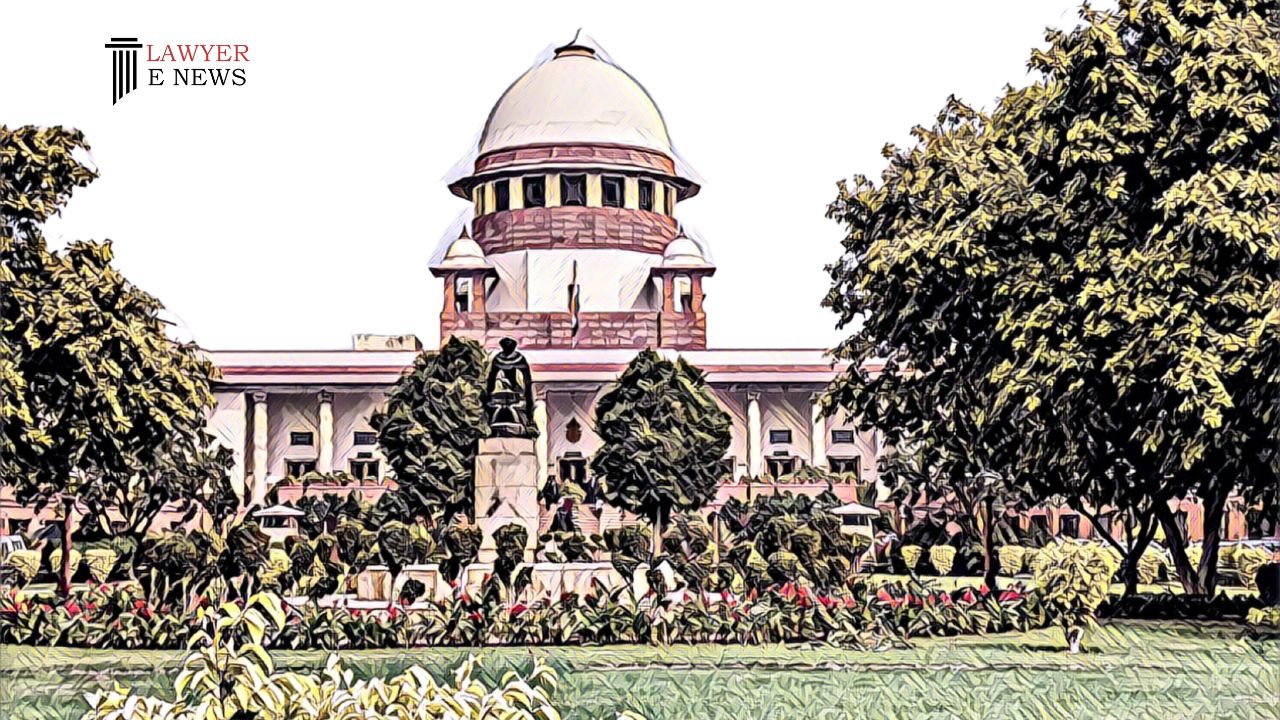
In a significant ruling, the Supreme Court of India, comprising Justices Sudhansu Dhulia and Rajesh Bindal, overturned the High Court's decision granting bail to an accused in a murder case. The apex court emphasized the necessity for detailed reasoning in bail decisions, especially in cases involving grave crimes.

The Supreme Court scrutinized a criminal appeal challenging the High Court’s decision to grant bail in a murder case. The judgment delved into the principles guiding the consideration of bail applications, particularly in the context of heinous offences.

The appeal was filed against the High Court's order which granted bail to the respondent, involved in a murder case. Initially, the respondent was not named in the FIR but was later implicated through the course of the investigation. The Sessions Judge had earlier dismissed the bail application, citing detailed reasons, which the High Court overlooked.

Justice Rajesh Bindal, in the judgment, criticized the High Court for its cursory analysis in granting bail. “The material collected was discussed in detail by the Sessions Judge while rejecting the bail application of the respondent no.2. However, the High Court merely noticing the arguments raised primarily by the counsel for the respondent no.2 has directed for his release on bail, which in our opinion cannot be legally sustained,” the bench observed.

The Supreme Court allowed the appeal, setting aside the High Court’s bail order. It was held that the High Court's order lacked a proper legal foundation and detailed reasoning, crucial in cases of serious nature. The respondent was directed to surrender within three weeks. However, the court clarified that this order would not prejudice any future proceedings related to the crime and does not prevent the respondent from applying for bail anew.

Date of Decision: 22nd March 2024

Ram Murti Sharma v. State of Uttar Pradesh and Another

Latest Legal News