-
by sayum
27 August 2026 3:32 PM







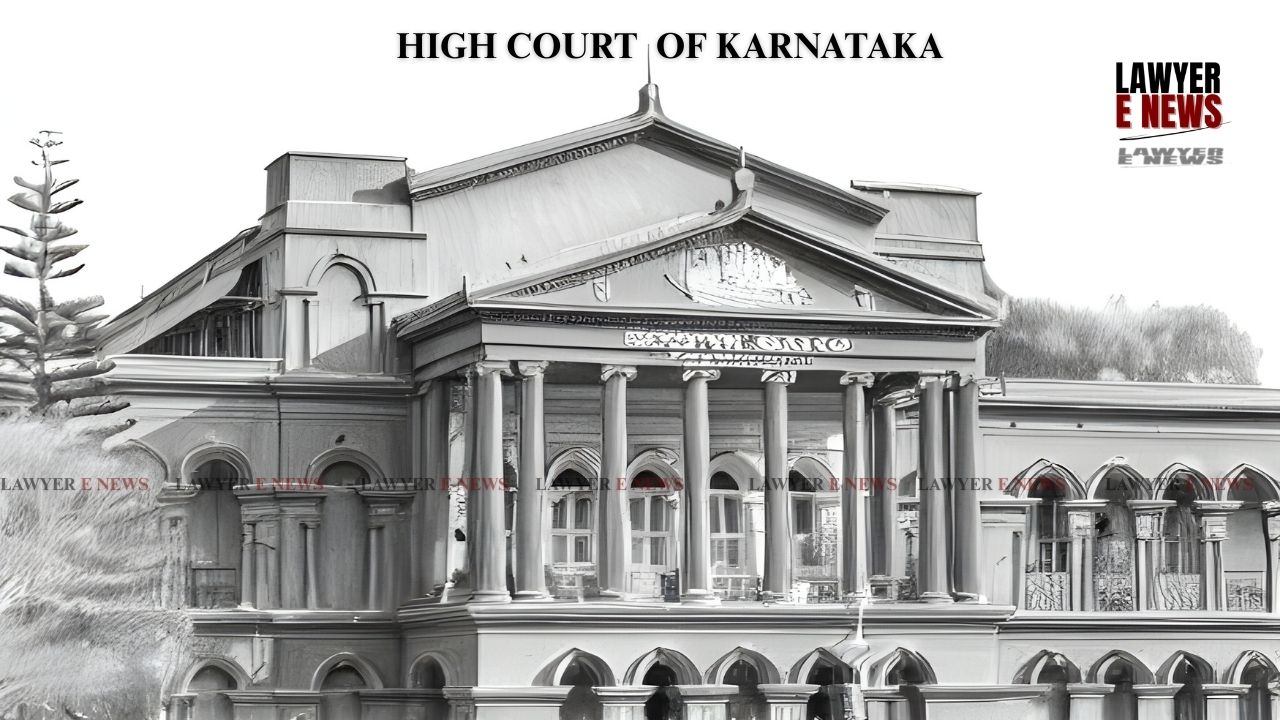
"Men and women stand equal in the eyes of the law; yet they are biologically distinct — to acknowledge such differences in matters of health, dignity and bodily autonomy is not to transgress the guarantee of equality, but to give it substantive meaning", In a landmark ruling with far-reaching consequences for women workers across Karnataka — particularly the millions toiling in the unorganized sector — the Karnataka High Court (Dharwad Bench) has directed the State Government to strictly and faithfully implement its Menstrual Leave Policy, issued vide Government Order dated 20.11.2025, across all establishments including those in the unorganized sector, and to issue comprehensive guidelines, circulars and administrative instructions to ensure its uniform enforcement pending the formal enactment of the Karnataka Menstrual Leave and Hygiene Bill, 2025.
Justice M. Nagaprasanna, in a richly documented judgment tracing the constitutional, historical and global foundations of menstrual leave, held that the policy is not a matter of administrative discretion but is intrinsically connected to the fundamental right to life and dignity under Article 21 of the Constitution — and that Article 14 cannot be invoked to resist such a measure, since acknowledging biological difference between men and women in matters of health and bodily autonomy gives substantive meaning to equality, not derogates from it.
The petitioner, Smt. Chandravva Hanamant Gokavi, is a woman of modest means employed in a small local hotel in Belagavi district, where her daily existence is marked by relentless physical labour — cleaning, washing utensils, serving food and assorted menial tasks from early morning until late evening, in an environment bereft of adequate hygiene and dignity. Such conditions, the petition urged, bear with particular severity upon women workers during menstruation, when the natural physiological processes of the body render the performance of arduous tasks exceedingly burdensome.
The State of Karnataka had, in 2024, constituted a dedicated Committee to formulate a menstrual leave policy. After exhaustive consultations with experts, hotel associations, labour unions and women's organizations, receiving 75 opinions of which 56 supported the policy, the State issued the Gazette Notification dated 12.11.2025 and Government Order No. LD 466 LET 2023 dated 20.11.2025, granting one day of paid menstrual leave per month — capped at 12 days per year — to all permanent, contract and outsourced women employees aged 18 to 52 years in establishments registered under specified labour legislations, without requirement of a medical certificate. A legislative bill — the Karnataka Menstrual Leave and Hygiene Bill, 2025 — has also been tabled before the Legislature.
The petitioner approached the High Court seeking implementation of this policy, particularly across the unorganized sector, and issuance of appropriate guidelines for its uniform enforcement.
On the Historical and Global Context
Justice Nagaprasanna opened with a sojourn through history to underscore the seriousness and global recognition of the issue. The Soviet Union introduced special protective labour laws for menstrual leave as far back as 1922 and 1931. Japan institutionalized "Seirikyuuka" under its National Labor Standards Act, 1947. Indonesia, South Korea, Taiwan, Vietnam and Zambia have variously legislated or recognized menstrual leave through the decades. In India, Bihar introduced paid menstrual leave for Government employees. The Menstruation Benefits Bill, 2017 introduced in Parliament did not attain legislative fruition.
Taking cue from the Supreme Court's direction in Shailendra Mani Tripathi v. Union of India, 2024 SCC OnLine SC 1694 — which requested the Union Government to frame a model menstrual leave policy while expressly clarifying that State Governments remain free independently to act — Karnataka constituted its Committee, obtained the Law Commission's recommendations, and formulated the present policy. "It is a matter, well documented in public domain, that as early as 1912, the State of Kerala, had exhibited remarkable foresight by permitting menstrual leave to girl students during their annual examinations," the Court noted, placing the Karnataka initiative in a long and honourable continuum.
On the Constitutional Roots of the Policy
The Court held emphatically that the menstrual leave policy did not spring from air — it has roots traceable directly to Article 21 of the Constitution and has taken birth from the womb of Articles 15(3), 39(e) and 42. Article 15(3) does not fetter the State from making special provisions for women; Article 39(e) mandates that the health and strength of workers, men and women, are not abused; Article 42 requires the State to secure just and humane conditions of work. The executive power under Article 162 furnished the necessary authority to translate these constitutional aspirations into tangible policy. "The State has articulated the present policy and has proceeded to usher in the proposed legislation, thereby giving concrete expression to the spirit and intent of the Constitution," the Court held.
On Menstrual Health as Part of Article 21
The Court placed emphatic reliance on the Supreme Court's landmark ruling in Jaya Thakur (Dr.) v. Union of India, 2026 SCC OnLine SC 133, which unequivocally recognized the right to dignified menstrual health as an integral facet of the right to life under Article 21. The Supreme Court had held in that case that Menstrual Hygiene Management is inseparable from the right to live with dignity, bodily autonomy, decisional privacy and reproductive health, and that the State bears a positive obligation not merely to refrain from discrimination but to take affirmative measures to secure MHM for menstruating persons.
The Karnataka High Court applied this principle directly: "The policy concerning the grant of menstrual leave is not merely a matter of administrative discretion, but is intrinsically connected to the realization of a fundamental right. Any measure undertaken by the State towards securing menstrual health and dignity directly engages and advances the guarantees enshrined under Article 21 of the Constitution."
The Court noted the physical realities with clinical precision — dysmenorrhea, menorrhagia, iron-deficiency anaemia, premenstrual dysphoric disorder, endometriosis, PCOS — and held that to compel a menstruating woman to perform arduous manual labour while experiencing such conditions, without even one day of paid relief, is to deny her the dignity that Article 21 guarantees. "True equality, as envisioned by the Constitution, demands a more compassionate and nuanced approach — one that acknowledges difference not as a ground for discrimination, but as a basis for accommodation. Thus, the call for menstrual leave is not a plea for privilege, but an assertion of dignity, fairness and humane understanding," the Court declared.
On the Unorganized Sector
The Court squarely addressed the gap that mattered most to the petitioner — the exclusion of the unorganized sector from the current Government Orders. Drawing from the Supreme Court's observations in Municipal Corporation of India v. Female Workers (Muster Roll) and Hamsaanandini Nanduri v. Union of India, 2026 SCC OnLine SC 402, on the importance of extending social security benefits including maternity benefit to women in the unorganized workforce, the Court held that it was now incumbent upon the State to take comprehensive measures aimed at sensitizing all sectors.
The Court broadly classified the unorganized sector into two categories: enterprises engaging fewer than 10 workers, and daily wage labourers like the petitioner herself, who remain outside the purview of the existing Government Orders. While the organized sector is amenable to regulatory intervention, the unorganized sector requires a more facilitative and sensitization-oriented mechanism. "Beyond regulatory frameworks, what remains imperative is a sustained and pervasive effort to sensitize all segments of society, reaching every corner of the State to foster awareness, empathy and compliance," the Court directed.
On Article 14
The Court also addressed the constitutional challenge that opponents of such policies often raise — that granting special leave to women violates the equality guarantee under Article 14. The Court firmly rejected this line of argument: "The State ought not to be deterred or constrained by misplaced apprehensions founded upon a superficial invocation of Article 14 of the Constitution. Men and women stand equal in the eyes of the law; yet they are biologically distinct. To acknowledge such differences, particularly in matters concerning health, dignity and bodily autonomy, is not to transgress the guarantee of equality, but to give it substantive meaning."
The Court disposed of the petition with the following directions: the State of Karnataka is directed to strictly and faithfully implement the existing Menstrual Leave Policy pending the formal enactment of the Karnataka Menstrual Leave and Hygiene Bill, 2025. Upon enactment of the Bill, Rules are to be framed without undue delay to give full and meaningful effect to the statutory mandate. In the interregnum, the State is directed to issue suitable guidelines, circulars and administrative instructions to secure uniform, consistent and rigorous implementation across all sectors, including the unorganized sector.
Date of Decision: 15.04.2026