Renewal Is Not Extension Unless Terms Are Fixed in Same Deed: Bombay High Court Strikes Down ₹64.75 Lakh Stamp Duty Demand on Nine-Year Lease Fraud Vitiates All Solemn Acts—Appointment Void Ab Initio Even After 27 Years: Allahabad High Court Litigants Cannot Be Penalised For Attending Criminal Proceedings Listed On Same Day: Delhi High Court Restores Civil Suit Dismissed For Default Limited Permissive Use Confers No Right to Expand Trademark Beyond Agreed Territories: Bombay High Court Enforces Consent Decree in ‘New Indian Express’ Trademark Dispute Assam Rifles Not Entitled to Parity with Indian Army Merely Due to Similar Duties: Delhi High Court Dismisses Equal Pay Petition Conspiracy Cannot Be Presumed from Illicit Relationship: Bombay High Court Acquits Wife, Affirms Conviction of Paramour in Murder Case Bail in NDPS Commercial Quantity Cases Cannot Be Granted Without Satisfying Twin Conditions of Section 37: Delhi High Court Cancels Bail Orders Terming Them ‘Perversely Illegal’ Article 21 Rights Not Absolute In Cases Threatening National Security: Supreme Court Sets Aside Bail Granted In Jnaneshwari Express Derailment Case A Computer Programme That Solves a Technical Problem Is Not Barred Under Section 3(k): Madras High Court Allows Patent for Software-Based Data Lineage System Premature Auction Without 30-Day Redemption Violates Section 176 and Bank’s Own Terms: Orissa High Court Quashes Canara Bank’s Gold Loan Sale Courts Can’t Stall Climate-Resilient Public Projects: Madras High Court Lifts Status Quo on Eco Park, Pond Works at Race Club Land No Cross-Examination, No Conviction: Gujarat High Court Quashes Customs Penalty for Violating Principles of Natural Justice ITAT Was Wrong in Disregarding Statements Under Oath, But Additions Unsustainable Without Corroborative Evidence: Madras High Court Deduction Theory Under Old Land Acquisition Law Has No Place Under 2013 Act: Punjab & Haryana High Court Enhances Compensation for Metro Land Acquisition UIT Cannot Turn Around After Issuing Pattas, It's Estopped Now: Rajasthan High Court Private Doctor’s Widow Eligible for COVID Insurance if Duty Proven: Supreme Court Rebukes Narrow Interpretation of COVID-Era Orders Smaller Benches Cannot Override Constitution Bench Authority Under The Guise Of Clarification: Supreme Court Criticises Judicial Indiscipline Public Premises Act, 1971 | PP Act Overrides State Rent Control Laws for All Tenancies; Suhas Pophale Overruled: Supreme Court Court Has No Power To Reduce Sentence Below Statutory Minimum Under NDPS Act: Supreme Court Denies Relief To Young Mother Convicted With 23.5 kg Ganja Non-Compliance With Section 52-A Is Not Per Se Fatal: Supreme Court Clarifies Law On Sampling Procedure Under NDPS Act MBA Degree Doesn’t Feed the Stomach: Delhi High Court Says Wife’s Qualification No Ground to Deny Maintenance

Material Contradictions in Testimonies Lead to Acquittal in POCSO Case: Supreme Court Sets Aside Conviction of Teachers

07 May 2024 8:19 AM

By: Admin


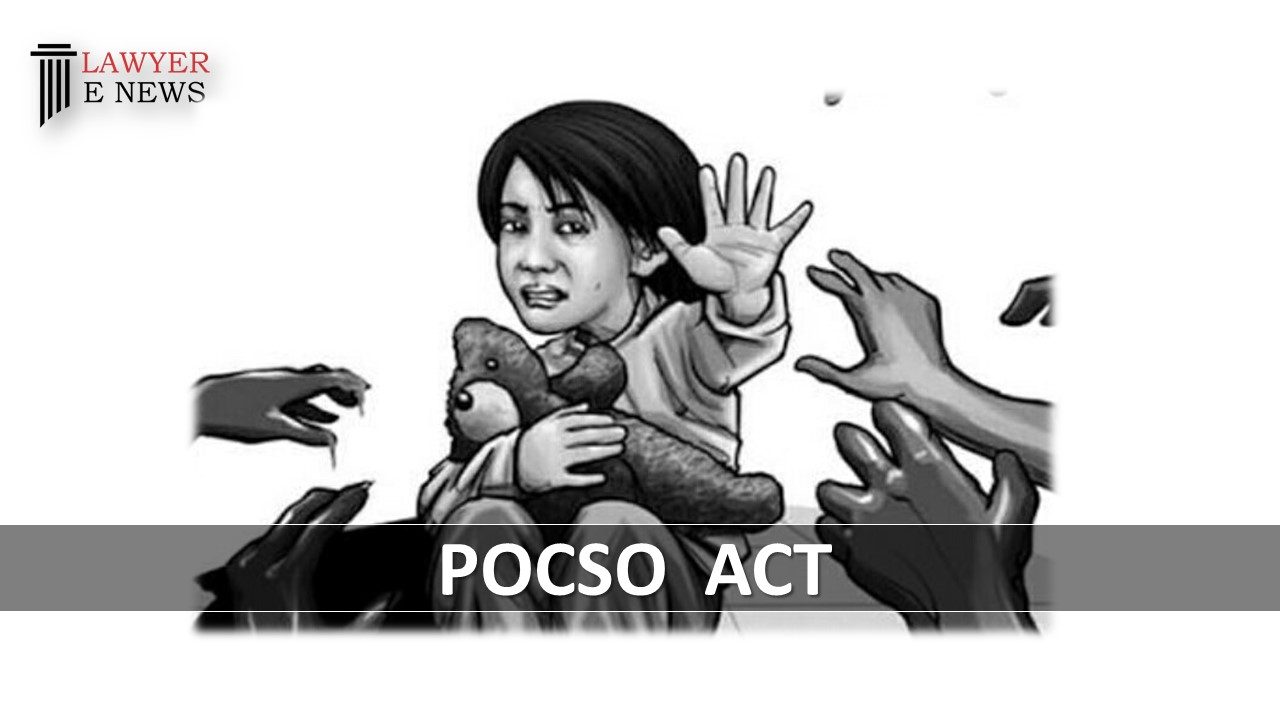
In a landmark judgment dated 11th March 2024, the Supreme Court of India acquitted two teachers previously convicted under the Protection of Children from Sexual Offences Act (POCSO Act) and Section 506 of the Indian Penal Code (IPC). The Court's decision hinged on the insufficiency of evidence and substantial doubts raised by inconsistencies in witness testimonies.

The case involved allegations against two teachers (appellants) for sexually harassing a minor girl on Valentine's Day, marked by gifting flowers and chocolates, followed by threatening remarks. The High Court had upheld their conviction. However, the appellants contested the findings, highlighting contradictions in the prosecution's evidence and the lack of corroborative witnesses.

Justice Dipankar Datta, in a detailed judgment, underscored numerous discrepancies, including:

Contradictory accounts of the complaint filing process.

  • Inconsistencies in the victim's statements under Section 164 Cr.P.C. and her deposition in court.
  • Unexplained failure to examine other classroom students who were potential eyewitnesses.
  • Irrelevant emphasis on Valentine's Day in the context of the case.

Justice Datta noted, "Material contradictions apparent in the depositions of prosecution witnesses, including the victim, significantly undermine the credibility of the prosecution version."

The Court found the evidence presented by the prosecution inadequate for conviction, granting the benefit of doubt to the appellants. The inconsistencies and contradictions led to the conclusion that the prosecution failed to prove the case beyond reasonable doubt.

The convictions under Section 12 of the POCSO Act and Section 506 IPC against the appellants were set aside, leading to their acquittal and immediate release from custody.

Date of Decision: 11th March, 2024.

Nirmal Premkumar & Anr. vs. State Rep. by Inspector of Police,

Latest Legal News