-
by sayum
13 August 2026 1:48 PM







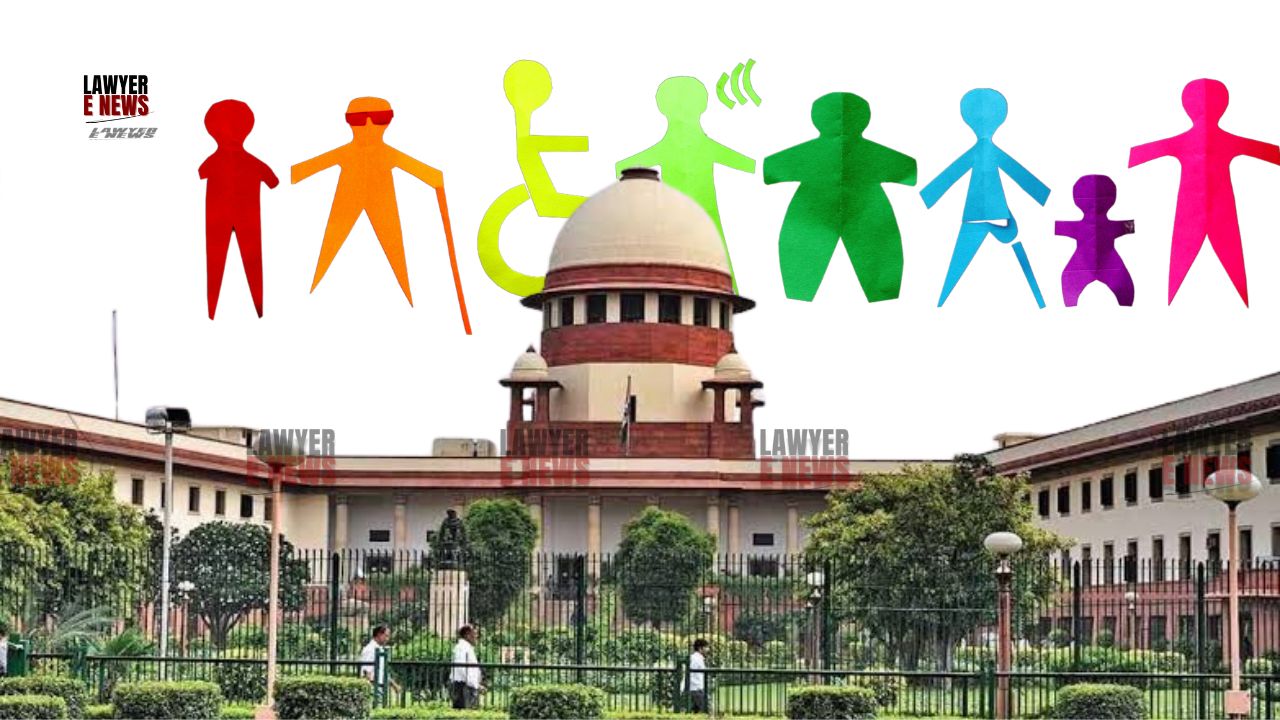
High Court Erred by Arbitrarily Reducing Compensation for Disability to ₹2.1 Lakhs - Supreme Court partially allowed appeals filed by the legal representatives of an accident victim, recalculating total compensation at ₹12,09,017. The case concerned compensation under the Motor Vehicles Act, 1988, for injuries resulting in 70% disability. The Court criticized the High Court’s reduction of the award to ₹6.69 lakhs, observing that its decision to assign ₹3,000 per percentage of disability was arbitrary and unjustified.
The bench of Justice K.V. Viswanathan and Justice S.V.N. Bhatti also upheld the principles outlined in National Insurance Co. Ltd. v. Pranay Sethi (2017), emphasizing the necessity to evaluate earning capacity and future employability in cases involving significant disability.
"Arbitrary Fixed Compensation of ₹3,000 Per Percentage of Disability Rejected"
The Supreme Court strongly disapproved of the High Court’s decision to award ₹3,000 for each percentage of the claimant’s 70% disability. The Court noted: “There is no rational basis or justification for awarding ₹3,000 per percentage of disability. The High Court failed to consider the claimant’s earning capacity as a mason and the employability challenges caused by serious head injuries.”
Instead, the Court awarded ₹7,50,000 under the head of “loss of earning capacity,” holding that a lump sum approach was more appropriate than the arbitrary per-percentage calculation used by the High Court.
"Loss of Income Must Account for Employment Constraints Due to Severe Injuries"
The Supreme Court emphasized that the claimant's disability and inability to resume work as a mason after the accident should guide the compensation calculation. The appellant had suffered grievous injuries, including fractures of the temporal and parietal bones, leading to memory loss and partial loss of speech. The Court stated: “The employability of a person with serious head injuries must be kept in perspective. The High Court erred in overlooking the impact of the disability on the claimant’s ability to resume his previous occupation.”
The Supreme Court recalculated the loss of income based on the claimant’s daily wage of ₹450 as a mason and determined a reasonable lump sum of ₹7,50,000 under this head.
"Pain and Suffering Compensation Enhanced to ₹50,000 Retained as Reasonable"
While the High Court had enhanced compensation under the head of "pain and suffering" from ₹25,000 to ₹50,000, the Supreme Court found this amount reasonable and retained it. Acknowledging the prolonged suffering caused by the appellant’s injuries, the Court stated:
“The enhanced compensation of ₹50,000 for pain and suffering appropriately reflects the physical and mental agony endured by the claimant.”
"High Court Failed to Properly Represent Victim's Case Due to Counsel Withdrawal"
The Supreme Court expressed concern over procedural lapses during the High Court proceedings, particularly the withdrawal of the appellant’s counsel. The Court observed:
“The appellant was prejudiced by inadequate representation before the High Court, as his counsel withdrew before the matter was adjudicated. This procedural lapse resulted in an arbitrary reduction of compensation without adequate consideration of evidence.”
However, instead of remanding the case, the Supreme Court decided to reexamine the compensation itself to ensure justice for the deceased appellant’s legal representatives.
"Final Compensation of ₹12.09 Lakhs Reflects Fair Balance"
After reassessing all the heads of compensation, the Supreme Court recalculated the total compensation as ₹12,09,017, with interest at 7.5% per annum from the date of the claim petition until payment.
"Multiplier Method Requires Caution but Cannot Be Entirely Disregarded"
The Court clarified that while applying a blanket multiplier to calculate loss of income may not always be appropriate, the High Court’s rejection of the multiplier entirely was an error. The Court stated: “Reasonable compensation must reflect the extent of disability and its impact on employability. A fixed per-percentage approach like ₹3,000 is arbitrary and unjustified.”
"Loss of Future Income Must Account for Disability’s Practical Impact"
The Court reiterated that compensation under the Motor Vehicles Act must account for real-world implications of disability on earning potential. The judgment emphasized:
“Disability must be assessed in the context of the claimant’s occupation and the constraints imposed on their employability. This is particularly critical for manual laborers like masons.”
The Supreme Court’s recalibration of the compensation to ₹12,09,017 reflects a balanced approach, accounting for the claimant’s 70% disability, his lost income as a mason, and the associated physical and emotional suffering. The decision underscores the importance of fairness and consistency in applying compensation principles under the Motor Vehicles Act.
Date of Decision: January 24, 2025