-
by sayum
27 August 2026 7:40 AM







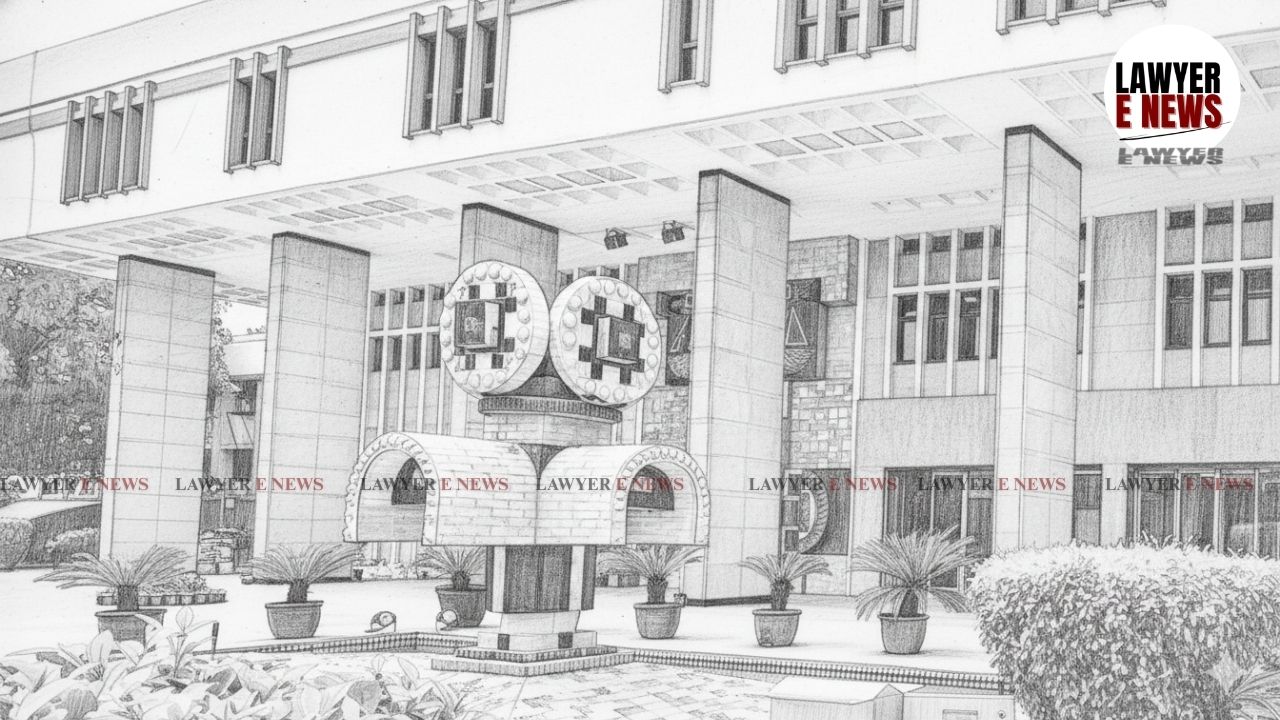
"Merely because power is vested in Lokpal to hold investigation under section 20(3), it does not mean that the same can be exercised in a whimsical or arbitrary manner." Delhi High Court, in a significant ruling, held that the Lokpal of India cannot direct a CBI investigation against a public servant by ignoring an exculpatory preliminary inquiry report without recording specific, cogent reasons.
A bench of Justice Vivek Chaudhary and Justice Renu Bhatnagar quashed a Lokpal order directing a probe against a senior Directorate of Revenue Intelligence (DRI) officer, observing that mere allegations without supporting material cannot form the basis for ordering a formal investigation when preliminary findings favour the public servant.
The petitioner, a Senior Intelligence Officer at the DRI, was part of an investigation team that had issued multiple show-cause notices proposing confiscation and raising demands running into hundreds of crores against the complainant. Five years after the alleged incidents of bribery, the complainant approached the Lokpal, which directed a preliminary inquiry under Section 20(1) of the Lokpal and Lokayuktas Act, 2013. Although the CBI, the Director General of Vigilance (DGoV), and the Finance Minister found no material against the petitioner and exonerated him, the Lokpal mechanically issued a show-cause notice and subsequently ordered a full CBI investigation against him.
The primary question before the court was whether the Lokpal could direct a formal investigation under Section 20(3) of the Act despite a preliminary inquiry exonerating the public servant, without recording reasons for rejecting the inquiry report. The court was also called upon to determine whether the mechanical issuance of a show-cause notice, without discussing the specific role of the accused, vitiates the proceedings.
Lokpal Not Bound By CBI Report But Must Record Reasons
The court acknowledged that under the statutory framework of Section 20 of the Act, the Lokpal is not strictly bound by the preliminary inquiry report of the CBI and retains the power to form an independent view. However, the bench emphasized that this discretion is not absolute. When the preliminary inquiry and the competent authority's comments favour the public servant, the Lokpal must record explicit reasons explaining why a prima facie case still exists to justify departing from those findings.
Mechanical Issuance Of Notice Undermines Statute
Examining the Lokpal’s initial order issuing the show-cause notice, the court found a complete absence of any discussion regarding the petitioner. The court noted that the notice concerned itself entirely with the defenses of other officials based in Kolkata. The bench strongly deprecated this practice, stating that issuing notices mechanically without evaluating the individual role of the person proceeded against compromises the fairness of the procedure.
"Issuing notices mechanically, without any discussion as to the role of the person proceeded against, undermines the very integrity of the statutory mechanism."
Order Arbitrary Due To Lack Of Application Of Mind
The High Court observed that the impugned order failed to articulate any clear facts or material to justify its prima facie satisfaction under Section 20(3). The bench pointed out that the Lokpal did not identify any defects, contradictions, or omissions in the CBI's preliminary inquiry report. Merely relying on general assertions and a delayed complaint, without addressing the exculpatory evidence on record, rendered the Lokpal's decision legally unsustainable.
Quasi-Judicial Orders Require Cogent Reasons
Relying on landmark Supreme Court judgments, including Siemens Engineering & Manufacturing Co. of India Ltd. v. Union of India and S.N. Mukherjee v. Union of India, the bench reiterated that orders affecting the rights of parties must be supported by clear reasons. The court observed that the requirement to record reasons ensures application of mind, introduces clarity into the decision-making process, and minimizes the possibility of administrative arbitrariness.
"The statutory framework under Section 20 of the Act is structured with precision and must be followed in letter and spirit."
Post-Facto Justifications Impermissible
Applying the principles laid down in Mohinder Singh Gill v. Chief Election Commissioner, the court stressed that the validity of a statutory order must be judged solely by the reasons stated within the four corners of the document. The bench noted that the Lokpal's vague reference to "counter allegations supported with verifiable facts" was entirely insufficient, as the order failed to identify those facts or explain how they overcame the unified findings of the CBI, the DGoV, and the Minister of Finance.
Concluding that the Lokpal's orders lacked the mandatory statutory satisfaction required under Section 20(3) of the Act, the High Court allowed the writ petition. The court quashed the Lokpal's order directing a CBI investigation and the underlying show-cause notices, granting full relief to the petitioner.
Date of Decision: 06 April 2026