-
by sayum
27 August 2026 3:32 PM







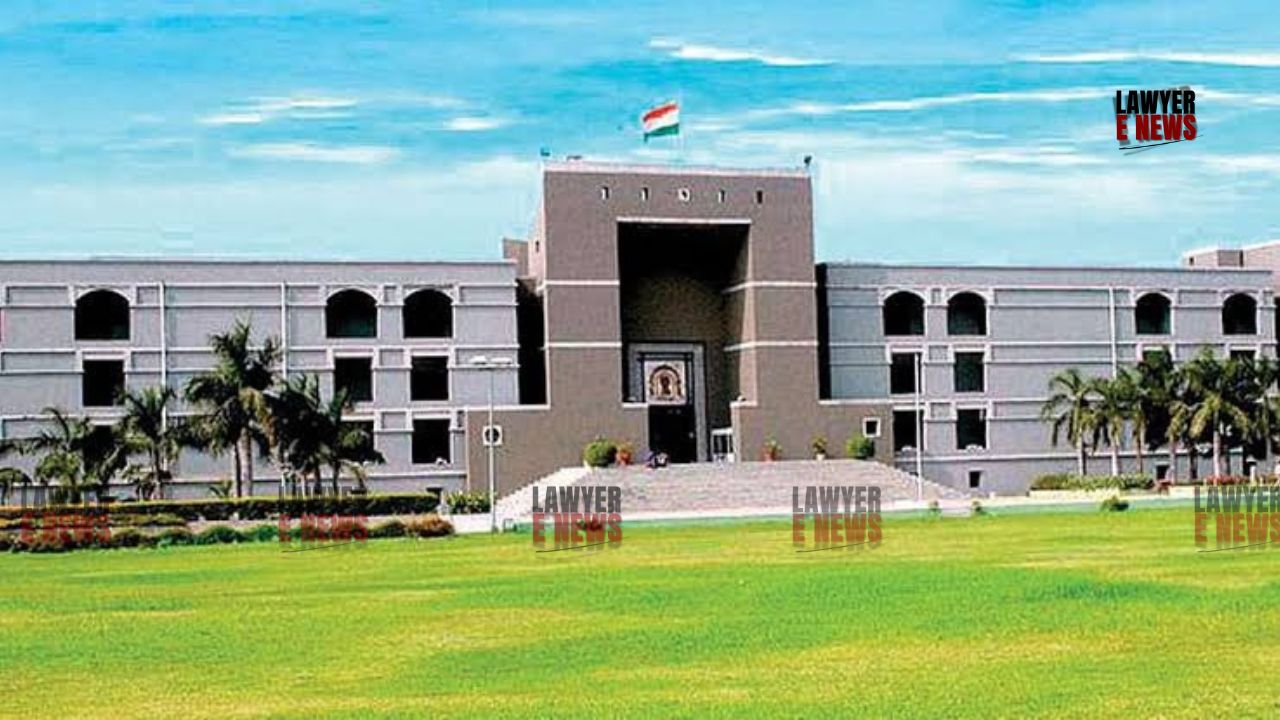
"It is the legal and ethical duty of the husband to maintain his wife — he cannot shirk his responsibility as husband and father", Gujarat High Court dismissed a divorced wife's revision application seeking enhancement of maintenance from Rs. 10,000/- to Rs. 25,000/- per month, holding that the Family Court had correctly applied the able-bodied principle to fix the husband's notional income and had awarded a just one-third thereof as maintenance.
Justice Hasmukh D. Suthar, while confirming the award, reaffirmed the important principle that a wife's possession of a law degree cannot be a ground to refuse or reduce maintenance.
Background of the Case
Dhruti Vinubhai Dodiya married respondent No. 2 on December 29, 2008 at Ahmedabad. Within six months of marriage, she alleged physical and mental harassment on account of dowry demands. The husband, engaged in singing and organising musical shows in India and abroad — including in the UK, Africa and Kenya — allegedly became addicted to alcohol and subjected her to cruelty. The parties separated in December 2013 and a divorce deed was executed on May 26, 2016. The wife filed a maintenance application under Section 125 CrPC before the Family Court, Ahmedabad. Despite being granted interim maintenance of Rs. 2,000/- per month, the husband failed to comply, leading to recovery proceedings and even an order of imprisonment for non-payment. The Family Court ultimately awarded Rs. 10,000/- per month by order dated January 11, 2022, which the wife challenged as grossly inadequate. Notably, the husband had separately challenged the same order — and his revision was dismissed by a coordinate Bench of the Gujarat High Court on February 1, 2023.
Legal Issues
Whether the Family Court's fixation of the husband's notional income at Rs. 33,000/- per month and the consequent award of Rs. 10,000/- maintenance warranted interference in revisional jurisdiction, and whether the wife's LL.B. degree or her practice as an advocate disentitled her from maintenance.
Court's Observations and Judgment
Husband's Duty to Maintain Cannot Be Shirked
Justice Suthar reiterated the settled legal position with clarity. The fact that the applicant held an LL.B. degree and was practising as an advocate did not diminish her entitlement to maintenance. "Merely because the applicant possesses an LL.B. degree cannot be a ground to refuse maintenance." The Court relied on the Supreme Court's ruling in Bhuwan Mohan Singh v. Meena (2015) 6 SCC 353, affirming that it is the legal and ethical duty of a husband to maintain his wife and children. The wife and children are entitled to the same standard of living they enjoyed while living with the husband, and this obligation cannot be escaped regardless of the circumstances.
The Court noted that the husband himself admitted in cross-examination that he was engaged in singing and organising musical shows and had travelled abroad for the same. Yet before the Family Court, he claimed earnings of only Rs. 200/- to Rs. 250/- per day. The Family Court disbelieved this figure, applied the able-bodied principle in the absence of documentary evidence, and fixed his notional income at Rs. 33,000/- per month. The Court found no error in this approach.
One-Third Formula Applied Correctly
The Family Court had also taken into account that after the divorce the husband had entered into a second marriage and had a son from that marriage, creating an additional maintenance obligation. Balancing both considerations, the Family Court awarded Rs. 10,000/- per month — approximately one-third of the notional income of Rs. 33,000/-. Justice Suthar found this to be just and proper.
Revisional Jurisdiction Has Narrow Scope
The Court held that the applicant had failed to point out any patent error or miscarriage of justice in the Family Court's order. Relying on the Supreme Court's ruling in Amit Kapoor v. Ramesh Chander (2012) 9 SCC 460, which lays down that revisional jurisdiction is not to be exercised unless there is a clear patent error or miscarriage of justice, the Court declined to interfere with concurrent findings supported by proper reasons.
The revision was dismissed. Liberty was granted to the wife to seek modification of maintenance under Section 127 CrPC before the concerned Court if there is any future change in circumstances.
Date of Decision: April 6, 2026