-
by sayum
27 August 2026 7:40 AM







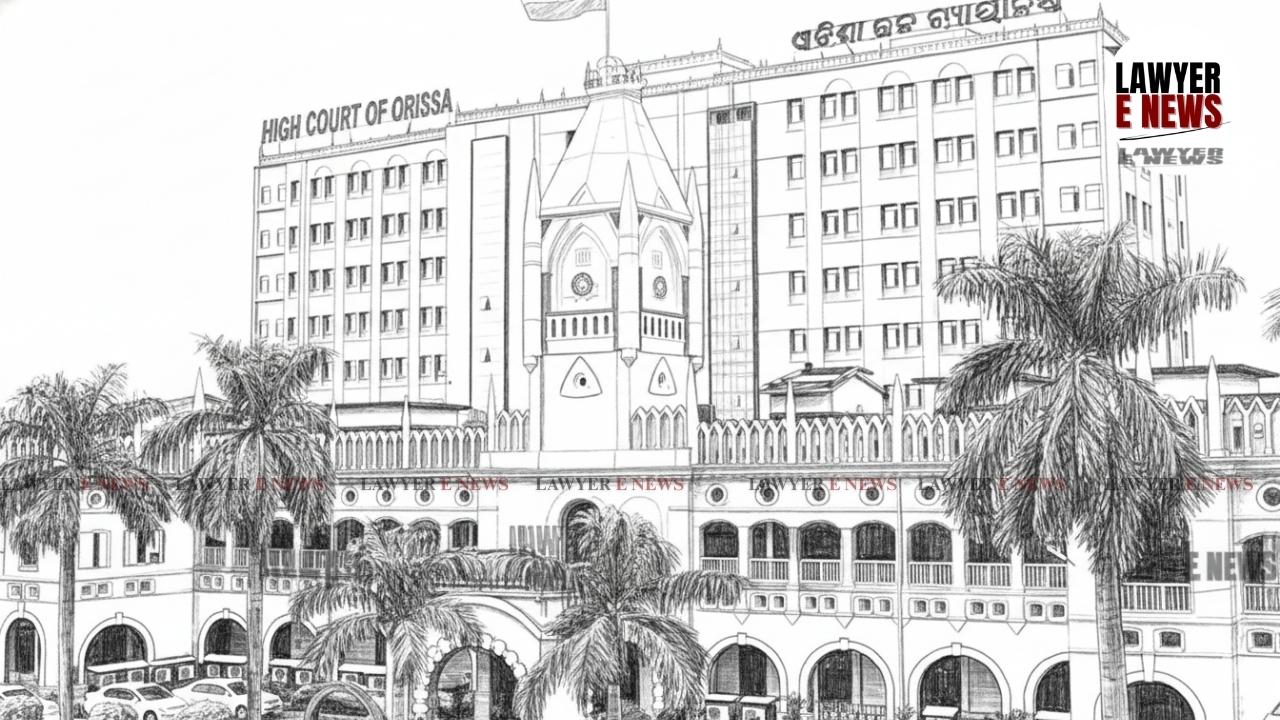
"Law Always Helps The Diligent, But Not The Indolent", In a firm ruling that places the responsibility of litigation squarely on the shoulders of the litigant, the Orissa High Court on April 10, 2026 dismissed an application for condonation of delay of 1,142 days in filing a motor accident appeal, refusing to accept the appellant's plea that his advocate never informed him about the outcome of his case.
Justice G. Satapathy held that a litigant cannot simply blame his counsel for failing to communicate the passing of a judgment when the litigant himself made no effort to follow up for over four and a half years.
The appellant, Kailash Panda, was a respondent before the Motor Accidents Claims Tribunal in a claim that originated in 2018. The Tribunal passed its award on September 21, 2021, in proceedings where Panda had been set ex-parte. He sought to challenge this award before the Orissa High Court but filed his appeal with a staggering delay of 1,142 days beyond the prescribed limitation period under Section 173(1) of the Motor Vehicles Act, 1988. To justify this delay, he filed IA No. 379 of 2025 under Section 5 of the Limitation Act, 1963, seeking condonation on the ground that his advocate never informed him about the matter.
The core question before the Court was whether the appellant had shown "sufficient cause" under Section 5 of the Limitation Act to justify condoning a delay of over three years beyond even the date when knowledge of the judgment could be directly attributed to him. The certified copy of the impugned judgment had been made ready on December 7, 2022 — a fact that conclusively established the appellant's knowledge from that date — yet he still failed to file the appeal for approximately three more years thereafter.
Justice Satapathy examined the substance of the appellant's plea, which rested entirely on the averment in paragraph 4 of the application — that he had handed over the brief, executed a Vakalatnama, and paid professional fees to his advocate at Sambalpur, who assured him that "nothing will happen as he is not the owner of the vehicle."
The Court found this plea wholly insufficient. "The plea as advanced by the appellant-petitioner is mere an oral assertion, but no document or any material has been produced to indicate that the said advocate did not communicate to the appellant-petitioner."
The Court was categorical that the burden of staying engaged with one's own litigation rests on the litigant, not the lawyer. It pointed out that not a single piece of documentary evidence — no letter, no affidavit from the advocate, no communication record — was placed before the Court to corroborate the claim that the counsel had remained silent throughout. The Court noted that it was entirely unclear even when the appellant had first handed over the brief to his counsel, and when that counsel had appeared in the matter.
Critically, the Court addressed the argument that the delay could be excused by imposing costs on the appellant. Rejecting this alternative submission made by the appellant's counsel Mr. H.S. Mishra, the Court found that the explanation offered did not "appeal to the conscience of the Court, rather it appears to be a mere plea than any substance in it."
"It is quite easy to say that the advocate did not contact the appellant-petitioner, but there is no explanation as to why the appellant-petitioner remained indolent/negligent in contacting his advocate for such a long duration at least for around more than four and half years of passing of the impugned judgment."
The Court further underscored that the appellant had an additional remedy available to him which he chose not to pursue. Since he had been set ex-parte before the Tribunal, he could have returned to the Tribunal in appropriate proceedings and led evidence to establish his plea — including evidence about his counsel's alleged failure to communicate. Instead, he preferred to approach the High Court armed with nothing but bare averments.
"The appellant-petitioner preferred to approach this Court with mere averment of his plea without substantiating the same."
Invoking the foundational principle of limitation law, Justice Satapathy concluded with the maxim that has guided courts for centuries: "Law always helps the diligent, but not the indolent."
Condonation application — was dismissed as without merit.
Date of Decision: April 10, 2026