-
by sayum
11 August 2026 2:00 PM







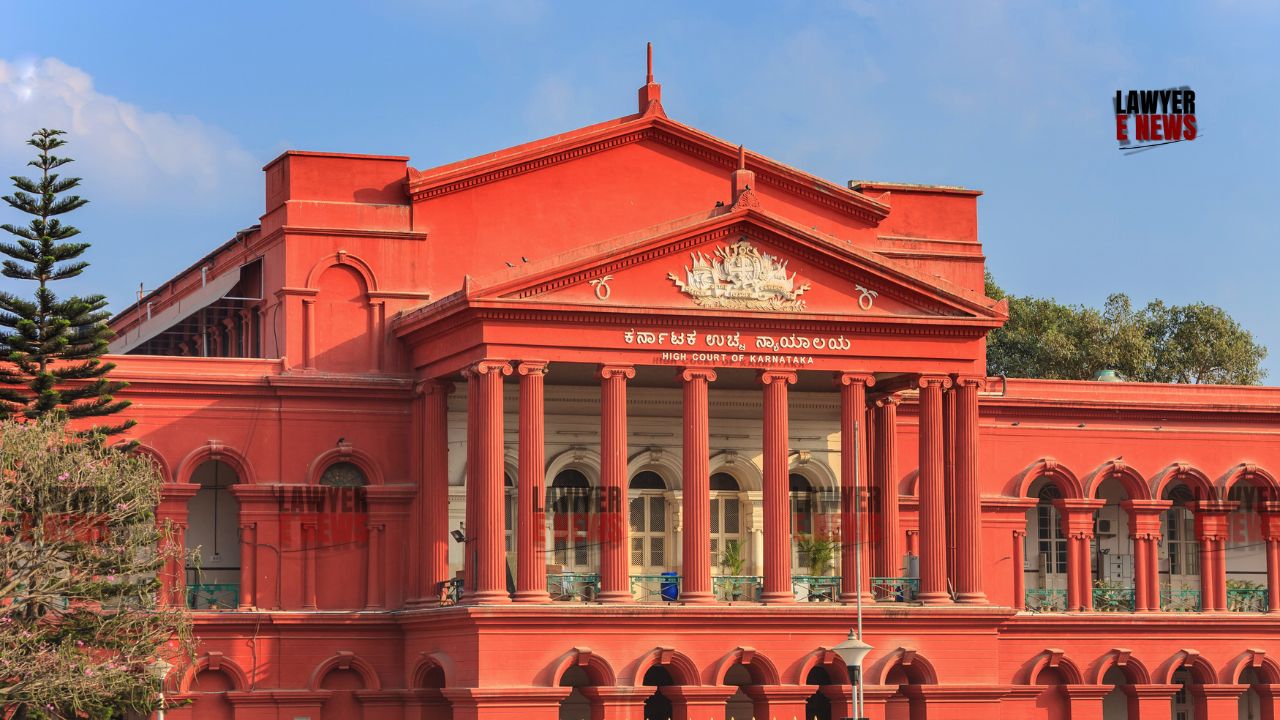
“At this stage, we are unable to convince ourselves that coming to such a conclusion would be just, reasonable, and proper, more so keeping in view the large amounts of money involved” — In a significant ruling Supreme Court of India set aside the Karnataka High Court’s order that had quashed criminal proceedings against Moon June Seok, the former Chief Financial Officer of Daechang Seat Automotive Pvt. Ltd., a Korean automotive parts manufacturer operating in India. The company had alleged that its former officers and external financial advisors siphoned off over ₹10 crore under the guise of GST payments.
Allowing the appeal filed by Hyeoksoo Son, the authorized representative of the company, the bench of Justices Sanjay Karol and Ahsanuddin Amanullah held that the High Court erred in prematurely entering into factual evaluations and interfering at the threshold stage of proceedings under Section 482 of the CrPC.
The Court observed, “Let it be proven in a trial that there is no evidence against Respondent No.1… At this stage, we are unable to convince ourselves that coming to such a conclusion would be just, reasonable, and proper.”
“Cash of ₹1.8 Crores Allegedly Handed Over in Person — Statements of CFO and Co-Accused Match”: SC Finds Prima Facie Evidence of Criminal Conspiracy
The case revolves around a series of payments made by the company between April and October 2022, purportedly for GST liabilities, which were never remitted to the tax authorities. A forensic internal audit later revealed that ₹10.18 crore had been misappropriated, and the GST dues had already been cleared through input credit.
According to the complaint, the former CFO Moon June Seok received ₹1.8 crore in cash through two instalments from Nikhil Kumar Singh, a co-accused and financial consultant with N.K. Associates. In his own statement, Moon admitted, “Nikhil Kumar Singh has given me around Rs.1,80,00,000/- in cash and out of that money, I have led a luxurious life and the remaining money has been kept in my house.”
The co-accused, in his statement, corroborated this version, stating, “In May 2022, I went to Hiranandani Villa, near Bellary Road, where Mr. Moon lives, and gave him Rs.1 crore. In June 2022, I met him at Gold Pinch Hotel and handed him another Rs.80 lakh in cash.”
Rejecting the High Court’s finding that the bribe amount was negligible, the Supreme Court categorically stated that “quantum received as bribe, be it high or low, cannot be a ground for quashing,” relying on its earlier ruling in Niranjan Hemchandra Sashittal v. State of Maharashtra.
“A CFO Cannot Simply Wash Off Responsibility and Say He Was Only a Forwarding Agent”: Apex Court Refuses to Accept High Court’s Reasoning
The Supreme Court strongly disagreed with the High Court’s assessment that Moon June Seok had no major role and was merely forwarding files for approval. The apex court held that his own statement, along with that of the co-accused, established prima facie material.
“As the Chief Financial Officer, the respondent was in control of the finances of the Company and the other co-accused persons were brought into the fold of the operations, at his behest… He is a vital link in the chain,” the Court noted.
The bench further expressed surprise that the company’s entire financial control and statutory payments were managed by consultants without any formal agreement and no due diligence, all allegedly approved by the CFO. “We are surprised by the fact that the CFO and an alleged chartered accountant both readily agreed to not put ink to paper to formalise this relationship,” the Court remarked.
“Inherent Power Under Section 482 CrPC Cannot Be Used to Conduct a Mini Trial”: SC Reiterates Bhajan Lal and Neeharika Doctrines
The Supreme Court reiterated the well-established principles from State of Haryana v. Bhajan Lal and Neeharika Infrastructure Pvt. Ltd. v. State of Maharashtra, holding that courts must not conduct a roving inquiry at the stage of framing charges or quashing FIRs unless the allegations are patently absurd or fall within the seven Bhajan Lal categories.
“The truth or falsity of the allegation can only be determined upon trial,” the Court emphasised, rejecting the High Court’s reasoning that the statement of co-accused cannot be the basis for implication.
The Court clarified that the respondent’s own confession, coupled with matching entries from the co-accused and recovery of cash from his residence, constitute a prima facie case. “There prima facie appears to be a connection,” the Court concluded.
SC Restores Trial, Asks CFO to Face Charges in ₹10.18 Crore Misappropriation
The Court allowed the appeal and directed that the trial before the III Additional Chief Metropolitan Magistrate, Bengaluru in C.C. No. 8373 of 2023 be resumed. The parties were directed to appear before the trial court on April 16, 2025.
The bench noted, “The rule of law has a responsibility to protect the investments of foreign investors, while at the same time ensuring that any person accused of mishandling such funds is really and fully protected by the power of the phrase ‘innocent till proven guilty’.”
Date of Decision: April 8, 2025