-
by sayum
13 August 2026 4:33 AM







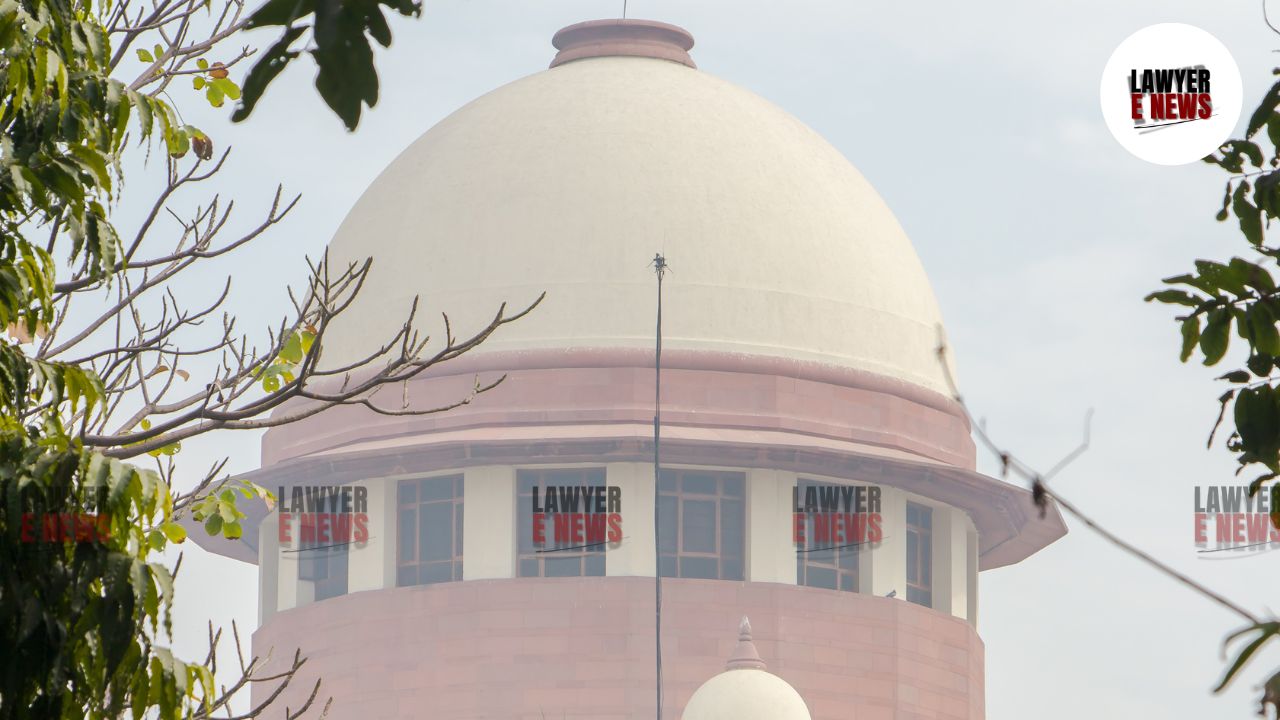
Planning Laws Cannot Be Used to Block Development Forever; State Must Act Within the Legal Timeline – In a landmark ruling Supreme Court of India quashed the reservation of land in Amravati, Maharashtra, which had been earmarked for a school since 1993 but was never acquired or developed. The Court held that when the government fails to acquire reserved land within the prescribed time, the reservation automatically lapses, and the owner has the right to use it as per permissible regulations.
"Reservation cannot be an indefinite restriction on property rights. The State must act within the legal timeline, or the land must be released for rightful use," the Supreme Court observed while allowing the appeal filed by Nirmiti Developers and Others.
The ruling sends a strong message that planning laws cannot be misused to indefinitely freeze private property, leaving landowners without compensation and blocking legitimate development.
"State Cannot Sleep on Land Acquisition for Decades and Then Claim Reservation Still Exists"
The case concerned a 50,138 sq. ft. vacant plot in Mouza Rajapeth, Amravati, which was originally owned by private individuals. The land was designated for a government school in 1993 under the Maharashtra Regional and Town Planning Act, 1966 (MRTP Act), yet for the next 13 years, the authorities failed to take any action to acquire or develop it.
On July 4, 2006, the original owners, frustrated by inaction, issued a purchase notice under Section 49 of the MRTP Act, requiring the government to either acquire the land or release it from reservation. The State acknowledged the notice on January 2, 2007, and explicitly directed the acquiring body to complete the acquisition within one year, failing which the reservation would lapse.
Despite these clear directions, the authorities took no real steps to complete the acquisition. Instead, on December 29, 2007—just three days before the deadline—the respondent trust merely issued a letter requesting the initiation of acquisition proceedings, but no concrete action followed.
"A legal obligation to acquire land cannot be satisfied by merely exchanging letters while doing nothing. The MRTP Act does not allow endless delays at the cost of landowners' rights," the Supreme Court noted while criticizing the State's lack of action.
"When the Government Fails to Acquire Within the Prescribed Time, the Reservation Automatically Lapses"
The Supreme Court analyzed Sections 49 and 127 of the MRTP Act, which establish clear rules for how and when a land reservation lapses. Section 49 states that if a purchase notice is confirmed but acquisition is not completed within one year, the reservation lapses by law. Similarly, under Section 127, if land reserved for public use is not acquired within ten years, the owner can serve a notice, and the government must acquire the land within twelve months—or the reservation is deemed to have lapsed.
The Court observed that the State had failed on both counts.
"The law does not permit the government to keep land frozen in the name of future acquisition while failing to act for decades. Once the statutory period expires, the land is automatically freed from reservation, and the owner has full rights to develop it," the Court ruled.
The Court pointed out that:
The reservation lapsed on January 2, 2008, because the authorities failed to complete acquisition within one year of confirming the purchase notice.
The reservation also lapsed again on August 13, 2015, when the original owners served another purchase notice under Section 127, and the government once again failed to act within twelve months.
By the time Nirmiti Developers purchased the land on December 30, 2015, there was no valid reservation left on the property.
"If a land reservation lapses under the law, it does not matter whether the original owner sells the property later. The lapse is final, and the State cannot revive the reservation by claiming the new owner must serve fresh notices," the Court held.
"Town Planning Cannot Be a Weapon to Block Development Indefinitely"
The State of Maharashtra defended its failure to acquire the land, arguing that the reservation should still apply because the land was originally meant for a public school. The High Court had upheld this view, ruling that the original owners had not taken timely steps to develop the land after the reservation lapsed.
Rejecting this argument, the Supreme Court stated: "Once a reservation lapses under the law, the land cannot remain frozen in time. The owner’s decision to sell the land does not revive the reservation. The State cannot deny the purchaser's right to develop legally acquired land."
The Court also criticized the authorities for repeatedly failing to act, calling the 33-year delay unjustifiable.
"The right to property is a fundamental human right. The government cannot hold land hostage in the name of development while failing to act for over three decades," the Court observed.
"Development Must Have a Timeline; The State Cannot Keep Landowners in Limbo Forever"
With these findings, the Supreme Court ruled in favor of Nirmiti Developers, holding that the reservation had long since lapsed, and the purchasers were free to develop the land as per the prevailing regulations.
In its final ruling, the Court declared:
The reservation under the MRTP Act had lapsed by law, first in 2008 and again in 2015.
The High Court erred in holding that the reservation still applied despite these statutory lapses.
The appellants are entitled to use the land for development without any further restrictions.
"Town planning laws must serve the purpose of development, not obstruction. The State cannot reserve land forever while doing nothing. If it fails to acquire land within the prescribed period, it forfeits its right to enforce the reservation," the Court concluded.
Justice After 33 Years: Supreme Court Ensures Fairness in Land Use and Development
The Supreme Court’s ruling in Nirmiti Developers v. State of Maharashtra is a historic judgment protecting property owners from indefinite government restrictions. The ruling establishes that land cannot be reserved indefinitely without timely acquisition, reinforcing that:
The government cannot hold land in reservation forever without acquiring it.
Landowners have the right to develop their property if the State fails to act within the legally mandated timeframes.
Planning laws must facilitate growth, not create bureaucratic obstacles that harm property rights.
"The government cannot treat landowners as hostages of its inefficiency. If acquisition does not happen within the prescribed time, the land must be freed. No citizen should suffer endless uncertainty due to bureaucratic lethargy," the Court declared.
This ruling brings an end to a 33-year-long legal battle and ensures that property rights are upheld while preventing misuse of planning laws to indefinitely freeze land use.
Date of decision: 25/02/2025