-
by sayum
27 August 2026 7:40 AM







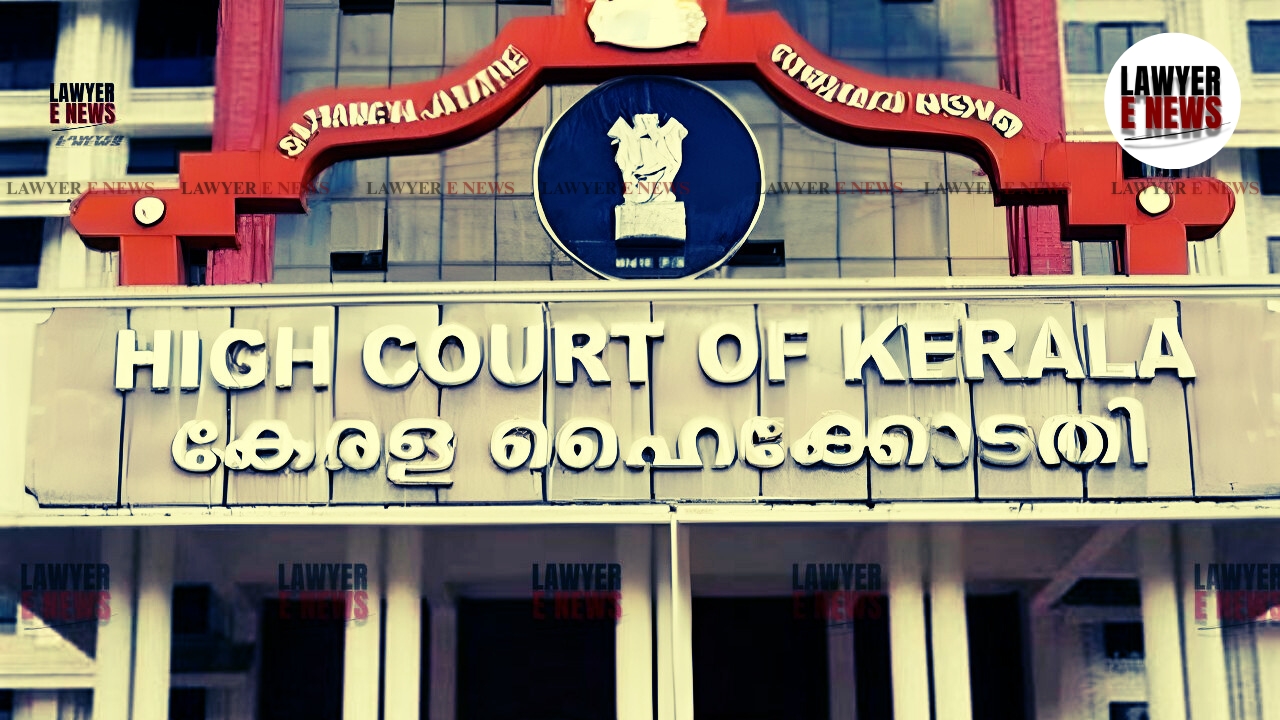
"The petitioner has not disclosed the full facts in the writ petition, and he approached this Court not with clean hands. Therefore, he is not entitled for the equitable relief sought in the writ petition," Kerala High Court, in a significant ruling dated April 6, 2026, held that a litigant who suppresses material facts and fails to approach the court with clean hands is absolutely disentitled to equitable relief under writ jurisdiction.
A division bench of Justice Anil K. Narendran and Justice Muralee Krishna S. observed that the petitioner had concealed the cancellation of his property mutation records. Declining to order the demolition of houses built under government schemes, the court directed the District Collector to conduct a sweeping enquiry into alleged encroachments on government land by all parties involved.
The petitioner approached the High Court seeking a writ of mandamus to direct the Pallivasal Grama Panchayat to demolish alleged unauthorized structures erected by two individuals on a 53-cent property. The petitioner claimed title over the land through a 1996 sale deed executed in his father's name. However, during the proceedings, the revenue authorities revealed that the petitioner's mutation (Thandaper) account had already been cancelled and alleged that he was involved in large-scale land-grabbing activities in Devikulam Taluk.
The primary question before the court was whether a petitioner who suppresses the cancellation of his title records is entitled to equitable relief under Article 226 of the Constitution of India. The court was also called upon to determine the legality of allotting residential houses under government welfare schemes on unassigned government (puramboke) land.
Suppression Of Material Facts Disentitles Relief
The court took strict note of the fact that the petitioner concealed crucial information regarding his legal title to the disputed property. The State Government filed detailed affidavits demonstrating that the revenue authorities had already cancelled the Thandaper account associated with the petitioner's claimed land. Refusing to entertain the petitioner's plea for demolition, the bench firmly emphasized the necessity of transparency and honesty in writ proceedings.
Houses Built Under Government Welfare Schemes
While examining the structures built by the private respondents, the court noted that they were constructed under state welfare initiatives, specifically the LIFE Mission and the IAY PMRY schemes. The respondents claimed they were landless, had resided on the property for years, and had formally applied for the assignment of the plots. Furthermore, since the plinth area of these houses was below 1000 sq. ft., they were legally exempted from requiring a building permit under the Kerala Panchayat Raj Act, 1994.
"Whether houses can be allotted in the Government schemes on puramboke lands by executing the agreements... is a matter that has to be enquired into by the authorities concerned."
Legality Of Scheme Allotments On Unassigned Land
Despite acknowledging the welfare nature of the constructions, the court expressed reservations about sanctioning government schemes on land to which no formal 'patta' (title deed) had been issued. The bench highlighted this administrative anomaly as an issue necessitating urgent regulatory scrutiny by the competent revenue authorities. The court noted that utilizing puramboke land for scheme-based housing without finalizing assignment applications required a proper administrative review.
Enquiry Ordered Into Encroachments By All Parties
Having found severe anomalies on both sides, the court declined to issue the demolition orders sought by the petitioner but expanded the scope of scrutiny. The bench observed that the comprehensive affidavits filed by the District Collector indicated potential encroachments on government property by both the petitioner and the private respondents. To ensure complete justice, the court ordered a thorough factual investigation into the land holdings and title claims in the Pallivasal Village.
Disposing of the writ petition, the High Court directed the District Collector of Idukki to conduct a detailed enquiry into the encroachments committed by any of the parties on government land. The Collector has been mandated to afford all stakeholders an opportunity of being heard and to take an appropriate decision in accordance with the law within a strict timeframe of three months.
Date of Decision: 06 April 2026