
-
by sayum
25 August 2026 12:32 PM







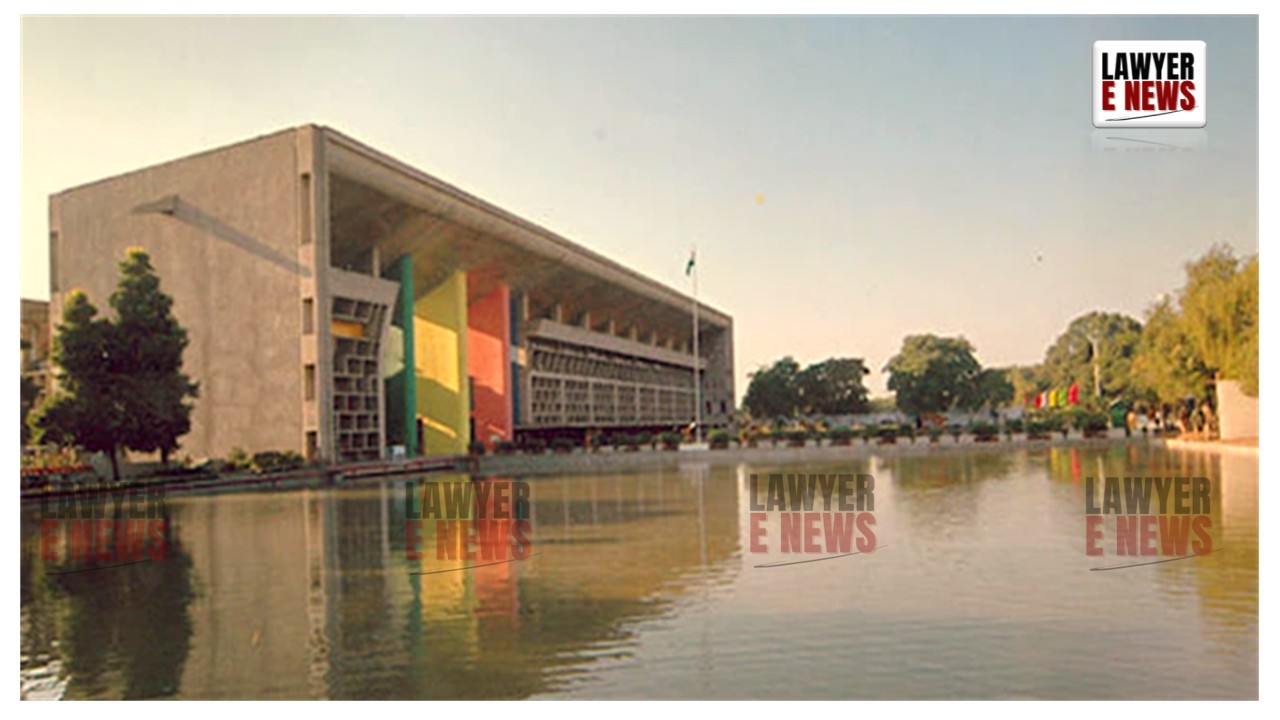
Court Cannot Be a Passive Spectator When Truth is at Stake: In a significant ruling Punjab & Haryana High Court partially allowed the Central Bureau of Investigation’s (CBI) plea to summon crucial witnesses in a high-profile bribery case, emphasizing that the right to a speedy trial cannot override the fundamental right to a fair trial. Justice Manjari Nehru Kaul, while deciding the CBI’s challenge against the trial court’s refusal to summon additional witnesses, held that “the pursuit of truth is the ultimate goal of criminal justice, and courts must not hesitate to exercise their powers under Section 311 CrPC when justice demands it.”
The case involves allegations of bribery against former Punjab & Haryana High Court judge, Justice Nirmal Yadav, and other accused persons, stemming from an incident in 2008 where a cash-laden bag was allegedly delivered to the judge’s residence. The trial, which has been pending for over a decade, saw multiple applications from the CBI under Section 311 CrPC, seeking to recall witnesses and summon new ones. The trial court, however, dismissed the latest application, citing delay and potential prejudice to the accused. Aggrieved, the CBI moved the High Court, arguing that crucial evidence had been left out and needed to be presented for a just adjudication of the case.
The defense fiercely opposed the petition, contending that this was the fourth such application and amounted to an abuse of process. They argued that the prosecution was attempting to fill gaps in its case at the final stage of the trial, an act they claimed would unfairly prejudice the accused and cause unnecessary delay. Rejecting a blanket denial, the High Court ruled that while “courts must ensure trials are conducted expeditiously, they cannot turn a blind eye to material evidence that could determine the outcome of a case.”
The Court extensively analyzed the legal position regarding Section 311 CrPC, relying on the Supreme Court’s landmark rulings in Zahira Habibulla H. Sheikh v. State of Gujarat (2004) 4 SCC 158 and Rajaram Prasad Yadav v. State of Bihar (2013) 14 SCC 461, which held that courts must actively seek the truth rather than remain passive adjudicators. Referring to these precedents, the Court remarked, “Justice is not a game of technicalities. The role of the court is not that of an umpire but of a vigilant seeker of truth. The mere fact that this is the fourth application does not ipso facto render it untenable. The essential question is whether the witnesses sought to be summoned are crucial to the case.”
One of the most critical aspects of the ruling was the admissibility of electronic evidence. The prosecution sought to recall PW-42 V.K. Gupta to produce a certificate under Section 65-B of the Indian Evidence Act, a mandatory requirement for admitting electronic records as evidence. The trial court had rejected this request on grounds of delay, but the High Court overruled this finding. Citing the Supreme Court’s decision in Arjun Panditrao Khotkar v. Kailash Kushanrao Gorantyal (2020) 7 SCC 1, the Court observed, “The certificate under Section 65-B can be produced at any stage before the trial concludes. The rejection of the application merely on the ground of delay was legally unsustainable.”
The Court permitted the summoning of crucial witnesses, including the officer responsible for granting sanction for prosecution, nodal officers from telecom companies to authenticate call records, CBI officers involved in seizure memos, and the Special Commissioner of Police, Delhi, to clarify ambiguities in his previous deposition. It also allowed the recall of PW-42 V.K. Gupta to present the Section 65-B certificate for electronic evidence. However, the Court denied the summoning of other witnesses, ruling that the prosecution had failed to establish their necessity.
Directing the trial court to complete the examination of additional witnesses within four weeks, Justice Kaul warned against “unwarranted delays and unnecessary adjournments.” She further noted, “Expeditious trial is a constitutional mandate, but it cannot be used as a pretext to deny the prosecution the opportunity to present material evidence. The defense must also cooperate in ensuring that justice is neither delayed nor derailed.”
By partially allowing the CBI’s plea, the High Court struck a delicate balance between the right of the prosecution to present a complete case and the accused’s right to a fair and speedy trial. The judgment reinforces the principle that courts must actively seek the truth while ensuring procedural fairness. In a powerful concluding remark, the Court held, “Justice must not be sacrificed at the altar of expediency. When crucial evidence is at stake, procedural hurdles must not stand in the way of truth.”
Date of decision: 17 February 2025





