-
by sayum
26 August 2026 4:44 AM







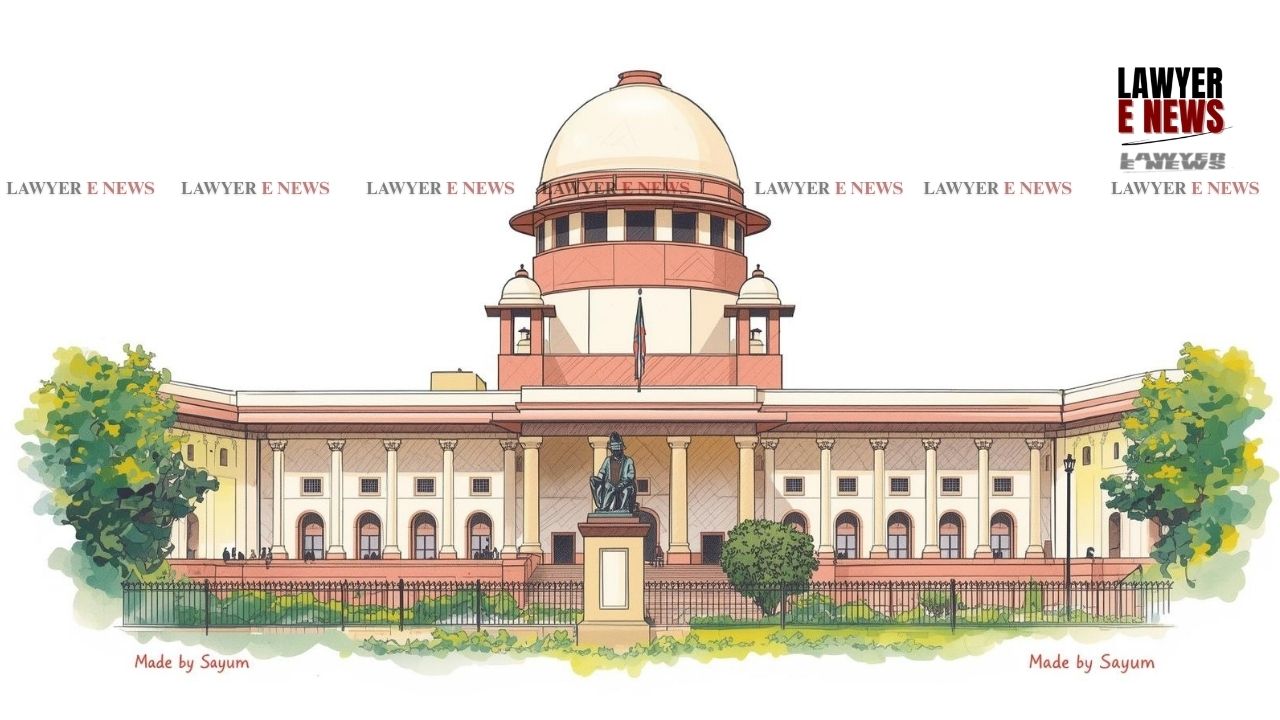
“Continuance of the marital bond would serve no meaningful purpose,” In a decisive application of its plenary powers under Article 142 of the Constitution, the Supreme Court of India on December 18, 2025, dissolved a 22-year-old marriage that had seen no cohabitation for nearly two decades. Despite a categorical denial of cruelty and opposition to divorce by the wife, the Court held that the marriage had irretrievably broken down, warranting exceptional intervention in the interests of justice.
The Bench of Justice Vikram Nath and Justice Sandeep Mehta allowed the appeal filed by Jatinder Kumar, setting aside concurrent decisions of the Trial Court (dated August 14, 2012) and the Punjab and Haryana High Court (dated February 28, 2014), both of which had rejected his plea for divorce under Section 13 of the Hindu Marriage Act. The Supreme Court instead exercised its extraordinary constitutional jurisdiction to grant a decree of divorce under Article 142, facilitating closure for both parties.
“Parties have lived apart for two decades – no point in prolonging the agony,” says Supreme Court
The parties, both government school teachers, were married in 2003. Their marital life, however, quickly deteriorated. According to the husband, the wife left the matrimonial home in 2005 and never returned, with no attempts at reconciliation despite a prior petition under Section 9 (Restitution of Conjugal Rights). His subsequent petition for divorce on grounds of cruelty and desertion was dismissed by the Trial Court, citing lack of sufficient proof.
Upholding the dismissal, the Punjab and Haryana High Court also rejected his appeal. Undeterred, the appellant approached the Supreme Court, where both parties appeared in person and were given an opportunity to settle the matter through mediation, which failed.
“At this stage, there appears to be no possibility of reconciliation between the parties. The continuance of the marital bond, in such circumstances, would serve no meaningful purpose and would only prolong the agony of both parties,” the Court observed.
The Court took note of the prolonged separation of nearly 20 years, the failure of reconciliation, and the absence of any shared life, to conclude that irretrievable breakdown of the marriage was evident.
“Even in the face of denial, ends of justice justify invoking Article 142”
While the respondent-wife opposed the divorce, denying all allegations and asserting that the husband had not made sincere efforts at reconciliation, the Supreme Court clarified that complete justice under Article 142 can still be rendered in such situations.
“Despite opportunities, including reference to the Supreme Court Mediation Centre, no amicable settlement could be arrived at. The strain in the marital relationship is evident. This is a fit case where the marriage has irretrievably broken down,” the Court held.
Thus, invoking Article 142, the Court overrode procedural hurdles and personal resistance, upholding the principle that law cannot compel an emotionally dead marriage to survive in perpetuity, especially when no shared marital life exists for decades.
₹20 Lakh Alimony Directed as One-Time Settlement
On the issue of permanent alimony, the Court took into account the financial parity between the parties — both being employed in government schools in Punjab. While the husband initially offered ₹15 lakhs, the Court enhanced the amount to ₹20 lakhs, calling it a “just and reasonable amount” given the long separation and to secure a clean break.
“A sum of ₹20,00,000/- would be a just and reasonable amount towards permanent alimony, payable as a one-time settlement,” the Court directed, ordering the husband to pay the amount within two months.
The wife was asked to provide necessary bank details, and the Registry of the Court was directed to draw up the divorce decree upon proof of payment.
Closure of All Civil and Criminal Litigation Ordered
Further, to prevent any lingering litigation or future disputes, the Court directed that:
“Any civil or criminal proceedings, if still pending between the parties, shall stand closed,” upon compliance with the alimony payment.
This ensures that the divorce decree brings not only marital closure, but also litigation closure, enabling both parties to move on with finality.
Another Step in Evolving Jurisprudence on Article 142 and Irretrievable Breakdown
This ruling reinforces a consistent line of jurisprudence where the Supreme Court has invoked Article 142 to dissolve marriages beyond repair, even in the absence of mutual consent or clear statutory grounds. The Court prioritized the realities of the relationship over technicalities, demonstrating that where emotional and practical ties have long dissolved, legal recognition must follow.
The decision also reflects a humane approach to matrimonial litigation, protecting parties from enduring unending and futile legal battles, especially where the marriage is only alive in name.
Date of Decision: December 18, 2025