-
by sayum
26 August 2026 4:40 AM







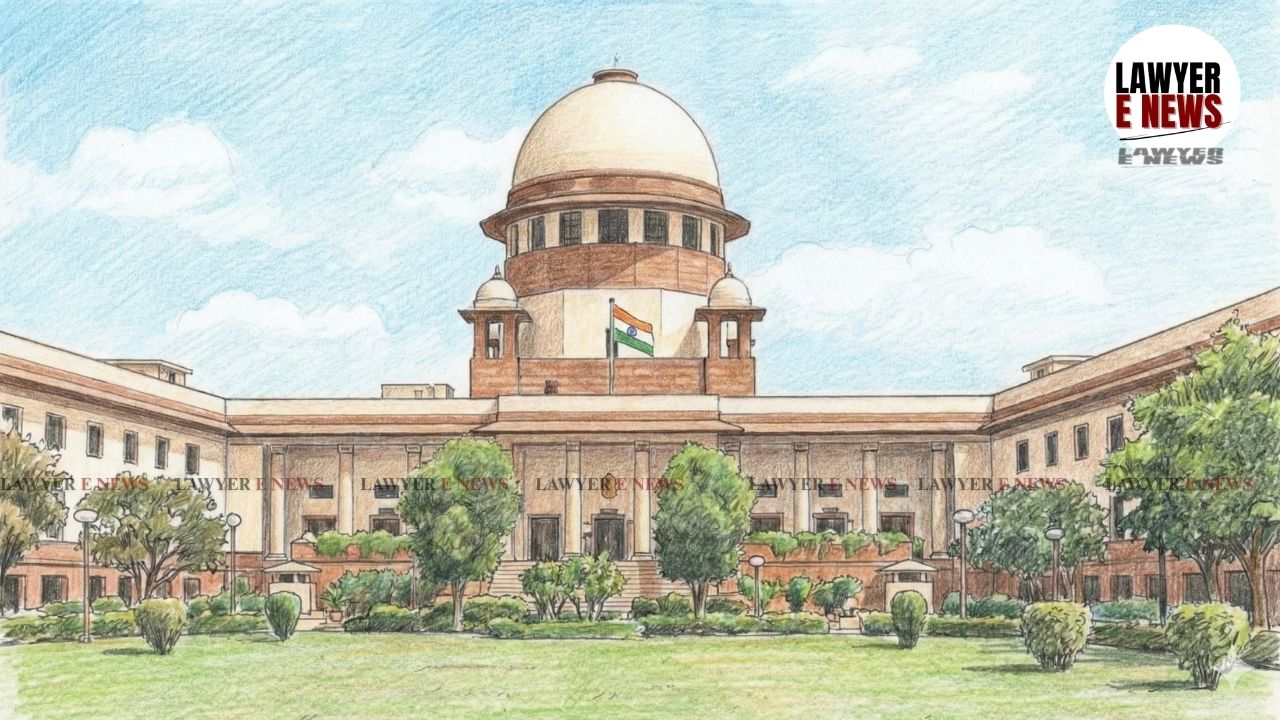
“‘After 2019, a Driving Licence Does Not Survive Even for One Day Beyond Expiry’ — Supreme Court Draws a Hard Line”, On 18 December 2025, the Supreme Court of India delivered a decisive and far-reaching ruling in Telangana State Level Police Recruitment Board v. Penjarla Vijay Kumar & Ors., settling a long-standing controversy over eligibility for government driver posts.
A Bench of Justice Ahsanuddin Amanullah and Justice S. V. N. Bhatti held that a driving licence which expires and is later renewed cannot be treated as “continuous”, even if the renewal is granted within one year of expiry. Interpreting recruitment conditions in the light of the Motor Vehicles (Amendment) Act, 2019, the Court ruled that “continuously” means uninterrupted legal capacity to drive, and that post-2019, “the licence does not continue even for a single day after expiry.”
Allowing the appeals filed by the Telangana State Level Police Recruitment Board, the Supreme Court set aside the Telangana High Court’s judgments and dismissed the writ petitions filed by candidates whose licences had gaps in validity.
“‘Continuously’ Cannot Be Read Out of the Advertisement’: Court Restores the Sanctity of Recruitment Conditions”
The case arose from recruitment notifications dated 25 April 2022 and 20 May 2022, issued to fill 325 driver posts in the Police Transport Organisation and the Disaster Response and Fire Services Department of Telangana. A core eligibility condition required candidates to have “possessed a valid LMV (Transport)/HMV driving licence continuously for a full period of two years and above as on the date of notification.”
Several candidates were disqualified because their driving licences had expired during the two-year window, although they were renewed later. These candidates approached the Telangana High Court, which accepted the argument that renewal related back to the date of expiry and therefore treated the licences as continuous.
Reversing this view, the Supreme Court held that such an interpretation empties the word “continuously” of all meaning. The Bench observed that if mere possession of a licence at any time in the past two years were sufficient, “the use of the word ‘continuously’ in the notification would be redundant.” Courts, the judgment stressed, must give full effect to every word used by the recruiting authority.
“‘The Legislature Has Spoken Clearly’: No Grace Period After the 2019 Amendment”
A central issue before the Court was the interpretation of Sections 14 and 15 of the Motor Vehicles Act, 1988, after their amendment in 2019. The Bench noted that prior to the amendment, Section 14 contained a proviso under which a licence remained effective for 30 days after expiry. This proviso was consciously deleted by Parliament.
The Court made its position unequivocal:
“Section 14 of the Act, as it stands today, does not provide for the licence to continue after its expiry even for a single day.”
Explaining Section 15, the Court clarified that it merely provides a window for renewal, not a continuation of legal validity during the gap period.
“Section 15 only extends the period within which an expired licence may be renewed; it does not erase the legal disability during the interregnum.”
Rejecting the theory of retrospective continuity, the Bench held that renewal cannot be used to pretend that the licence never lapsed. Once a licence expires, the holder is legally barred from driving until renewal is actually granted.
“‘Driving Is Not Just a Paper Qualification’: Experience and Regular Practice Matter”
The Supreme Court underscored the nature of the posts involved, noting that these were not ordinary clerical appointments but driver positions in police and disaster-response services.
The Bench observed:
“Driving is not merely a qualification on paper but involves hands-on experience coupled with regular practice.”
A gap in licence validity necessarily implies a statutory interruption in lawful driving, which directly impacts the experience and competence expected from candidates entrusted with emergency and law-enforcement vehicles.
“‘Passing a Driving Test Cannot Cure Ineligibility’: Equality at the Recruitment Threshold”
The respondents argued that since candidates had to clear a driving test at a later stage, minor gaps in licence validity should not matter. The Court firmly rejected this contention.
It held that threshold eligibility cannot be diluted by later stages of selection, warning that such an approach would unfairly benefit those who applied despite being ineligible, while prejudicing similarly placed candidates who did not apply at all, believing themselves disqualified.
In strong terms, the Court cautioned:
“Allowing such candidates to gain eligibility later would violate the doctrine of equality, the backbone of our Constitution.”
The driving test, the Court clarified, is an additional filter, not a substitute for the minimum eligibility prescribed in the advertisement.
Concluding the matter, the Supreme Court allowed all the appeals, set aside the Telangana High Court’s Division Bench judgment dated 03 October 2023 and the Single Judge’s interim orders dated 13 March and 28 March 2023, and dismissed all underlying writ petitions.
The Court directed the Telangana State Level Police Recruitment Board to complete the recruitment process within three months, bringing finality to the dispute.
The ruling sends a clear message across India’s recruitment landscape: after the Motor Vehicles (Amendment) Act, 2019, a driving licence lapses the moment it expires, and no subsequent renewal can manufacture “continuity” where the law recognizes none.
Date of Decision: 18 December 2025