-
by sayum
26 August 2026 4:44 AM







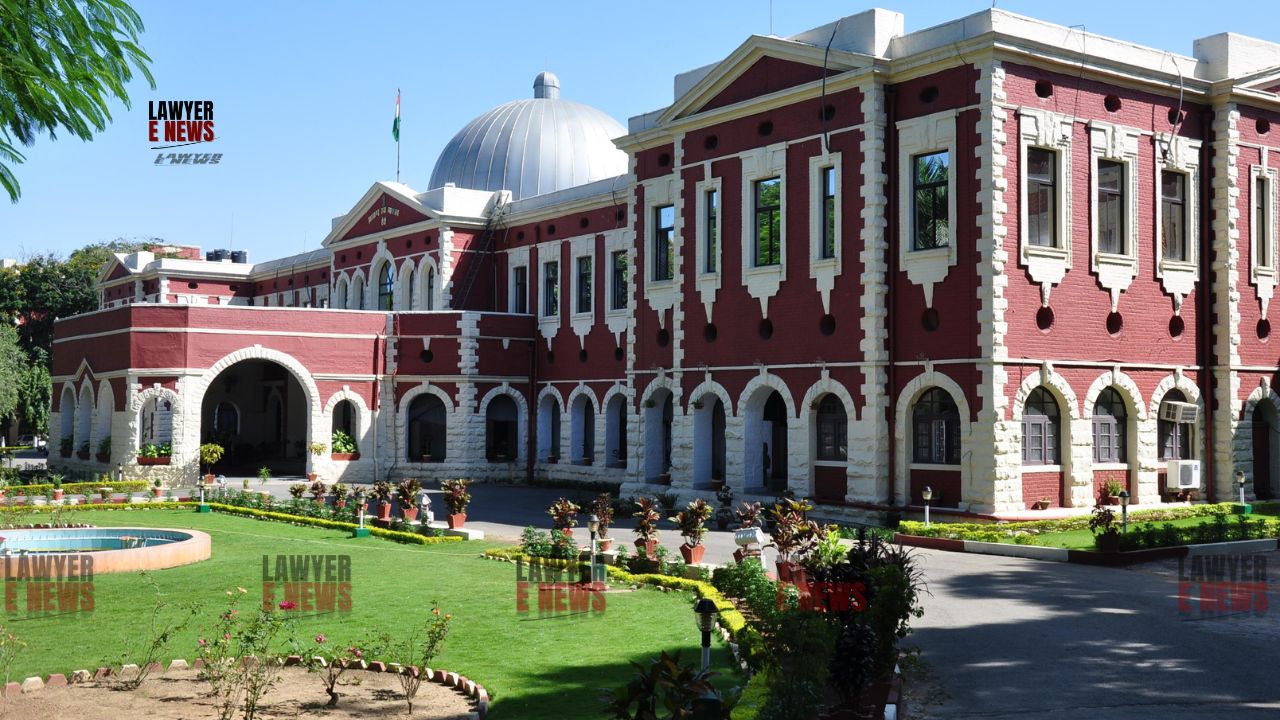
In a latest Order High Court of Jharkhand at Ranchi delivered a reportable order in W.P.(PIL), Court on its Own Motion v. State of Jharkhand & Ors., arising from a letter by a victim’s wife alleging illegal arrest, custodial torture, and threats of a “false case”. Treating the letter as a suo motu PIL, the Court recorded a prima facie finding of custodial beating, condemned the absence of CCTV cameras in the concerned police station as a “blatant” violation of binding Supreme Court directions, and directed the State to pay ₹1,50,000 as interim compensation—with a clear instruction that the amount be recovered from erring officials/officers.
The Bench’s central message is uncompromising: “Every illegal detention irrespective of its duration, and every custodial violence irrespective of its degree and magnitude, is outright condemnable and per se actionable.”
“We are prima facie of the opinion that this is a case of custodial torture and beating”: Court rejects the ‘villagers beat him’ narrative—at least at first blush
The State attempted to project that the injuries were due to a clash with villagers. The Court refused to accept that explanation at the interim stage. It leaned heavily on the contemporaneous complaints, the letter addressed to the President of India, repeated representations to multiple authorities, and the photographs annexed to the petition, concluding: “Even though the respondent would have this Court believe that the husband of the petitioner was beaten up by the villagers, however, we are prima facie of the opinion that this is a case of custodial torture and beating.”
What strengthened the Court’s view was the consistency and immediacy of the allegations. The Bench recorded that letters with the “same” contents were addressed to a spectrum of authorities—police leadership, district administration, and the Jharkhand and National Human Rights Commissions—soon after the incident. The Court also recorded a striking evidentiary inference from the images: “the photographs appended with the petition clearly indicate that the injuries… would only be inflicted if the person is in custody.”
“We deem it appropriate to treat this letter as a writ petition in the nature of Public Interest Litigation”: Suo motu PIL on a letter alleging illegal arrest, torture, threat of false implication
The proceeding began not with formal pleadings but with a letter by Bhanumati Mahto complaining of illegal arrest, torture, and threats of false implication of her husband. On 05 December 2025, the Court took cognizance and registered it as a PIL, directing the Superintendent of Police to appear “along with the relevant records and also recordings of DVR of the CCTV Cameras installed at the concerned Police Station.”
That direction—routine in rights-sensitive custodial allegations—became central when the State’s response was that no CCTV existed at all in the police station.
“Since there is no CCTV Camera installed… the recordings thereof could not be produced”: A rights case turns into a compliance indictment
When the matter was taken up on 08 December 2025, the SP appeared and stated: “since there is no CCTV Camera installed in the concerned police station, therefore, the recordings thereof could not be produced.” The Bench treated it as more than a missing exhibit; it treated it as an institutional failure. Notably, the Court recorded that the DGP was present in court in another case, and the Bench “interacted with her” and informed her of “the blatant violation of human rights in the State of Jharkhand”, noting that this was “the second case… within 48 hours”, and expressing the expectation that corrective directions would be issued “forthwith.”
The Court then connected the missing CCTV to binding Supreme Court jurisprudence, pointing out that despite repeated directions culminating in the Paramvir Singh Saini line, the State had still not installed CCTV cameras widely—and was now seeking time up to 31 December 2025 in other proceedings.
“The police even managed to get a certificate… ‘clinically, medically fit for custody’”: Magistrate’s injury recording defeats a ‘managed’ fitness certificate
One of the most damning parts of the order concerns the mismatch between the medical certificate and the Magistrate’s own contemporaneous observations when the accused was produced for remand. The Bench noted that a certificate dated 19.11.2025 described injuries merely as “bruising seen over arms, back, buttock, legs and face” and declared the victim “clinically, medically fit for custody.”
Against this, the Court relied on the Additional Chief Judicial Magistrate, Chandil’s remand order which recorded multiple injuries, including: “injury mark on his back and two hands, cut injury on his left ear, injury below the left eye and fracture of both legs.” The Magistrate also directed the officer-in-charge to submit an explanation regarding the injuries within seven days.
In words that will sting in any later accountability process, the High Court concluded: “we have no hesitation to conclude that it was the police which managed the medical certificate,” while adding a crucial rider for medical accountability: “but that does not exonerate the medical officer issuing the medical certificate clinically medically fit for custody.”
The Bench also recorded, with evident alarm, an assertion made at the bar: the court of the ACGM was on the first floor and the injured person “was made to walk to the court despite his fractured legs.” The Court termed the conduct “probably a most unprecedented demonizing behavior on the part of the police perhaps one of the worst crime in a civilized society governed by the rule of law.”
“The State of Jharkhand has blatantly violated and openly flouted” Supreme Court’s CCTV directions: Court invokes Shafhi Mohammad–Paramvir Singh Saini compliance chain
The judgment traces the Supreme Court’s trajectory on videography/CCTV and oversight mechanisms, referencing D.K. Basu (2015) on the need for oversight mechanisms, Shafhi Mohammad (2018) on crime scene videography action plans, and the Paramvir Singh Saini orders directing CCTV installation and oversight committees.
The High Court’s finding is blunt: “the State of Jharkhand has blatantly violated and openly flouted the directions passed by the Hon’ble Supreme Court by not installing the CCTV Cameras in all the police station,” rejecting any attempt to justify absence of footage by pleading non-installation.
“Award of compensation… is an appropriate and effective remedy”: Interim ₹1.5 lakh ordered—State to pay first, recover from erring officers later
Relying on the public law compensation doctrine for Article 21 violations and specifically referring to Sube Singh v. State of Haryana, the Court held that some interim compensation was necessary because the suspension order itself “prima facie acknowledges the lapses” of police officials.
The operative direction is clear and coercive: “we direct the respondent State to pay, by way of interim compensation a sum of Rs. 1,50,000/-… within one week… which, at the first instance, shall be paid by the State Government but shall thereafter be recovered from the erring officials/officers.” The Court also clarified that this interim payment will not affect the victim’s right to seek additional compensation through civil/criminal remedies, including Section 357 CrPC compensation.
“No society can permit it”: Court’s constitutional sermon against third-degree methods and illegal detention
The Bench’s reasoning is anchored in constitutional protections under Articles 21, 22, and 20(3) and reaffirms the Supreme Court’s long line against custodial violence. It reiterated the core principle from D.K. Basu that “End cannot justify the means” and that law enforcement cannot do “behind the closed doors precisely what the demands of our legal order forbid.”
The judgment also quotes a powerful Supreme Court admonition (Kishore Singh Ravinder Dev): “Nothing is more cowardly and unconscionable than a person in police custody being beaten up and nothing inflicts a deeper wound on our constitutional culture than a State official running berserk regardless of human rights.”
“Director, Health Services… will hold an enquiry”: Departmental probe ordered into the allegedly false “fit for custody” certificate
Beyond police accountability, the Court widened the lens to medical complicity/negligence. It directed the Director, Health Services, Department of Health, Medical Education and Family Welfare, Government of Jharkhand to hold an inquiry “against the erring medical officer… as to on what basis he issued the medical certificate… without making a mention of… fracture in both legs,” and to file a report “well before the next date of hearing.”
What the Court ordered next: pleadings, monitoring, and a return date
The State was directed to file a counter affidavit within four weeks. The matter was listed on 07 January 2026, with a direction that a copy of the order be sent for compliance to the Health Directorate.
Date of Decision: 11/12/2025