-
by sayum
24 August 2026 3:22 PM







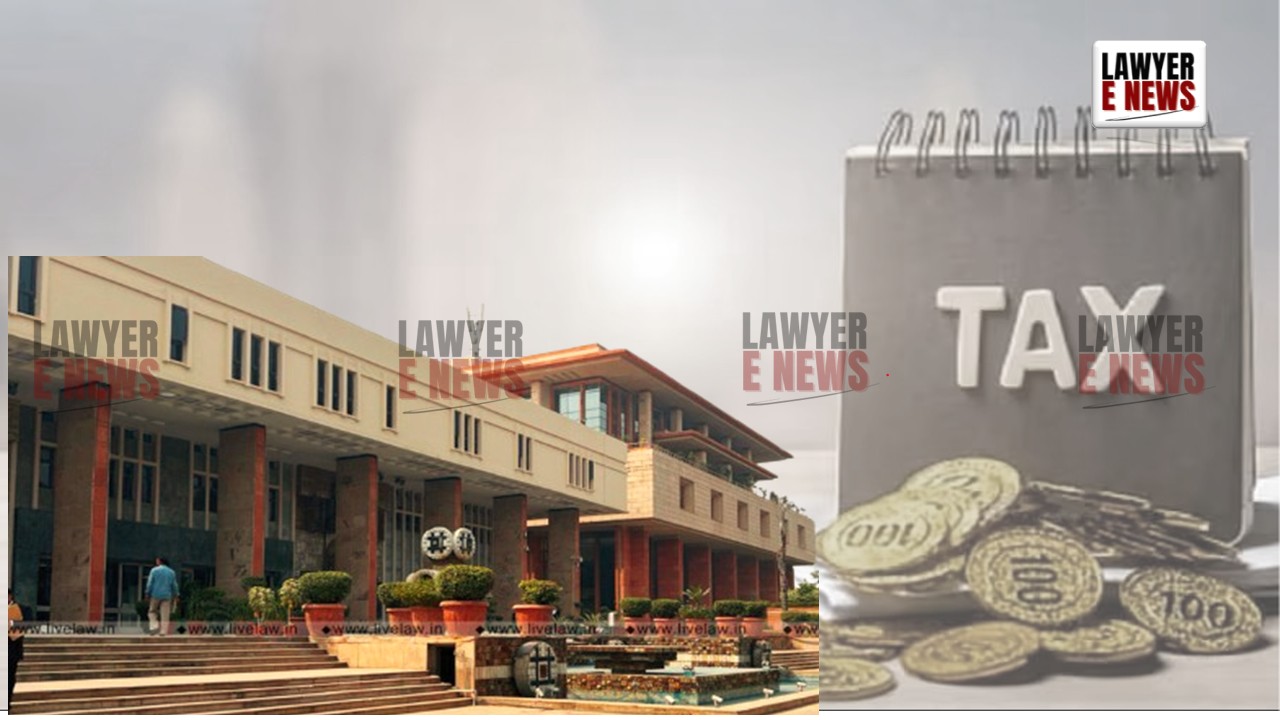
“The judgment in TKS Builders still holds the field within the Delhi jurisdiction and continues to bind coordinate benches until stayed or overruled by the Supreme Court” – Delhi High Court delivered a significant ruling in a batch of writ petitions led by Inder Dev Gupta & Ors. v. Assistant Commissioner of Income Tax, Central Circle 2, rejecting the challenge to reassessment notices issued under Section 148 of the Income Tax Act, 1961 by Jurisdictional Assessing Officers (JAO). The Division Bench comprising Justice V. Kameswar Rao and Justice Vinod Kumar held that both the JAO and the Faceless Assessing Officer (FAO) under the National Faceless Assessment Centre (NFAC) possess concurrent jurisdiction to initiate reassessment proceedings, even after the enactment of Section 151A and the introduction of the 2022 Faceless Assessment Scheme.
This judgment reinforces the Delhi High Court’s earlier precedent in TKS Builders Pvt. Ltd. v. ITO, and firmly rejects the contention that only FAOs can initiate reassessment notices under the faceless regime. The decision carries substantial weight in light of conflicting decisions from other High Courts and ongoing litigation before the Supreme Court on the same issue.
“Dismissal of SLP Without Reasons Cannot Override Precedent”: Court Clarifies Non-Binding Nature of SC Orders Without Speaking Judgments
The petitioners — various charitable and educational societies — approached the Delhi High Court under Article 226 of the Constitution, assailing reassessment notices issued under Section 148 of the Income Tax Act, 1961. These notices were issued by the respective Jurisdictional Assessing Officers (JAOs) post-enactment of Section 151A of the Act and the CBDT’s E-Assessment of Income Escaping Assessment Scheme, 2022. The core claim was that following the statutory introduction of faceless assessments, only the FAO functioning under NFAC could validly issue such notices, rendering any action by JAOs ultra vires and void ab initio.
It was argued that the entire reassessment regime had shifted into a centralized and faceless framework, thereby divesting jurisdiction from physical tax offices.
The primary legal issue before the Court was whether the introduction of Section 151A and the 2022 Scheme under the faceless regime extinguished the authority of the JAO to initiate reassessment proceedings under Section 148.
Petitioners, represented by Mr. Kumail Abbas, heavily relied on multiple High Court judgments, particularly from the Bombay, Telangana, and Madras High Courts (Hexaware Technologies Ltd., Ganesh Nivrutti Jagtap, Dadha Pharma LLP, Arene Life Sciences, among others), which had uniformly held that only FAOs could issue such notices post-Section 151A. Petitioners emphasized that the Supreme Court had dismissed the Revenue's SLP in Deepanjan Roy v. ADIT, arguing that the legal position against JAO jurisdiction now stood affirmed.
However, the Delhi High Court decisively rejected this premise, observing:
“The dismissal of a special leave petition in limine without assigning reasons cannot be treated as affirmation of the High Court's reasoning, nor can it be construed as a declaration of law under Article 141 of the Constitution,” [Para 20, quoting Fuljit Kaur v. State of Punjab and Kunhayammed v. State of Kerala].
The Court further cited Khoday Distilleries, reiterating that in the absence of a speaking order or grant of leave to appeal, the doctrine of merger does not apply, and the High Court’s judgment does not merge into the Supreme Court’s dismissal order.
Thus, the Delhi High Court concluded that the dismissal of the Revenue’s SLP in Deepanjan Roy did not render TKS Builders per incuriam or non-binding.
The Court strongly reaffirmed its prior rulings in TKS Builders Pvt. Ltd. v. ITO and other cases (PC Jeweller Ltd., Mala Petrochemicals, Mehak Jagga, Empire Fasteners), which had upheld the concurrent jurisdiction of the JAO and the FAO under the current statutory and administrative framework.
“This Court has maintained a consistent position that both JAO and FAO possess concurrent jurisdiction to initiate reassessment proceedings under Section 148 of the Act,” the Bench observed. [Para 17]
The Court emphasized that no stay had been granted by the Supreme Court against the operation of TKS Builders, and therefore, the judgment remains binding within the territorial jurisdiction of the Delhi High Court.
Addressing the argument that interim stay orders by the Supreme Court in related SLPs (e.g., All India Kataria Education Society, Yukti Export) should apply by parity, the Court rejected the notion that such interim protection amounted to a stay on the underlying High Court judgment.
“The Supreme Court has not stayed the effect of the orders passed by this Court based on TKS Builders... similar is the position with the SLP in P.C. Jeweller Ltd.,” the Bench noted. [Para 27]
The Court also declined to infer any implied reversal of its ratio in TKS Builders from these interim directions.
“We find that the SLP preferred against TKS Builders is still pending adjudication... As such, the judgment in TKS Builders would still hold the fort in Delhi,” the Court ruled emphatically. [Para 25]
The Delhi High Court dismissed all the writ petitions, holding that the JAO retains jurisdiction to issue reassessment notices under Section 148 of the Income Tax Act, even after the introduction of Section 151A and the 2022 Faceless Scheme. The Court also dismissed all pending applications as infructuous.
Significantly, the ruling fortifies the legal position within Delhi that until the Supreme Court expressly overrules TKS Builders, the concurrent jurisdiction model between JAO and FAO stands.
Date of Decision: November 21, 2025