-
by sayum
27 August 2026 3:32 PM







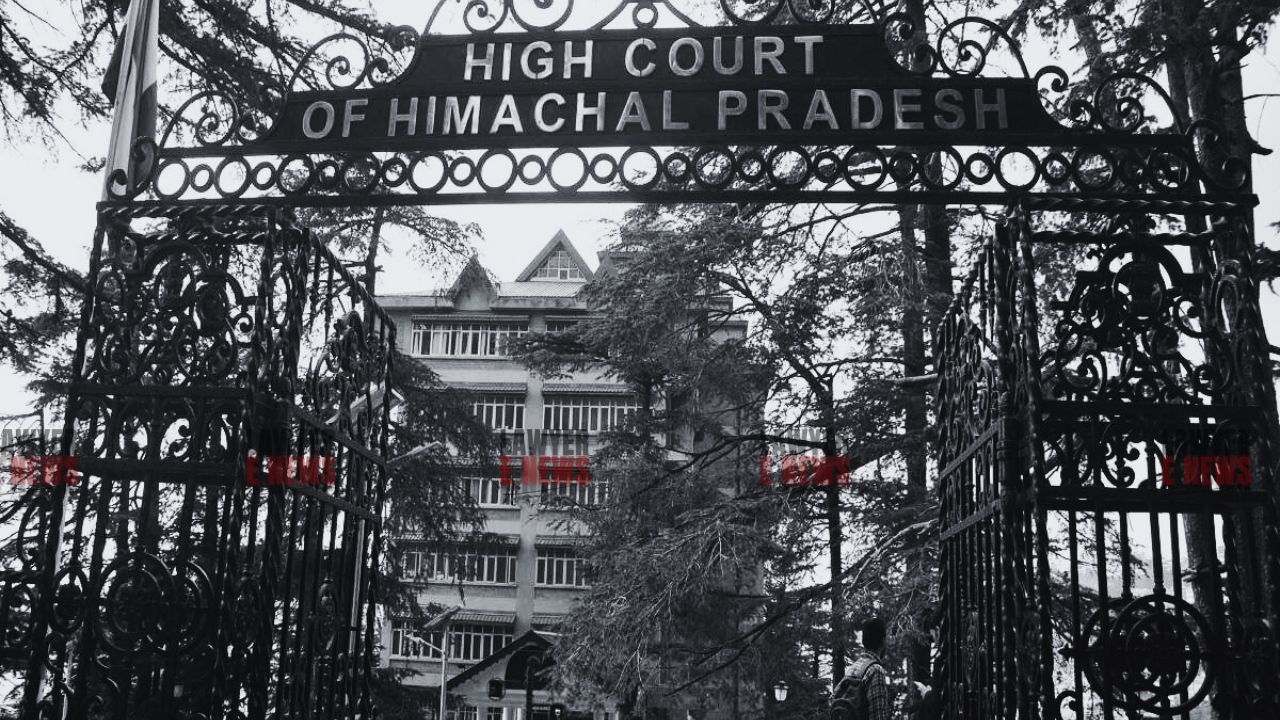
"Appellant had no authority to enforce the attendance of witnesses — it was for the Tribunal alone, which is empowered to enforce attendance and compel appearance", Himachal Pradesh High Court has partly allowed an appeal by Oriental Insurance Company, holding that a Motor Accident Claims Tribunal committed a serious procedural error in closing the insurance company's evidence without affording it reasonable opportunity, particularly when the Tribunal's own summons to a key witness had neither been returned served nor unserved — a situation that demanded coercive judicial action, not closure of evidence.
Justice Sushil Kukreja, while remanding the matter for fresh adjudication on the sole issue of the driver's driving licence validity, made clear that courts cannot penalise a party for the non-appearance of witnesses whom only the court itself has the authority to compel.
On 07.12.2007, Gauri Shankar was travelling in an auto bearing registration No. HP-500065 on the Solan-Subathu road when the vehicle fell downhill near Deothi due to the alleged rash and negligent driving of respondent No. 1-Hardev Singh. Gauri Shankar died of his injuries. His widow Vidya Devi, daughter Kumari Ranjana, son Gautam Thakur, and mother Shanti Devi filed a claim petition under Section 166 of the Motor Vehicles Act, 1988 seeking compensation from the driver, owner, and the insurer, Oriental Insurance Company Limited. The Motor Accident Claims Tribunal-II, Solan, awarded compensation of Rs. 3,63,696 with interest at 6% per annum and fastened liability on the insurance company. The insurer appealed, contending that the driver held no valid driving licence and that its evidence had been wrongly closed.
Legal Issues
The primary question before the High Court was whether the Tribunal had afforded the insurance company a reasonable opportunity to lead its evidence on the issue of the driver's driving licence validity — Issue No. 4 framed by the Tribunal — before closing that evidence and rendering findings adverse to the insurer.
Court's Observations and Judgment
On the Closure of Evidence Without Reasonable Opportunity
The High Court undertook a careful examination of the Tribunal's own orders to trace what had transpired. On 01.07.2013, the Tribunal had directed the insurance company to take dasti summons for the Licensing Authority, Mathura, and produce the witness on the next date. Crucially, on that very date, the Tribunal itself recorded that the "summons issued to the respondent not received back served or unserved." Despite this, on 20.07.2013, the Tribunal closed the insurance company's evidence on the bare observation that "sufficient time has already been granted."
The High Court found this sequence deeply troubling. When summons sent by the Tribunal had not been returned either served or unserved, the legal obligation was squarely on the Tribunal — not the insurance company — to proceed under Order 16 of the Code of Civil Procedure and take coercive measures to secure the witness's presence. "The appellant had no authority to enforce the attendance of the witnesses — rest it was for the learned Tribunal which alone is empowered to enforce attendance and compel the appearance of the witnesses, and therefore, the Tribunal was duty bound to do so," the Court held, relying on its earlier coordinate bench decisions in Oriental Insurance Co. Ltd. v. Ramila & Others (FAO No. 223 of 2015) and ICICI Lombard General Insurance Co. Ltd. v. Soun Khatun & Others (CMPMO No. 294 of 2014).
The Court quoted with approval the powerful observation from the ICICI Lombard case: "Courts are respected not on account of their power to legalize injustice on technical grounds but because they are capable of removing injustice and are expected to do so — when substantial justice and technical considerations are pitted against each other, cause of substantial justice deserves to be preferred, for the other side cannot claim to have a vested right in injustice being done."
On the Scope of Remand
The Court was careful to confine the remand to its narrowest possible scope. Only Issue No. 4 — pertaining to the validity of the driver's driving licence — was remitted for fresh adjudication after giving the insurance company a full and fair opportunity to lead its evidence with all necessary assistance of the Tribunal. The findings on all other issues, including negligence and quantum of compensation, were expressly directed to remain undisturbed.
The Court further directed that if the witness, despite service, failed to appear before the Tribunal on remand, the Tribunal "shall not hesitate to take coercive measures to secure his presence." Given that the accident dates back to 2007, the Tribunal was directed to decide the matter expeditiously and in no event later than 31st October, 2026.
Date of Decision: 10.04.2026