-
by sayum
25 August 2026 6:19 AM







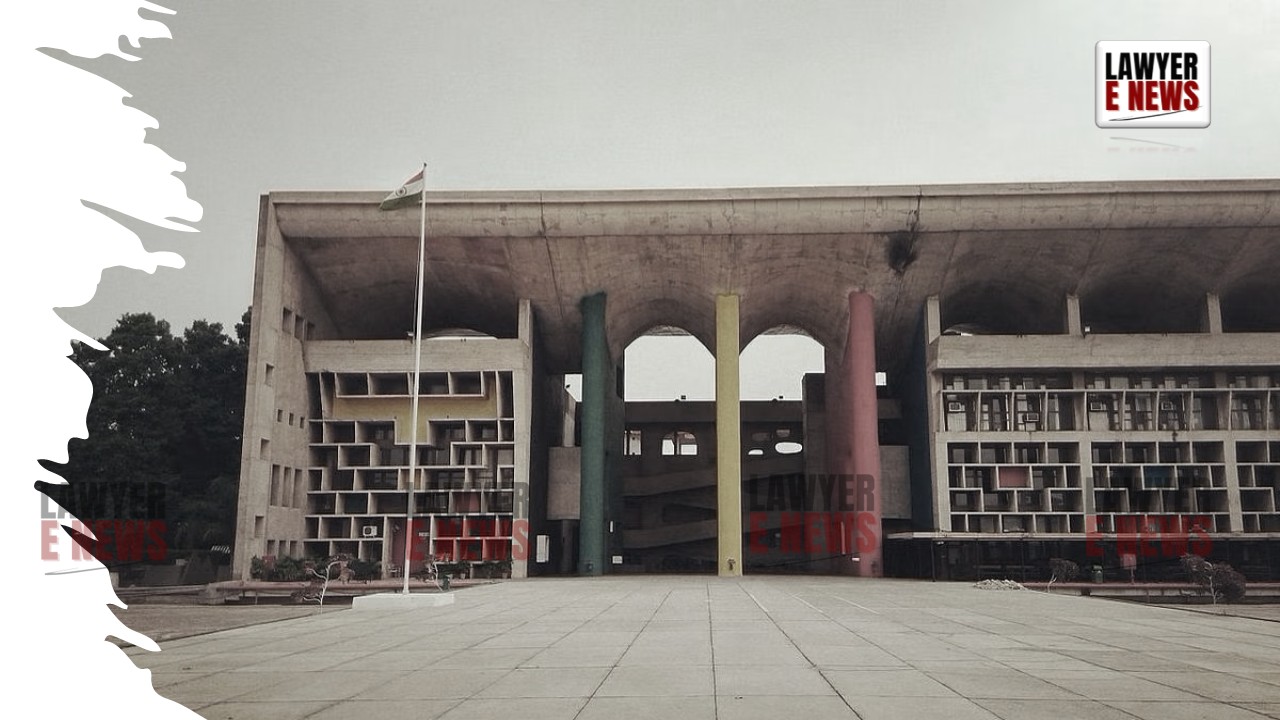
"Corruption Is Not Just a Private Fraud When It Touches the Bench—It Is an Existential Threat to the Institution Itself", In a significant ruling underscoring the gravity of corruption within the justice system, the Punjab and Haryana High Court dismissed the regular bail application of Advocate Jatin Salwan, who was arrested by the Central Bureau of Investigation (CBI) for allegedly demanding ₹30 lakhs as bribe to secure a favourable judicial order in a matrimonial dispute. The Court held that the case "strikes at the very foundation of the administration of justice" and rejected arguments based on age, health, and length of custody.
Justice Sumeet Goel held: "When an advocate, who is considered as an officer of the Court, solicits or accepts illegal gratification under the pretext of influencing a judicial outcome, the act is not merely a private fraud but a sacrilegious affront to the judiciary as an institution." [Para 8.1]
The Court emphasized that the gravity of the allegations, the potential erosion of public trust in the judiciary, and the prima facie material placed on record made a strong case against grant of bail at this stage.
Section 7A of PC Act Applies Even to Non-Public Servants—Prima Facie Offence Made Out Against Advocate
A crucial contention by the petitioner was that Section 7A of the Prevention of Corruption Act, 1988, could not apply to him as he was not a public servant. The Court firmly rejected this, clarifying the scope of the provision:
"The argument that the petitioner is not a public servant does not help him at this stage as Section 7A... squarely covers any person who accepts or obtains undue advantage to influence a public servant by corrupt or illegal means." [Para 8]
Justice Goel reiterated that the section covers intermediaries, and prima facie evidence showed that the petitioner, while claiming influence over a judge, had demanded and partially received illegal gratification through a co-accused.
Petitioner Caught in CBI Trap—Allegation Supported by Recordings and Recovery of Bribe
According to the prosecution, the CBI laid a trap on 14.08.2025 following a written complaint filed by Harsimranjit Singh. The complainant alleged that Advocate Jatin Salwan demanded a bribe of ₹30 lakhs in exchange for a favourable court order in a case involving the complainant’s cousin.
Following verification of the complaint—including recorded telephonic conversations, the CBI registered an FIR under Section 61(2) of the Bharatiya Nyaya Sanhita, 2023 and Section 7A of the Prevention of Corruption Act. During the trap, the co-accused Satnam Singh allegedly accepted ₹4 lakhs on behalf of the petitioner. The amount was recovered, and both were arrested.
Court Reiterates Strict Bail Parameters in Corruption Cases
Citing the Supreme Court’s precedent in State through CBI v. Amarmani Tripathi and others, the High Court reiterated the well-settled principles guiding bail in corruption cases:
“Offences involving corruption, particularly those undermining institutional integrity, require a cautious and stringent approach while considering the grant of bail.” [Para 8]
The Court noted that the petitioner's long professional experience and age (approximately 70 years), while relevant, could not dilute the gravity of the alleged offence:
“Such allegations, if found true, do not affect only the complainant but have a wider impact on public trust in the justice delivery system.” [Para 8]
Medical Grounds Rejected—No Serious Ailment Found Justifying Release
The petitioner had claimed that he suffered from cardiac ailments and anxiety, but the Court noted:
“Upon directions... the medical condition of the petitioner was got assessed by the CBI and nothing has come forth which may entitle the petitioner to be afforded regular bail on medical ground(s).” [Para 8]
The Court also brushed aside the argument that continued custody was unnecessary after filing of the chargesheet, stating that the institutional impact of the offence outweighs the duration of incarceration.
Pendency of Earlier NDPS Case Considered While Refusing Bail
The Court also took note of the petitioner’s involvement in another criminal case—FIR No. 83/2016, registered under the NDPS Act and IPC, observing that antecedents are a relevant factor in bail adjudication:
“The petitioner being an accused in another FIR... and the larger public interest involved, this Court is of the considered view that the petitioner does not deserve the concession of regular bail.” [Para 9]
Constitutional Morality and Institutional Sanctity Are Paramount, Says Court
Opening the judgment with an evocative reference to the Preamble of the Constitution, the Court highlighted that corruption in the judicial process is not merely a criminal act but an attack on the democratic values and constitutional ethos:
“Corruption is a corrosive acid that eats away these pillars [of democracy]... It assumes a more harrowing significance when the menace of corruption casts a shadow over the judiciary.” [Para 6]
The judgment quoted Manoj Narula v. Union of India and Niranjan Hemchandra Sashittal v. State of Maharashtra to affirm the view that corruption cannot be judged by degree, especially when it threatens the credibility of judicial institutions.
Bail Denied for Now, Fresh Application Permitted After Examination of Key Witnesses
Although the petition was dismissed, the Court left the door open for the petitioner to reapply later:
“Liberty is reserved in favour of the petitioner to apply for regular bail afresh... after PW-Harsimranjit Singh (FIR-complainant) and PW-Sandeep Kaur (victim) are examined.” [Para 11]
Importantly, the Court clarified that its observations were confined to bail adjudication and shall not influence the trial proceedings.
Date of Decision: 02 February 2026