-
by sayum
28 August 2026 2:11 PM







“Failure to Disclose Material Facts and Seeking Parallel Relief Undermines the Sanctity of Judicial Hierarchy” – Supreme Court of India delivered a stern order staying all High Court orders which had modified the conditions of anticipatory bail granted to a person accused in 31 serious financial crimes. Emphasizing the primacy of judicial discipline and the integrity of appellate review, the Supreme Court held that the conduct of the accused—who secured modification of bail conditions to travel abroad while the Supreme Court was already seized of the bail order—amounted to “concealment of facts” and “disrespect for the hierarchical structure of Indian judiciary.”
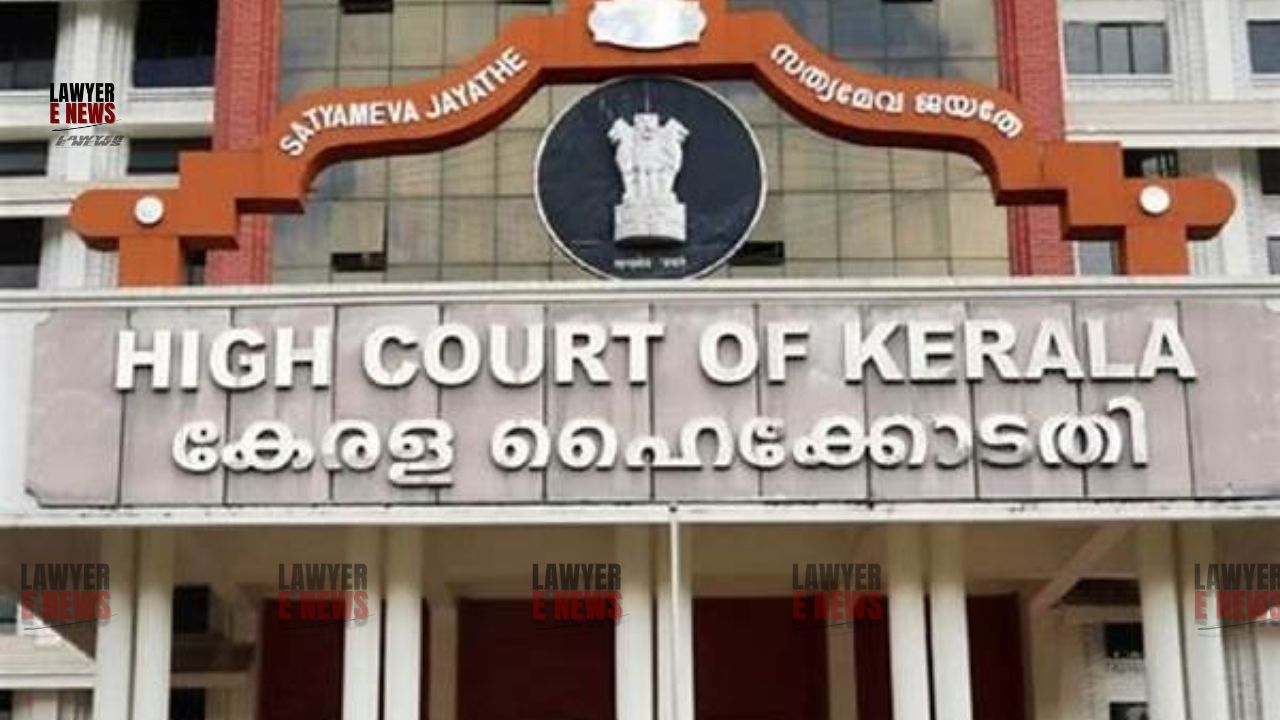
The Apex Court’s directions came while he aring a Special Leave Petition filed under Article 136 of the Constitution challenging the anticipatory bail granted by the Kerala High Court to Respondent No. 1, Anitha R. Nair, who is facing prosecution in over thirty First Information Reports under Sections 406 and 420 of the Indian Penal Code and Sections 21 and 23 of the Banning of Unregulated Deposit Schemes Act, 2019. The Court made it clear that High Courts must not pass orders which can prejudice proceedings pending before the Supreme Court, especially in matters involving liberty and public interest.
“The High Court Still Remains the Younger Brother in the Judicial Family – It Cannot Act to Circumvent Proceedings Before the Elder”
The origins of the case lie in multiple criminal complaints alleging serious financial misappropriation and illegal deposit collection. The Kerala High Court had granted anticipatory bail to the respondent accused, imposing a travel restriction as one of the bail conditions. However, during the pendency of the SLP challenging the bail itself, the accused quietly moved the High Court again, seeking permission to travel abroad. This was granted by the High Court on 12 August 2025 and further clarified on 23 August 2025 by directing release of her passport. Crucially, these orders were obtained without disclosure to the Supreme Court, despite multiple hearings taking place in the interim.
The Supreme Court found this course of action deeply problematic. The Bench, comprising Justice J.K. Maheshwari and Justice Vipul M. Pancholi, observed that such conduct violated the principle of judicial comity and rendered the pending appeal potentially infructuous.
The Court held: “An order modifying the conditions of anticipatory bail runs contrary to the principles of judicial propriety and comity when the matter is under active consideration before this Court.”
The judgment cited Tirupati Balaji Developers (P) Ltd. v. State of Bihar, (2004) 5 SCC 1, to reinforce that although High Courts are courts of record and constitutionally independent, they are not expected to act in a manner that undermines the Supreme Court’s role in a unified judicial hierarchy. As quoted in the judgment:
“The High Court is not a court ‘subordinate’ to the Supreme Court… yet, in a unified hierarchical judicial system, the Supreme Court remains the elder brother... The appellate jurisdiction inherently carries with it a power to issue corrective directions binding on the forum below.”
“Despite Appearances in Supreme Court, There Was Total Silence About the Application for Modification – Grave Displeasure Expressed”
One of the most serious aspects that attracted the Supreme Court’s censure was the failure of Respondent No. 1 to inform the Court of her application for modification of bail. The accused had filed her modification plea before the High Court on 6 July 2025, yet continued to appear before the Supreme Court on 14 July, 25 July, and 25 August without mentioning it.
The Court noted with disapproval: “Even though the Crl.MC was filed on 06.07.2025, and the matter was heard by this Court thrice thereafter, no whisper was made about the relief sought before the High Court. The counter affidavit filed on 14.07.2025 is entirely silent on this aspect.”
The Court expressed its grave displeasure, observing that such suppression of material facts severely undermines the sanctity of judicial proceedings and may warrant the cancellation of bail altogether.
The Bench observed: “We would like to reserve our views in respect of the conduct of the respondent for the time being, while expressing our grave displeasure.”
Accordingly, a show cause notice was issued to Respondent No. 1, asking her to explain why her anticipatory bail should not be cancelled due to such concealment and misleading conduct.
"Granting Parallel Relief Risks Judicial Chaos – Hierarchical Restraint Must Guide the Exercise of Jurisdiction"
Reinforcing the necessity of judicial self-restraint and avoiding conflicting jurisdiction, the Court relied on Chhavi Mehrotra v. DGHS, 1993 Supp (4) SCC 309, where it had previously deprecated the conduct of High Courts entertaining parallel proceedings on issues already under consideration before the Supreme Court. The Apex Court noted that parallel jurisdictional exercises lead to a breakdown of judicial discipline and public confidence.
As noted: “The High Court ought not to have exercised jurisdiction under Article 226 where the matter was clearly seized of by this Court… Judicial discipline would require that in a hierarchical system it is imperative that such conflicting exercise of jurisdiction should strictly be avoided.”
“We Stay All High Court Orders Modifying Bail Terms – Accused Must Surrender Passport and Seek Leave from this Court Before Traveling”
Taking immediate corrective action, the Supreme Court stayed the operation of the High Court’s orders in Crl.M.C. No. 6178/2025 and Crl.M.A. No. 1/2025, including the permission granted to the accused to travel abroad and the release of her passport. The Court directed that until further orders, the respondent cannot leave the country.
The Bench directed: “Respondent No. 1 – accused shall immediately surrender her passport and she shall not leave India without the permission of this Court.”
The respondent has been given three weeks to file a detailed response to the show cause notice, enclosing all documents filed before the High Court and the trial court. The matter is now listed for further orders on 26 September 2025.
A Cautionary Message on Maintaining Institutional Integrity and Respect for the Apex Court’s Jurisdiction
The Supreme Court’s decision in Sreeja D G & Others v. Anitha R. Nair & Another sends a strong and necessary message about the importance of judicial hierarchy, transparency before courts, and avoidance of procedural gamesmanship. The Apex Court has clarified that while liberty of an individual is paramount, it must not come at the cost of respect for process, hierarchy, and candour.
In a powerful reminder to litigants and High Courts alike, the Supreme Court has laid down that:
“When an order passed by the High Court is under challenge and notice has been issued by this Court, thereafter, if any application is filed for modification of the said order, the High Court must exercise restraint... and avoid passing orders which can prejudice or render infructuous the proceedings pending before this Court.”
The ruling is now expected to become a reference point in future matters involving bail, judicial propriety, and the boundaries of jurisdiction across forums.
Date of Decision: 4 September 2025