Employees Cannot Pick Favourable Terms and Reject the Rest: Bombay High Court Upholds SIDBI’s Cut-Off Date for Pension to CPF Optees Rules of the Game Were Never Changed: Delhi High Court Upholds CSIR’s Power to Prescribe Minimum Threshold in CASE-2023 Resignation Does Not Forfeit Earned Pension: Calcutta High Court Declares Company Superannuation Benefit as ‘Wages’ Under Law Fraud Vitiates Everything—Stranger Can File Independent Suit Against Compromise Decree: Bombay High Court Refuses to Reject 49-Year-Old Challenge at Threshold Mere Long Possession By One Co-Owner Does Not Destroy The Co-Ownership Right Of The Other: Madras High Court State Cannot Hide Behind An Illegal Undertaking: Punjab & Haryana High Court Questions Denial Of Retrospective Regularization Article 21-A Cannot Be Held Hostage to Transfer Preferences: Allahabad High Court Upholds Teacher Redeployment to Enforce Pupil–Teacher Ratio Arbitrator Cannot Rewrite Contract Or Travel Beyond Pleadings: Punjab & Haryana High Court Quashes ₹5.18 Crore Award Director’ in GeM Clause 29 Does Not Mean ‘Independent Director’: Gujarat High Court Sets Aside Technical Disqualification Section 25(3) Is Sacrosanct – Removal of a Trademark Cannot Rest on a Defective Notice: Delhi High Court Not Every Broken Promise Is Rape: Delhi High Court Draws Clear Line Between ‘Suspicion’ and ‘Grave Suspicion’ in False Promise to Marry Case Section 37 Is Not A Second Appeal On Merits: Delhi High Court Refuses To Re-Appreciate Evidence In Challenge To Arbitral Award Recovery After Retirement Is Clearly Impermissible: Bombay High Court Shields Retired Teacher From ₹2.80 Lakh Salary Recovery Paying Tax Does Not Legalise Illegality: Bombay High Court Refuses to Shield Alleged Unauthorized Structure Beneficial Pension Scheme Cannot Be Defeated By Cut-Off Dates: Andhra Pradesh High Court Directs EPFO To Follow Sunil Kumar B. Guidelines On Higher Pension Claims Equity Aids the Vigilant, Not Those Who Sleep Over Their Rights: Punjab & Haryana High Court Refuses to Revive 36-Year-Old Pay Parity Claim Students Cannot Be Penalised For Legislative Invalidity: Supreme Court Protects Degrees Granted Before 2005 Yash Pal Verdict Restructuring Without Fulfilment of Conditions Cannot Defeat Insolvency: Supreme Court Reaffirms Default as the Sole Trigger Under Section 7 IBC Section 100-A CPC Slams The Door On Intra-Court Appeals In RERA Matters”: Allahabad High Court Declares Special Appeal Not Maintainable Mental Distance Between ‘May Be’ and ‘Must Be’ Is Long: Patna High Court Acquits Six in Murder Case Built on Broken Chain of Circumstances Where Corruption Takes Roots, Rule of Law Is Replaced by Rule of Transaction: Punjab & Haryana High Court Denies Bail to DIG Harcharan Singh Bhullar Mere Voter List and Corrected SSC Certificate Cannot Prove Paternity: Andhra Pradesh High Court Rejects 21-Year-Old Bid for DNA Test in Partition Appeal Section 147 NI Act Makes Offence Compoundable At Any Stage: Karnataka High Court Sets Aside Concurrent Convictions in Cheque Bounce Case After Settlement Bald Allegations of Adultery Based on Suspicion Cannot Dissolve a Marriage: Jharkhand High Court Once a Document Is Admitted in Evidence, Its Stamp Defect Cannot Be Reopened: Madras High Court

High Court Directs Rigorous Probe into Allegations of Over-Invoicing in Power Projects by Top Corporates Adani and Essar

07 May 2024 8:19 AM

By: Admin


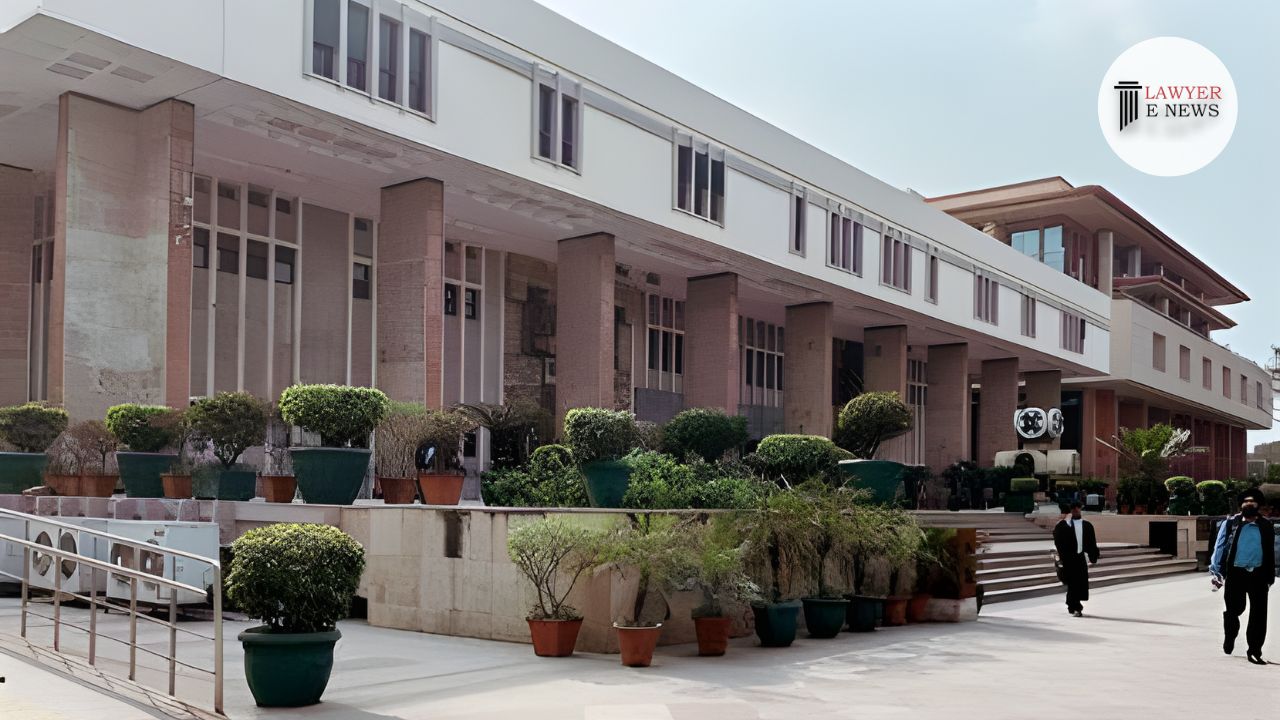
In a significant move towards ensuring transparency and accountability in the power sector, the High Court of Delhi has disposed of two public interest litigations (PILs), directing the Directorate of Revenue Intelligence (DRI) and the Central Bureau of Investigation (CBI) to conduct meticulous and expeditious investigations into allegations of over-invoicing by major corporate groups in the power projects.

The PILs, filed by the Centre for Public Interest Litigation and others, highlighted concerns over alleged over-invoicing in coal imports and equipment by companies within the Adani and Essar Groups. These practices, the petitioners claimed, led to inflated power tariffs and the illegal siphoning of funds.

In their judgment, the Hon’ble Mr. Justice Suresh Kumar Kait and Hon’ble Ms. Justice Neena Bansal Krishna observed, “In the peculiar facts of these cases, this Court finds it appropriate to direct the respondents to meticulously and expeditiously look into the allegations of the petitioners to unearth the actual factual position and take appropriate actions against the erring companies, if any, as per law.” This directive underscores the court’s commitment to unearthing the truth and ensuring justice in the face of complex financial allegations.

The DRI and CBI have been actively Investigating these allegations, issuing several Show Cause Notices and seeking international assistance through Letters Rogatory. The involvement of multiple companies and the complexity of transactions across different jurisdictions have made the investigation challenging.

The Ministry of Power, in its response, stated that power tariffs are determined through transparent processes, unaffected by the alleged inflated costs of projects. However, the court’s directive highlights the need for a deeper investigation into these claims to safeguard public interest and consumer rights.

This decision marks a crucial step in addressing concerns over corporate governance and financial ethics in India’s power sector. The outcome of these investigations is eagerly awaited, as it could have significant implications for the industry and its regulatory framework.

With the High Court’s directive, the DRI and CBI are expected to intensify their investigative efforts, bringing clarity and justice to a matter of significant public concern.

Date of Decision: 19th December 2023

CENTRE FOR PUBLIC INTEREST LITIGATION  AND ANR. VS  UNION OF INDIA AND ORS.

 

Latest Legal News