-
by sayum
06 November 2026 2:47 PM







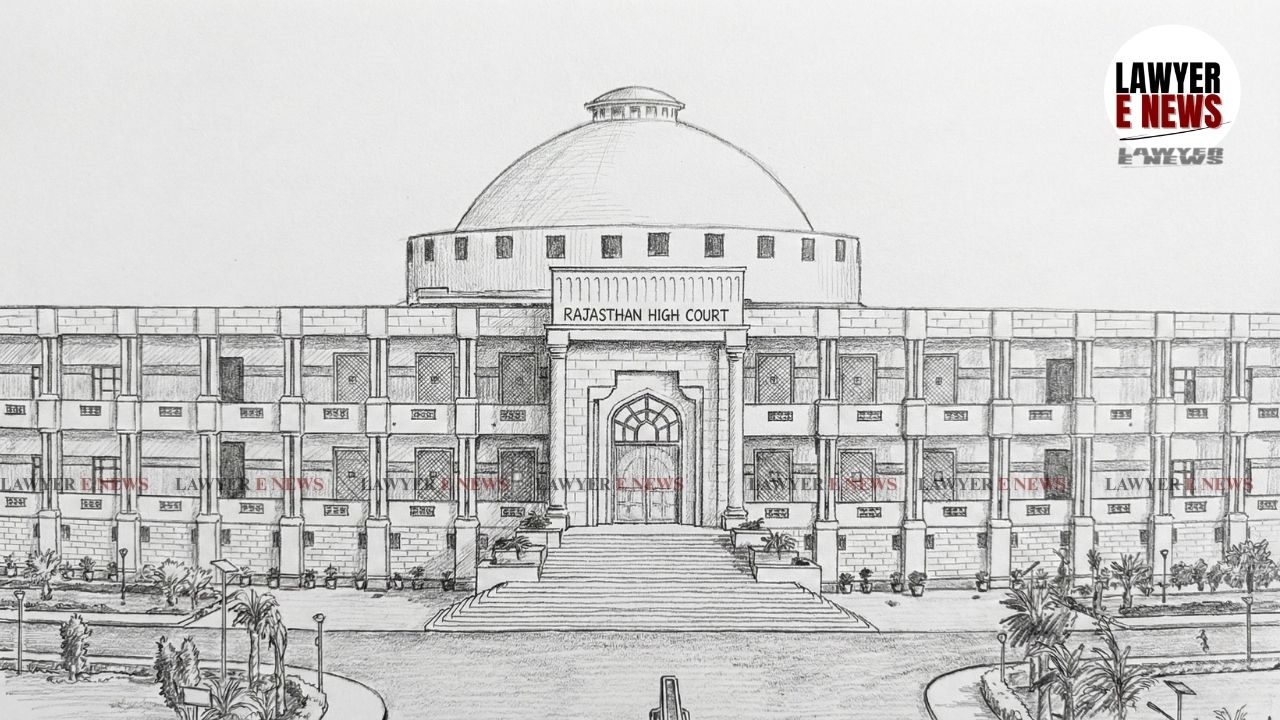
"Such intervention carries the potential to affect the subsequent stages of the election and, in the circumstances of the present case, would be inconsistent with the principle of judicial restraint governing interference in an ongoing electoral process." Reaffirming that constitutional courts must strictly refrain from stalling ongoing democratic exercises, the Rajasthan High Court held on October 28, 2026, that no direction can be issued under Article 226 of the Constitution of India to modify or transfer names within an electoral roll once the election programme has been officially notified.
A Single Bench of Justice Dr. Nupur Bhati held that entertaining such claims post-notification carries the risk of disrupting sequential election milestones and directly runs counter to the constitutional embargo embodied in Article 243-O.
The petitioner approached the High Court seeking the transfer and inclusion of her name from the electoral roll of Gram Panchayat Chainpura to Gram Panchayat Bhaniyana, relying upon a spot verification report prepared in February 2026. Although the final electoral roll was published on February 25, 2026 retaining her name in Chainpura, she took no prompt legal recourse. Instead, she instituted the writ petition on October 6, 2026, days after the State Election Commission had already set the Panchayat election machinery in motion by notifying the election schedule on October 3, 2026.
Whether the High Court under Article 226 of the Constitution of India can direct the inclusion or transfer of a voter's name in an electoral roll after the formal notification of the election programme?
Whether the constitutional bar under Article 243-O and the doctrine of judicial restraint preclude intermediate judicial intervention that may necessitate altering electoral rolls during an ongoing election?
Justice Bhati observed that the controversy was squarely governed by the precedent laid down in Manoj Kumar Godara v. State Election Commission, wherein the Court had declined to entertain similar belated prayers for electoral roll rectification. The Court reiterated that the stage at which judicial intervention is sought remains a critical and decisive factor in determining whether extraordinary writ jurisdiction can be exercised.
Electoral process is an integrated, sequential exercise that cannot be interrupted at intermediate stages
Relying on the Constitution Bench ruling in N.P. Ponnuswami v. Returning Officer, Namakkal Constituency, the Court stressed that the term "election" connotes an integrated, multi-stage procedure commencing from the issuance of the schedule and culminating in the declaration of results. The Court highlighted that any controversy capable of determination through statutory election remedies must be deferred until the conclusion of the polls to avoid derailment of the statutory timeline.
Quoting the rationale governing Article 243-O from its earlier decision in Babu Singh v. State of Rajasthan, the Court noted that the constitutional design strictly guards against piecemeal interference. The Court emphasized that an election is an interdependent exercise where interference at any one stage may have a cascading effect on subsequent stages, thereby delaying the constitution of an elected body and undermining democratic continuity.
Alteration of electoral rolls post-notification impairs the notified election timetable
The Court observed that directing authorities to alter the voters' list post-notification would inevitably necessitate consequential administrative steps and modifications to the finalized rolls. Such intermediate directions, the Bench reasoned, risk impeding the prescribed timetable for filing nominations, scrutiny, and polling, thereby undermining the integrity of the notified election schedule.
Reiterating that writ jurisdiction cannot be used to derail statutory election timelines, the Court noted:
"The publication of the election programme is a significant stage in the electoral process. Once the competent election authority has notified the schedule and the machinery for conducting the election has been set in motion, judicial interference which has the effect of altering the notified electoral arrangements or disrupting the prescribed timetable must be approached with considerable restraint."
Article 243-O erects an independent constitutional bar against intermediate judicial relief
The Court highlighted that the constitutional framework governing local self-government under Part IX of the Constitution contains an explicit bar in Article 243-O, which is directly applicable to Panchayat disputes. Referring to Division Bench rulings including Kanti Lal v. State of Rajasthan, the Bench underscored that where elections are imminent or underway, High Courts must exercise extreme circumspection and refuse orders that might delay or postpone the polling process.
While clarifying that the extraordinary power under Article 226 is not formally obliterated, the Court held that its invocation must strictly conform to constitutional limitations and the doctrine of non-interference once the election schedule is operational.
Holding the writ petition to be non-maintainable at this belated juncture, the High Court dismissed the plea in terms of the Manoj Kumar Godara decision without entering into the merits of the petitioner's residential claims, while disposing of all pending applications.
Date of Decision: October 28, 2026