-
by sayum
26 August 2026 6:42 AM







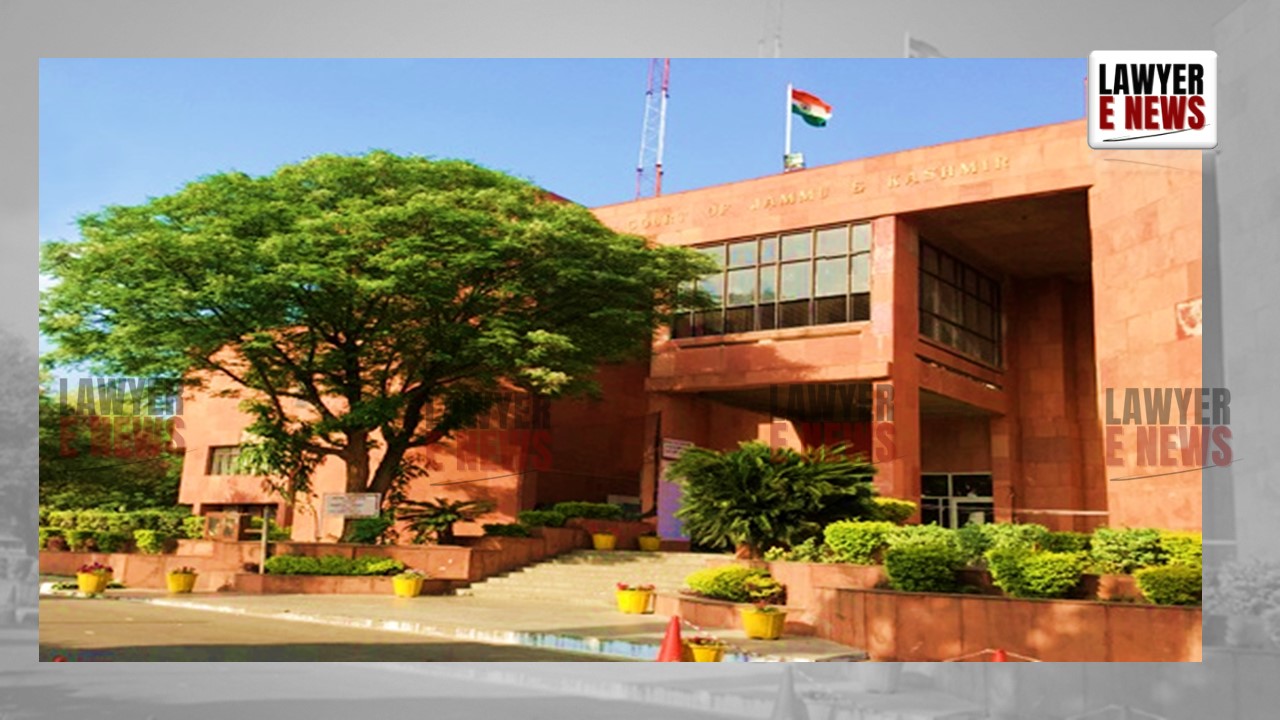
High Court of Jammu & Kashmir and Ladakh at Jammu, under the bench of Justice M.A. Chowdhary, issued a landmark ruling in Anu Bala v. Rajesh Singh & Union Territory of Jammu & Kashmir, Bail Application No. 379/2021. The Court cancelled bail previously granted to the accused, Rajesh Singh, citing abuse of court processes, suppression of material facts, and violations of procedural requirements under the Scheduled Castes and Scheduled Tribes (Prevention of Atrocities) Act, 1989.
The case stemmed from an FIR filed by Anu Bala, Assistant Director of Fisheries in Jammu, alleging that Rajesh Singh, an Inspector in the Department, verbally and physically abused her, including caste-based insults, thus violating the SC/ST (Prevention of Atrocities) Act. The accused was initially granted bail on August 28, 2021, by the Sessions Court without disclosing a pending bail application on the same matter before another court. The complainant filed for cancellation of bail, arguing that the accused had obtained interim bail through misrepresentation and forum shopping.
Forum Shopping and Misrepresentation in Bail Applications: The accused filed multiple bail applications in different courts without disclosing the existence of the first application, which was still pending.
Right of Victim to Be Heard Under SC/ST Act: The Sessions Court granted bail without notifying or hearing the complainant, as mandated by Sections 15-A(3) and 15-A(5) of the SC/ST Act.
Abuse of Judicial Process: The Court condemned the accused's actions as an abuse of judicial process, undermining the integrity of the justice system.
Forum Shopping and Non-Disclosure: Grounds for Cancellation of Bail
The High Court observed that the accused engaged in "forum shopping," or "bench hunting," by filing multiple bail applications before different courts on the same day, attempting to secure favorable interim relief. Citing the Supreme Court’s precedents in State of Maharashtra v. Pankaj Gagshi Gangar and Vijay Kumar Ghai v. State of West Bengal, the Court condemned this practice as a "disreputable" tactic that pollutes the judicial process.
“Forum shopping has been termed as a disreputable practice by the Courts and has no sanction and paramountcy in law,” stated the Court [Para 24].
The Court emphasized that litigants are required to approach the judiciary with "clean hands" and must fully disclose relevant facts, especially in bail proceedings. The accused’s failure to disclose the pending bail application before another court constituted "misrepresentation and suppression of facts," justifying the cancellation of bail.
The High Court highlighted the mandatory requirement under Sections 15-A(3) and 15-A(5) of the SC/ST Act to notify and allow the victim to be heard in bail proceedings involving atrocities against Scheduled Castes and Scheduled Tribes. The Court criticized the Sessions Court for granting bail without ensuring compliance with these provisions.
“The statutory provisions, which have been enacted by Parliament as a measure of protecting the constitutional rights of persons belonging to the Scheduled Castes and Scheduled Tribes, must be complied with and enforced conscientiously,” the Court remarked, citing Hariram Bhambi v. Satyanarayan [Para 25].
The Court observed that non-compliance with Section 15-A amounted to a procedural irregularity that rendered the initial grant of bail unsound.
Justice Chowdhary underscored the responsibility of the judiciary to safeguard the fairness and integrity of judicial proceedings, especially in cases under the SC/ST Act, which protect marginalized communities. The Court noted that the accused’s actions and the Sessions Court's oversight in failing to involve the complainant violated fundamental principles of justice.
“No litigant should be allowed to pollute the pure stream of justice in any manner,” the Court observed, ordering the cancellation of bail [Para 29].
The High Court quashed the bail order dated November 8, 2021, granted by the Sessions Court, and directed the accused, Rajesh Singh, to surrender to the trial court by November 11, 2024. The Court allowed the accused to apply for fresh bail but directed the trial court to consider any new application independently, without being influenced by the current judgment.
Date of Decision: 04 Novemer 2024





