-
by sayum
10 August 2026 7:33 AM







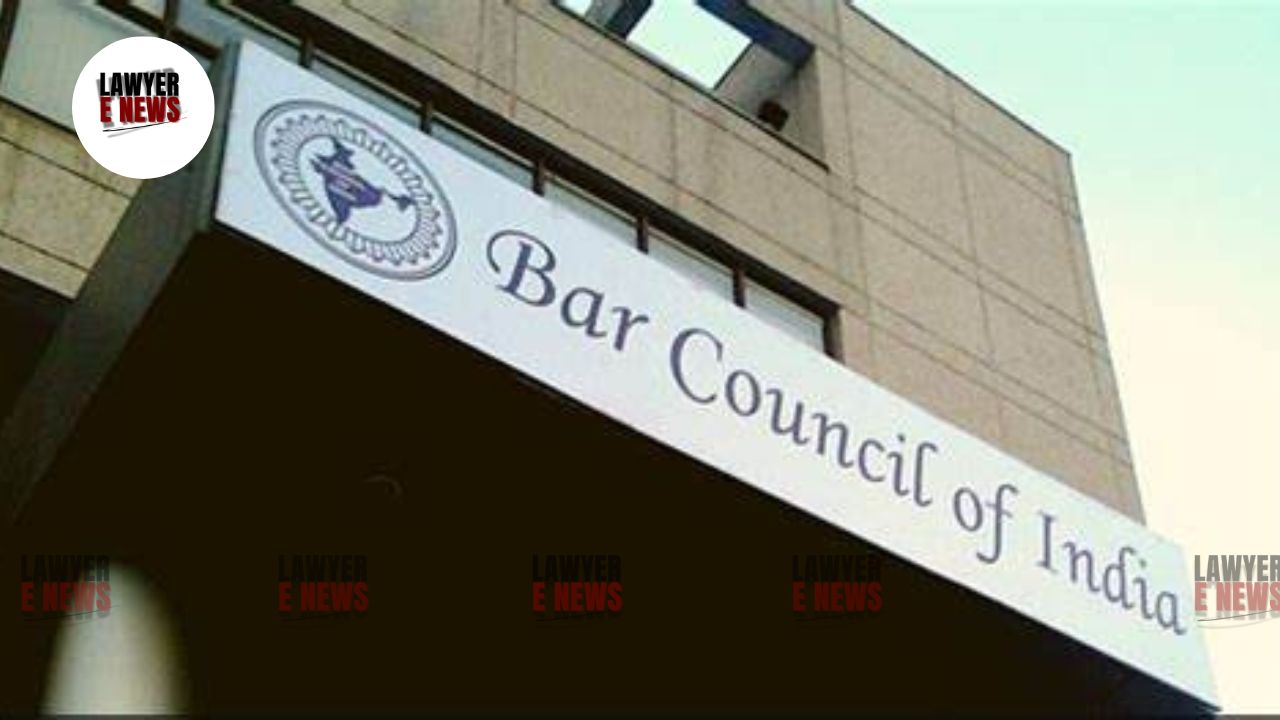
“Those who fail to clear the AIBE even within this final extended period will cease to be advocates and their names shall be removed from the State Roll.” In a decisive move to uphold professional standards and ensure strict adherence to statutory requirements, the Bar Council of India (BCI) has issued a final one-time extension for advocates enrolled in 2022 or later who have failed to clear the All India Bar Examination (AIBE) within the mandated time.
This directive was communicated through BCI Letter No. BCI:D:2371/2025, circulated to all Bar Associations in Punjab, Haryana, and U.T. Chandigarh by the Bar Council of Punjab and Haryana. It also includes enforcement directions against those enrolled prior to 2022 who continue to practice without clearing the AIBE, despite multiple relaxations since the pandemic.
The AIBE was introduced as a mandatory requirement under the Advocates Act, 1961, ensuring minimum professional competence before advocates are issued a Certificate of Practice. As per existing rules, an advocate must clear the AIBE within two years of enrollment, excluding certain exempted periods granted due to the COVID-19 pandemic and related disruptions.
The Bar Council had earlier provided relief through resolutions dated July 29, 2020, December 31, 2021, and March 30, 2022, which excluded periods between March 2020 to 31st October 2021, and October 31, 2021 to April 2023, from the computation of the two-year limit.
Despite these concessions, many advocates failed to qualify, risking disqualification from legal practice. To address this, the Bar Council has now resolved to offer a final one-year extension, which comes with stringent conditions and no scope for further relaxation.
The terms of this final relief, granted through the Bar Council of India's resolution on 2nd March 2025, are clear and binding.
First, the extension is applicable only to those advocates who were enrolled in 2022 or later, and have completed the two-year practice period excluding exempted durations without clearing the AIBE.
Second, such advocates will be issued a Provisional Certificate of Practice, valid only for the duration of this one-year extension.
Third, and most significantly, if the AIBE is not cleared within this additional period, the advocate:
Will cease to be recognized as an advocate
Will have their name removed from the State Bar Council roll
Will be barred from wearing court dress (gown, band, etc.) and appearing in court
Will lose eligibility to vote or contest elections in Bar Councils
Will be denied access to all welfare measures under Bar Council or Bar Association schemes
This is in strict compliance with BCI Circular No. 1516/STBC CIR No. 4/2013 dated 12.4.2013, which mandates provisional enrollment for AIBE non-passouts and explicitly disqualifies them from receiving any professional benefits.
Termination of Membership of Pre-2022 Advocates Failing AIBE
A parallel and equally serious direction has been issued for advocates enrolled after the introduction of AIBE Rules and prior to 2022, who have not yet cleared the AIBE. The Bar Council of India has instructed that:
“Bar Associations should terminate the membership of those advocates (enrolled after the introduction of AIBE Rules & Notification and prior to 2022) who are not able to clear the AIBE.”
This action is necessary to ensure that only qualified and eligible individuals continue to access the privileges and rights associated with legal practice, including Bar Association membership and participation in elections or welfare benefits.The President and Secretaries of all Bar Associations, including High Court, District, Tribunal, and Tax Bar Associations across Punjab, Haryana, and Chandigarh, have been directed to display this notification on their Notice Boards and WhatsApp groups, and circulate it widely among advocates for immediate compliance.
All State Bar Councils have been asked to implement the new directive without delay, inform affected advocates accordingly, and update their rolls as per the new compliance guidelines. Advocates who pass the AIBE during this extended window shall be issued regular Certificates of Practice upon submission of the requisite documentation and return of the provisional certificate.
This final one-year extension is the last opportunity for advocates enrolled in 2022 or later to regularize their legal practice. The Bar Council of India has made it unequivocally clear that no further extensions or relaxations will be granted. The message is one of regulatory firmness: uphold the standards of the legal profession, or risk disqualification.
The directive comes at a time when the legal system is emphasizing both transparency and accountability. This move seeks to balance fairness towards young professionals who faced academic and professional disruptions during the pandemic, while also enforcing long-standing statutory obligations in the legal profession.