-
by sayum
26 August 2026 8:37 AM







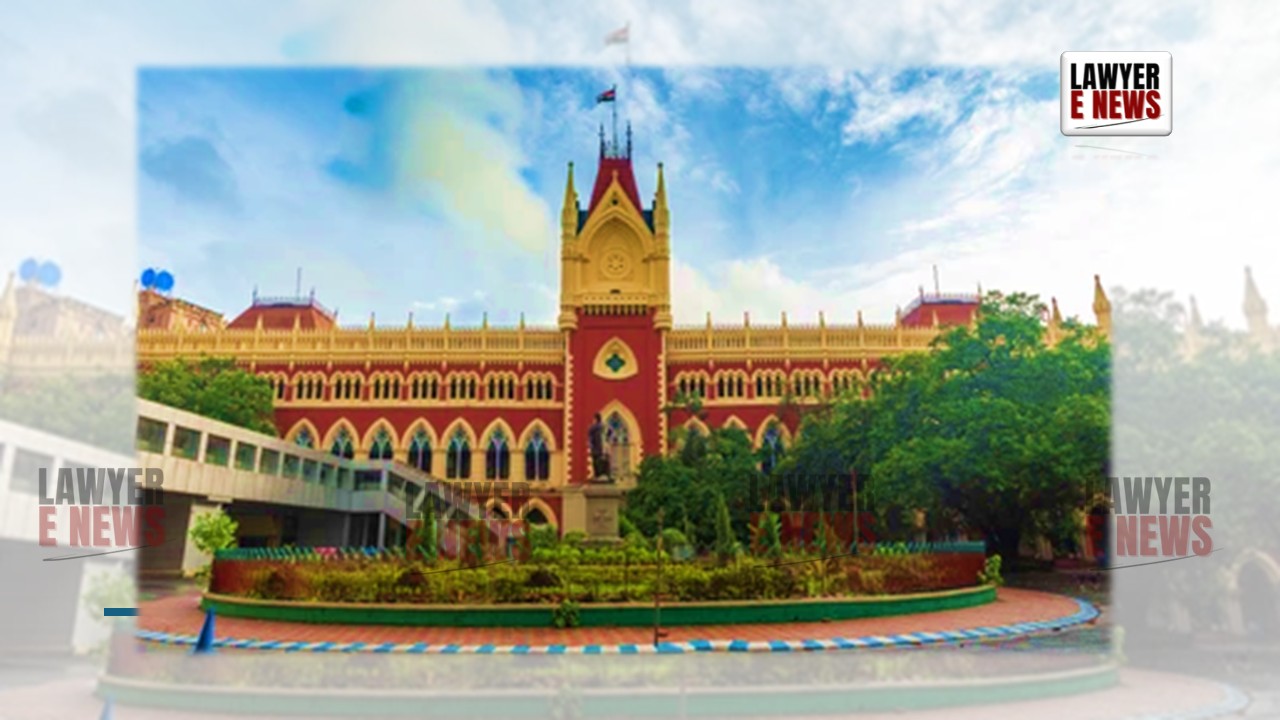
“Once Parties Accept the Partition Plan and Decree, They Cannot Turn Around to Deny Its Finality”, In a reportable judgment Justice Om Narayan Rai of the Calcutta High Court, exercising Constitutional Writ Jurisdiction on the Original Side, dismissed WPO and upheld the levy of stamp duty on a final decree passed in a partition suit.
The Court held that the final decree dated 29 November 2023 squarely falls within the definition of “instrument of partition” under Section 2(15) of the Indian Stamp Act, 1899 and is therefore exigible to stamp duty under Article 45 of Schedule 1A. The writ petition challenging the Collector’s retention of Rs. 45,000/- towards partition duty was rejected.
The judgment delivers a clear message: once a partition suit culminates in a final decree incorporating the Commissioner’s plan and the decree attains finality, stamp duty consequences follow, regardless of whether physical division by metes and bounds was practically feasible.
From Preliminary Decree to Final Disposal
The controversy arose from C.S. No. 91 of 2013, a partition suit instituted on the Original Side of the High Court. A preliminary decree was passed declaring the shares of the parties. A Commissioner was appointed to prepare a plan for partition.
A structural engineer reported that the building was dilapidated and that physical partition as per plan was not feasible. The plaintiffs then sought sale of the property, but the petitioner opted to purchase their shares. A registered conveyance dated 05 August 2023 was executed upon payment of stamp duty.
On 29 November 2023, a coordinate Bench disposed of the suit and directed drawing up of the decree “by making the proposed plan for partition being Annexure L of the Commissioner’s report and the Deed of Conveyance dated 5th August, 2023 as part of the Decree.”
When the draft decree was forwarded for assessment, the Collector imposed stamp duty under Article 45 for partition. The petitioner challenged the levy contending that since physical partition was not possible, there was no “final order for effecting partition.”
“A Final Order for Effecting a Partition” – Statutory Interpretation of Section 2(15)
Section 2(15) of the Stamp Act defines “instrument of partition” to include “a final order for effecting a partition passed by any Revenue-authority or any Civil Court.”
Justice Rai undertook a detailed examination of Order XX Rule 18 and Order XXVI Rules 13 and 14 of the Code of Civil Procedure. The Court explained that a preliminary decree declares shares, while a final decree follows further inquiry and conclusively determines rights.
Quoting from Shankar Balwant Lokhande v. Chandrakant Shankar Lokhande, the Court reiterated that “the final decree merely carries into fulfilment the preliminary decree.”
In the present case, the Commissioner’s partition plan was accepted and incorporated into the decree. The suit stood disposed of. No appeal was preferred. The decree attained finality both procedurally and substantively.
The Court posed a decisive question: can a party, having accepted the partition plan and final decree, later contend that it is not a final order for effecting partition to avoid stamp duty? The answer, the Court declared, “must be in the negative.”
“Physical Impossibility Does Not Denude the Decree of Its Character”
The petitioner’s principal submission was that since physical partition by metes and bounds was not feasible, the decree could not be treated as effecting partition.
The Court rejected this argument. It noted that although the structural engineer reported impracticability, no application under Section 2 of the Partition Act, 1893 was pressed before the passing of the final decree. The parties allowed the decree to be drawn incorporating the partition plan and accepted it without challenge.
Referring to Rachakonda Venkat Rao v. R. Satya Bai, the Court observed that “in a partition it is not necessary that each and every property must be partitioned and that the parties are put in separate possession of respective portions.” Acceptance of an arrangement, even if certain aspects remain joint, does not detract from the decree’s finality.
The Court held that the acceptance of the plan and decree was “strongly suggestive of the parties’ intent” to conclude the partition proceedings. Therefore, the decree answers the description of a “final order for effecting a partition.”
“Stamp Duty Is on the Instrument, Not on Creation of New Rights”
The petitioner argued that since no new rights were created, stamp duty should not be imposed. The Court firmly rejected this contention.
It held that in partition cases, stamp duty is levied on the instrument recording division “irrespective of the fact whether the transaction creates new rights or not.” The final decree is a formal expression of adjudication conclusively determining rights and thus attracts duty.
“Certiorari Is Supervisory, Not Appellate” – Limited Scope Under Article 226
Justice Rai also emphasised the limited scope of judicial review in matters of stamp assessment. Interference under Article 226 would arise only if the action were “wholly arbitrary or without jurisdiction or patently illegal or in violation of the principles of natural justice.”
No such infirmity was demonstrated. The Collector’s decision was based squarely on statutory provisions and the character of the decree.
Fiscal Consequences Flow from Finality
The Calcutta High Court concluded that the decree dated 29 November 2023 satisfies the statutory definition of a “final order for effecting a partition” and is therefore chargeable with stamp duty under Article 45 of Schedule 1A of the Indian Stamp Act, 1899.
WPO 506 of 2025 was dismissed without costs.
The ruling reinforces a crucial principle: once a partition suit is finally disposed of and the decree incorporating the Commissioner’s plan is accepted by the parties, the decree attracts stamp duty notwithstanding practical difficulties in physical division. Finality in civil adjudication carries statutory fiscal consequences, and parties cannot avoid them by recharacterising the decree after having accepted its binding effect.
Date of Decision: 18/02/2026