-
by sayum
26 August 2026 8:00 AM







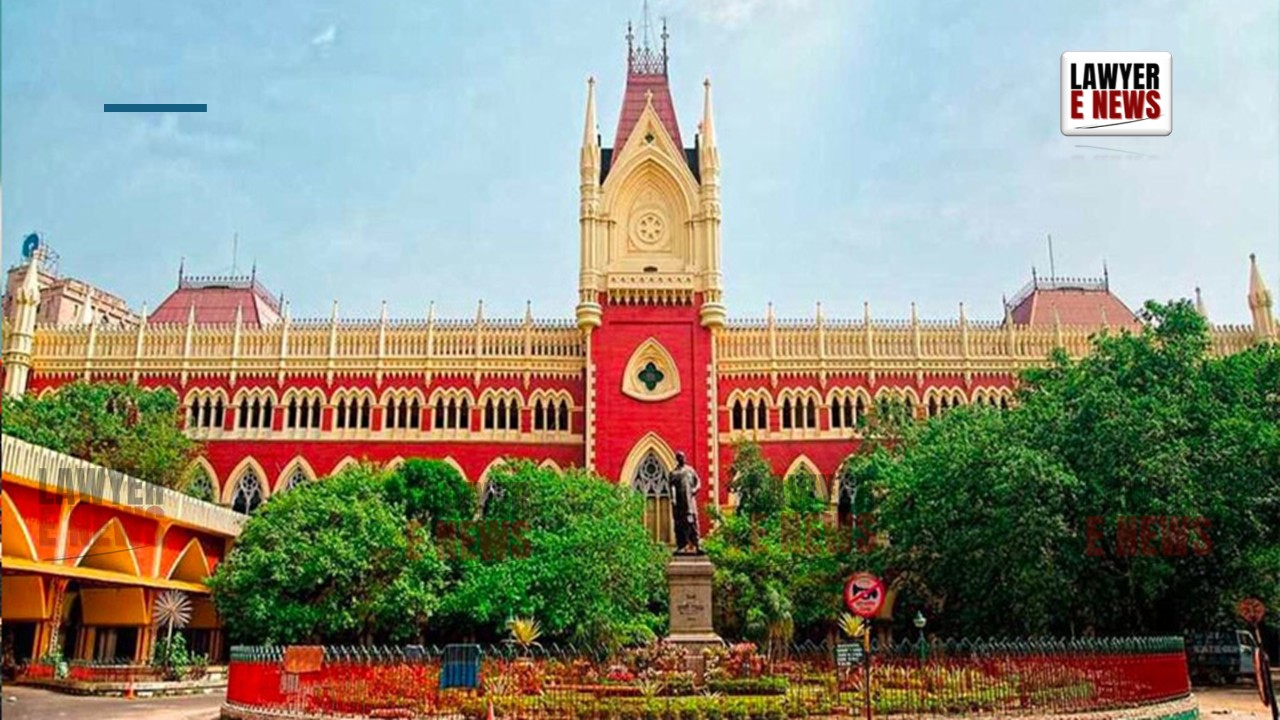
In a ruling that will resonate across commercial litigation, the Calcutta High Court held that transfer of a pending civil suit to a Commercial Court does not freeze the pleadings or bar a defendant from filing a counter-claim, provided leave of the Court is granted under the Code of Civil Procedure.
Justice Shampa Dutt (Paul), dismissing the civil revision, upheld the Commercial Court’s order permitting the defendant to file a fresh written statement along with a counter-claim after the suit had been transferred under Section 15 of the Commercial Courts Act, 2015. The Court held that the impugned order was “in accordance with law” and did not warrant interference in supervisory jurisdiction under Article 227 of the Constitution.
Can a Counter-Claim Be Filed After an Earlier Written Statement?
The suit was originally pending before a civil court, where the defendant had filed its written statement in 2017 without any counter-claim. The matter had progressed to the stage of plaintiff’s evidence. Thereafter, on 09.02.2022, the suit was transferred to the Commercial Court and renumbered.
On 11.07.2022, the defendant filed a fresh written statement along with a counter-claim, contending that a subsequent cause of action had arisen due to arbitration proceedings initiated by third parties after the earlier written statement.
The plaintiff challenged the Commercial Court’s order accepting the counter-claim, arguing that “there is no provision under the Commercial Courts Act, 2015 that the transferred suit shall proceed de novo.” It was further contended that once a written statement had already been filed, the defendant could not change its defence or introduce a new claim.
Flexibility With Leave
Justice Paul examined the scheme of Order VIII Rules 6A, 6C, 8 and 9 CPC to determine whether such a counter-claim was legally permissible.
The Court noted that under Order VIII Rule 6A, a counter-claim is “in addition to his written statement,” and the plaintiff is expressly given the liberty to file a written statement in response under Rule 6A(3).
Crucially, the Court relied on Order VIII Rule 8, which allows:
“Any ground of defence which has arisen after the institution of the suit or the presentation of a written statement… may be raised.”
Further, the Court emphasized the clear language of Order VIII Rule 9:
“No pleading subsequent to the written statement of a defendant other than by way of defence to set-off or counter-claim shall be presented except by the leave of the Court…”
Interpreting these provisions together, the Court observed:
“It appears that the provision under Order VIII Rule 9 CPC is very clear that there cannot be any further pleadings, subsequent to a written statement filed by the defendant, other than by way of defence, as a counter claim and the same can be accepted with the leave of the Court.”
In the present case, such leave had in fact been granted by the Commercial Court.
Subsequent Cause of Action Strengthened the Defendant’s Case
The defendant contended that after filing its original written statement, arbitration proceedings were initiated by L&T and Usha Martin, giving rise to a fresh cause of action. The High Court found that Order VIII Rule 8 squarely permits raising new grounds that arise after filing of the written statement.
The Court thus held that the plea of subsequent cause of action supported the permissibility of filing a counter-claim at a later stage.
Right to Seek Exclusion
Significantly, the Court pointed out that the CPC itself provides a statutory safeguard for the plaintiff.
Order VIII Rule 6C states that where a defendant sets up a counter-claim and the plaintiff contends that it ought not to be disposed of by way of counter-claim but in an independent suit, the plaintiff may apply for its exclusion before issues are settled.
By highlighting this remedy, the Court reinforced that mere acceptance of a counter-claim does not cause irreparable prejudice. The plaintiff retains the right to challenge its maintainability before the trial court.
Article 227: No Patent Illegality, No Interference
The petitioner had invoked Article 227, relying on precedent to argue that supervisory jurisdiction can be exercised to correct jurisdictional errors.
Justice Paul reiterated the settled position that Article 227 is not meant to correct mere errors of law or fact, but to address “manifest and apparent” errors resulting in grave injustice.
In the present case, the Commercial Court had exercised a jurisdiction expressly available under Order VIII Rule 9 CPC. There was no patent illegality or jurisdictional error.
The High Court therefore concluded:
“Thus the impugned order in the present case being in accordance with law requires no interference.”
Expeditious Trial Directed
While dismissing the revision, the Court directed the trial court to proceed expeditiously and permit the plaintiff to file its written statement to the counter-claim within the time allowed.
The civil revision was dismissed, connected applications were disposed of, and any interim order stood vacated.
Commercial Litigation Must Remain Procedurally Adaptive
This judgment makes it clear that transfer of a suit to a Commercial Court does not rigidly lock the pleadings at the stage they stood prior to transfer. The procedural regime under the CPC continues to apply, including provisions allowing subsequent pleadings with leave of the court.
By harmonizing the Commercial Courts Act with the CPC framework, the Calcutta High Court has ensured that commercial adjudication remains both efficient and legally adaptable — without compromising the plaintiff’s right to challenge a counter-claim through the mechanism provided in Order VIII Rule 6C.
Date of Decision: 19.02.2026