-
by sayum
26 August 2026 8:37 AM







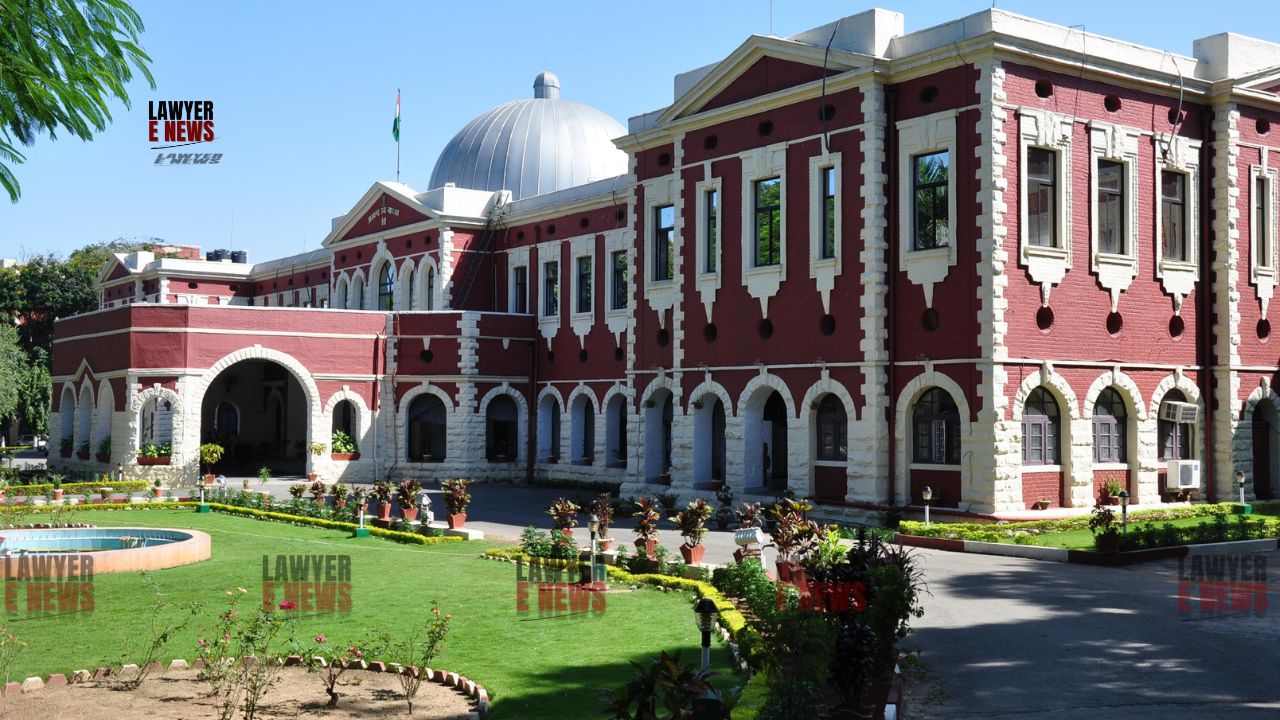
Insurance Money is for Genuine Victims, Not a Reward for Fraud – Jharkhand High Court, in a scathing judgment, struck down a ₹17.49 lakh compensation award granted in a motor accident claim case, ruling that the entire claim was based on fabricated facts. Declaring the case a deliberate fraud orchestrated by the claimant, the vehicle owner, and the driver in collusion with their lawyer, the Court not only reversed the award but also ordered criminal proceedings against those involved in perjury and conspiracy.
Condemning the manipulation of legal procedures to extract insurance money, the Court held that “polluting the stream of justice with false claims will not be tolerated, and those who manufacture accidents to secure compensation will face the full force of law.”
"A Manufactured Accident to Claim Insurance – A Fraud Unraveled After Four Years"
The claim arose from an alleged accident that took place on June 23, 2009, in which Dashrath Tudu, a Revenue Karamchari, reportedly died while riding as a pillion passenger on a motorcycle that collided with a cow. His wife, Anati Murmu, filed a claim for compensation under Section 166 of the Motor Vehicles Act on August 29, 2013, a full four years after his death.
The insurance company, National Insurance Co. Ltd., challenged the claim, arguing that the entire case was a fabrication. The Unnatural Death (U.D.) case report, which had been filed by the claimant herself immediately after the incident, made no mention of a road accident. Instead, it stated that Tudu had been riding his own motorcycle when he lost balance due to dizziness, fell, and died.
Calling out the deception, the High Court observed, “This is a textbook case of how unscrupulous litigants, in collusion with vehicle owners, drivers, and even legal professionals, attempt to extract insurance compensation through fraudulent means. Such conduct is a direct attack on the integrity of the judicial system.”
"An Orchestrated Conspiracy to Deceive the Court – Tribunal’s Failure to Scrutinize the Evidence"
The High Court found that the owner and driver of the motorcycle had fully admitted the accident without contest, despite there being no evidence supporting the claim. The Court found this highly suspicious, remarking that “the perfect symphony between the vehicle owner, the driver, and the claimant raises serious doubts about their collusion to defraud the insurance company.”
Further investigation revealed that the alleged driver, Navin Kumar Gupta, had been involved in another similar fraudulent accident claim, exposing a pattern of deception. The Court noted that “when the same individual repeatedly appears in fabricated accident claims, it is no longer a coincidence but a carefully planned fraud.”
Criticizing the Motor Accident Claims Tribunal (MACT) for failing to scrutinize glaring contradictions, the Court stated, “the Tribunal turned a blind eye to the most fundamental inconsistencies in the case, allowing a false narrative to be built at the cost of justice.”
"Perjury and Criminal Conspiracy Cannot Go Unpunished" – High Court Orders Prosecution of Claimant, Lawyer, and Witnesses
Taking a firm stance against perjury, the High Court directed the Registrar of the Civil Court, Pakur, to file a criminal complaint under Section 340 of the Cr.P.C. (now Section 379 of BNSS, 2023) against those involved in fabricating the claim. The Court held that the claimant, her lawyer, the vehicle owner, and the driver were all complicit in a conspiracy to defraud the insurance company and that their actions amounted to perjury, criminal conspiracy, and fraud.
Citing the Supreme Court’s ruling in Dalip Singh vs. State of U.P. (2010) 2 SCC 114, the Court observed, “A new breed of litigants has emerged who shamelessly resort to falsehood to achieve their goals. Those who attempt to pollute the stream of justice must face serious consequences.”
Calling out the role of the claimant’s lawyer, the Court remarked, “A lawyer’s duty is to uphold the rule of law, not to fabricate evidence to defraud insurance companies. Legal professionals cannot misuse their knowledge of the law to perpetuate fraud.” The Court directed that a copy of the order be sent to the Jharkhand State Bar Council for necessary disciplinary action against the advocate involved.
"False Claims Will Not Be Rewarded – Compensation Must Be Refunded with Interest"
Quashing the Tribunal’s award, the High Court ruled, “Insurance money is meant for genuine victims, not as a reward for fraudulent claims. The entire claim was a fabrication designed to deceive the Tribunal.”
The Court ordered a full refund of the ₹17.49 lakh compensation, along with 9% interest, to be repaid to the insurance company. Additionally, it directed that all case records, the Special Investigation Team (SIT) report, and video recordings of witness depositions be sent to the Principal District Judge, Pakur, for further legal action.
This ruling by the Jharkhand High Court serves as a stern warning against fraudulent accident claims, ensuring that justice is not reduced to a tool for financial exploitation. By ordering criminal prosecution and disciplinary action, the Court has sent a clear message that courts will not hesitate to take strong action against those who attempt to undermine the rule of law.
Date of decision: 11/03/2025