-
by sayum
25 August 2026 5:15 AM







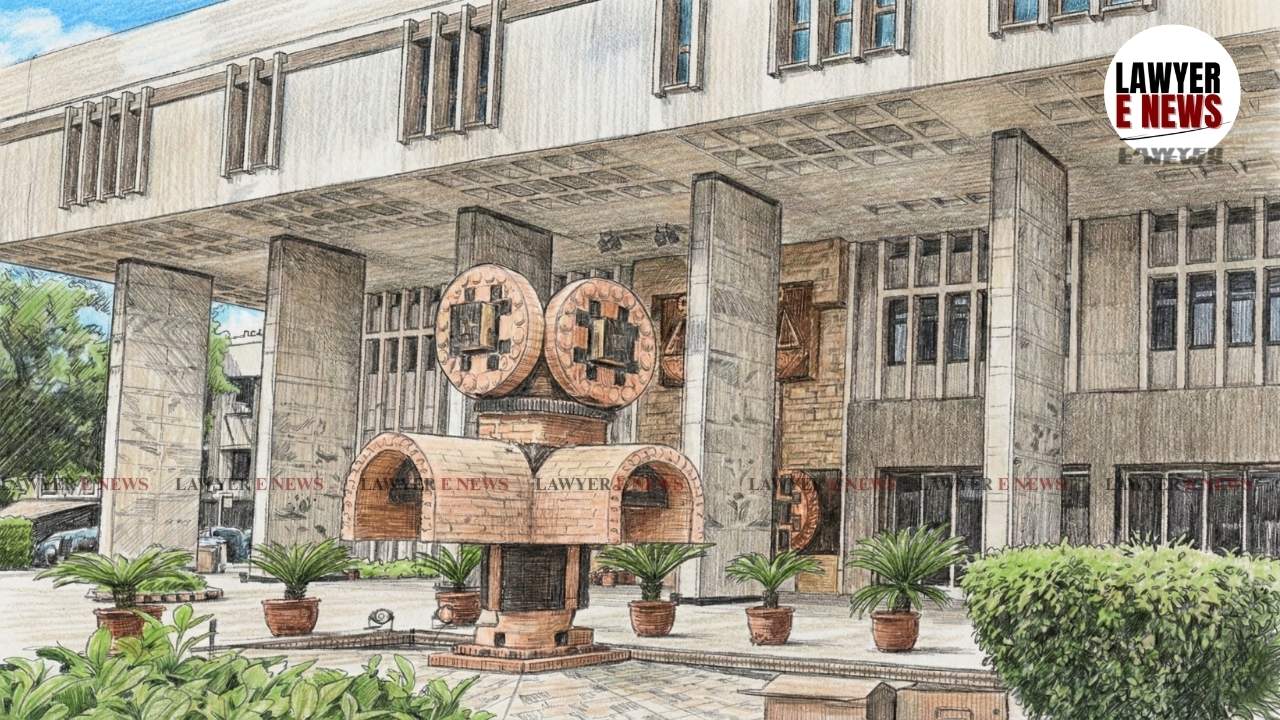
“In Partition Suits, All Legal Heirs Must Be Present”, In a significant ruling touching upon the principles of intestate succession, testamentary validity, and procedural rigour in partition suits, the Delhi High Court dismissed a long-pending partition suit filed by one Kanta Sethi, a daughter of the deceased parents, on the ground of non-joinder of necessary parties, undervaluation of properties, and unsubstantiated challenge to two registered Wills.
Justice Amit Bansal not only upheld the Will dated 12 October 2001 of Smt. Krishna Wanti, which bequeathed all property to her husband, but also validated the registered Will dated 30 May 2003 executed by Sh. Hans Raj Gulati, wherein he exclusively left his estate to his son and grandson, expressly excluding all daughters.
The judgment clarifies crucial legal questions under Section 63 of the Indian Succession Act, Section 68 of the Indian Evidence Act, Order VI Rule 17 CPC, and Article 137 of the Limitation Act, laying down that “probate petitions filed after years can still be valid if the ‘right to apply’ accrues later during litigation.”
“The Estate Can Be Represented Only When All Heirs Are Before the Court” – Suit Dismissed for Non-Joinder
The plaintiff, Kanta Sethi, had filed the partition suit in 2002, seeking a share in two properties located at Krishna Market and Kalkaji, New Delhi, asserting that her mother died intestate. However, as the Court pointed out, five other daughters of the deceased parents were not impleaded, despite being legal heirs.
Justice Bansal observed:
“In a suit for partition based on intestate succession, all the legal heirs of the deceased must be impleaded to ascertain the exact share of the plaintiff.”
Citing the Supreme Court’s decision in Kanakarathanammal v. V.S. Loganatha Mudaliar, the Court reiterated:
“If the parties who are not joined are not only proper but also necessary parties to it, the infirmity in the suit is bound to be fatal.”
Accordingly, the suit was held as not maintainable, and the issue was decided in favour of the defendants.
Undervaluation of Properties Defeats Court Fee Compliance
The Court also found fault with the plaintiff’s reduction in property valuation. Initially, the Krishna Market property alone was valued at Rs. 1.5 crore, but after amendment in 2009, the combined valuation for both properties was abruptly reduced to Rs. 45 lakh, allowing a court fee payment of only Rs. 37,000.
The Court held:
“The plaintiff has failed to value the suit properly and has failed to pay the appropriate court fees.”
Thus, on both counts—non-joinder and undervaluation—the partition suit was liable to be dismissed.
“Bequest to Husband Not Unnatural” – Will of Smt. Krishna Wanti Found Valid
The plaintiff challenged the 2001 Will of her mother, arguing that she used thumb impressions, not signatures, and was mentally unfit. However, the Will was proven by the son Sudesh Gulati, an attesting witness, whose testimony the Court found credible.
Justice Bansal ruled:
“A hip bone fracture suffered by the testatrix may imply a lack of physical fitness but cannot imply that the testatrix was not in a sound state of mind… There is nothing unnatural in the bequest made by the testatrix in favour of her husband to the exclusion of the plaintiff.”
The Court held that the Will complied with Section 63 of the Indian Succession Act and Section 68 of the Indian Evidence Act, stating:
“Only one attesting witness is required to be examined, which has been satisfied.”
Thus, the Will was upheld as valid and genuine.
“Right to Apply for Probate Is Continuous” – Delay of 7 Years Does Not Defeat Petition
The objectors raised a strong objection regarding delay in filing the probate petition, which was initiated in 2012, seven years after the father’s death in 2005.
However, the Court explained that under Article 137 of the Limitation Act, the right to apply for probate accrues when the need arises, not necessarily at death. Since the plaintiff only denied the father’s Will in 2009, following her amended plaint, the three-year limitation was reckoned from that date, and thus the 2012 filing was held within time.
Quoting the Supreme Court in Kunvarjeet Singh Khandpur v. Kirandeep Kaur, the Court emphasised:
“A legal duty created by a Will is a continuous right which can be exercised any time after the death of the deceased, as long as the right to do so survives.”
"I Have Spent Sufficiently on My Daughters’ Marriages” – Disinheritance by Father Deemed Rational
Perhaps the most contested issue was the exclusion of all daughters in the 2003 Will of Sh. Hans Raj Gulati. The Will stated:
“I do not wish to bequeath or devise any of my properties… to them in any manner whatsoever.”
The daughters alleged suspicious circumstances, claiming the Will was torn during a family ceremony. But the Court rejected these as unsubstantiated hearsay, noting that:
“None of the objectors have seen or read the Will that was allegedly torn… the contents of the torn Will could not have been ascertained.”
Upholding the Will, the Court relied on Hari Singh v. State to stress:
“Courts are not expected to be satisfied that a bequeathal is rational or not… The Court cannot infuse its own value system on the testator.”
The Court concluded that the father's Will, leaving everything to his son and grandson, was valid, genuine, and free from suspicious circumstances.
Daughter’s Suit Dismissed, Son and Grandson Get Probate
Having upheld both Wills and dismissed all objections, the Delhi High Court allowed the probate petition and dismissed the partition suit.
The Court directed that:
“Subject to the petitioner filing the requisite court fees and complying with the formalities, let the probate/letters of administration be issued in respect of the Will dated 30th May 2003.”
Date of Decision: 06 January 2026