-
by sayum
25 August 2026 8:14 AM







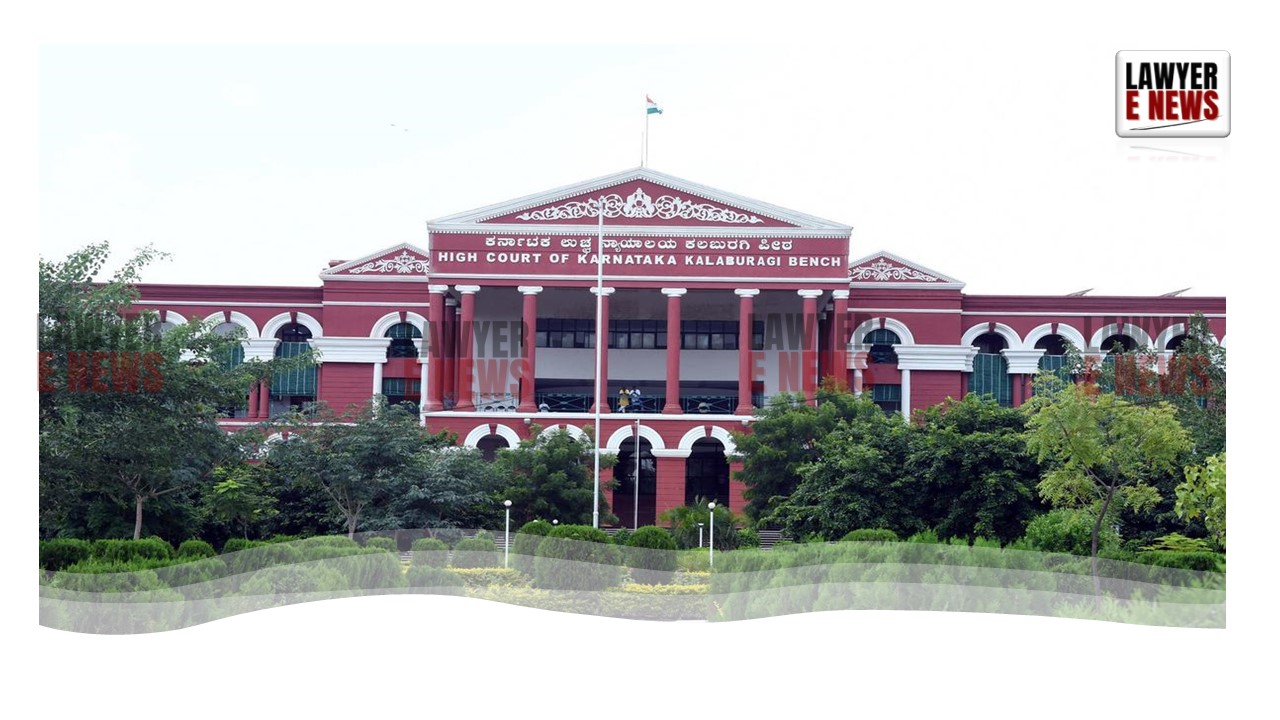
“Failure To Appear For Cross-Examination Alone Cannot Establish Domestic Violence”, High Court of Karnataka scrutinizing the evidentiary basis and legal principles applicable under the Protection of Women from Domestic Violence Act, 2005. Justice Ravi V. Hosmani allowed a criminal revision petition filed by the father, Bhaskar Reddy, and set aside concurrent findings of the DV Court and the Sessions Court that had directed him to pay maintenance and compensation to his minor daughter.
The High Court ruled that both the lower courts had misapplied the provisions of the DV Act, particularly by drawing adverse inference merely due to the petitioner’s failure to appear for cross-examination and by presuming domestic violence without concrete evidentiary support. The Court categorically held: “There is no provision in the DV Act casting onus on respondent to disprove allegations of domestic violence. Therefore, failure of respondent to appear for cross-examination by itself cannot be a ground to hold incidents of domestic violence established.” [Para 49]
Daughter’s Status As "Aggrieved Person" Not In Dispute, But Findings Of Domestic Violence Termed Perversely Rendered
The petition arose from a complaint under Section 12 of the DV Act filed by minor daughter Roshini (through her maternal grandmother), seeking relief under Sections 18, 19, 20, and 22 – including protection, residence, maintenance of ₹30,000/month, compensation of ₹50 lakhs, and return of stridhan.
The father, a software engineer, challenged the maintainability of the petition arguing that a child cannot be an “aggrieved person” under Section 2(a) of the DV Act. However, the High Court rejected this contention, relying on Prabha Tyagi v. Kamlesh Devi (2022) 8 SCC 90 and Menti Trinadha Venkata Ramana v. Menti Lakshmi (2021 SCC OnLine AP 2860), holding that a daughter, even if a minor, could maintain a petition under the DV Act through a guardian.
The Court further clarified that the definition of “domestic relationship” under Section 2(f) is broad and inclusive:
“The contention that Section 2(f) contemplates relationship of marriage or in the nature of marriage and hence daughter is excluded is contrary to the phrase ‘or are family members living together as a joint family’” [Para 31]
“Findings Based On No Evidence Or Contrary To Evidence Are Perverse”: Revisional Court Dissects Lower Court Orders
While acknowledging the permissibility of a minor daughter’s application, the High Court turned its focus to the core issue – whether the findings of domestic violence, maintenance and compensation were legally sustainable. Justice Hosmani invoked the settled law under Amit Kapoor v. Ramesh Chander (2012) 9 SCC 460 and State of Tamil Nadu v. R. Soundirarasu (2023) 6 SCC 768, observing:
“Concurrent findings are susceptible to challenge on ground that findings are based on no evidence or are contrary to evidence on record” [Para 36]
The Court noted that the DV and Appellate Courts had shifted the burden of proof upon the father, largely due to his failure to appear for cross-examination, which the High Court found to be a flawed approach.
Prior Acquittals And B-Report In Murder and POCSO Cases Weaken Domestic Violence Allegations
A striking aspect of the High Court’s analysis was its reliance on the material contradictions in the allegations and the prior acquittals of the father in related criminal proceedings. Notably, the High Court observed:
“In the complaint about respondent murdering petitioners’ mother, police have filed a B-report, while respondent herein is acquitted… in POCSO case” [Para 48]
Justice Hosmani emphasized that the allegations of sexual and physical abuse lacked specificity regarding time and place, and were contradicted by:
Medical reports showing injuries occurring while in maternal custody;
Admissions by the grandmother (PW1) about no complaint prior to the mother's death;
The daughter’s own deposition (Ex.R13 in POCSO case) stating that life in Bengaluru was "happy and pleasant" until her mother’s death.
These, the Court held, seriously undermined the domestic violence narrative, observing:
“These materials would cast allegations of domestic violence in serious doubt… Impugned judgments… would be contrary to material on record or without any basis. As such same, would require to be termed perverse” [Paras 48–49]
Quantification of Maintenance and Compensation Done Without Basis
The Court also flagged the lack of reasoning behind the monetary reliefs granted, holding that the DV Court “did not assign any reasons or basis” for ordering maintenance of ₹15,000/month till marriage and compensation of ₹10 lakhs.
Citing decisions like Rajnesh v. Neha (2021) 2 SCC 324 and Parvin Kumar Jain v. Anju Jain (2025) 2 SCC 422, the Court held that while relief may be awarded under the DV Act, it must be backed by a rational assessment of evidence, needs, and earning capacity, which was absent in this case.
Perversity Of Findings Vitiates Relief – Revision Allowed
Ultimately, the High Court allowed the revision petition, set aside the orders of the DV Court dated 19.07.2023 and the Appellate Court dated 28.02.2025, holding that the conclusions were based on perverse appreciation of evidence, and cannot be sustained in law.
“Thus, impugned judgments… holding incidents of domestic violence as established against respondent, would be contrary to material on record or without any basis” [Para 49]
This decision serves as a cautionary precedent on the limits of adverse inference and underscores that allegations under the DV Act, though serious, must meet the evidentiary thresholds laid down in law.
Date of Decision: January 29, 2026