-
by sayum
06 August 2026 1:57 PM







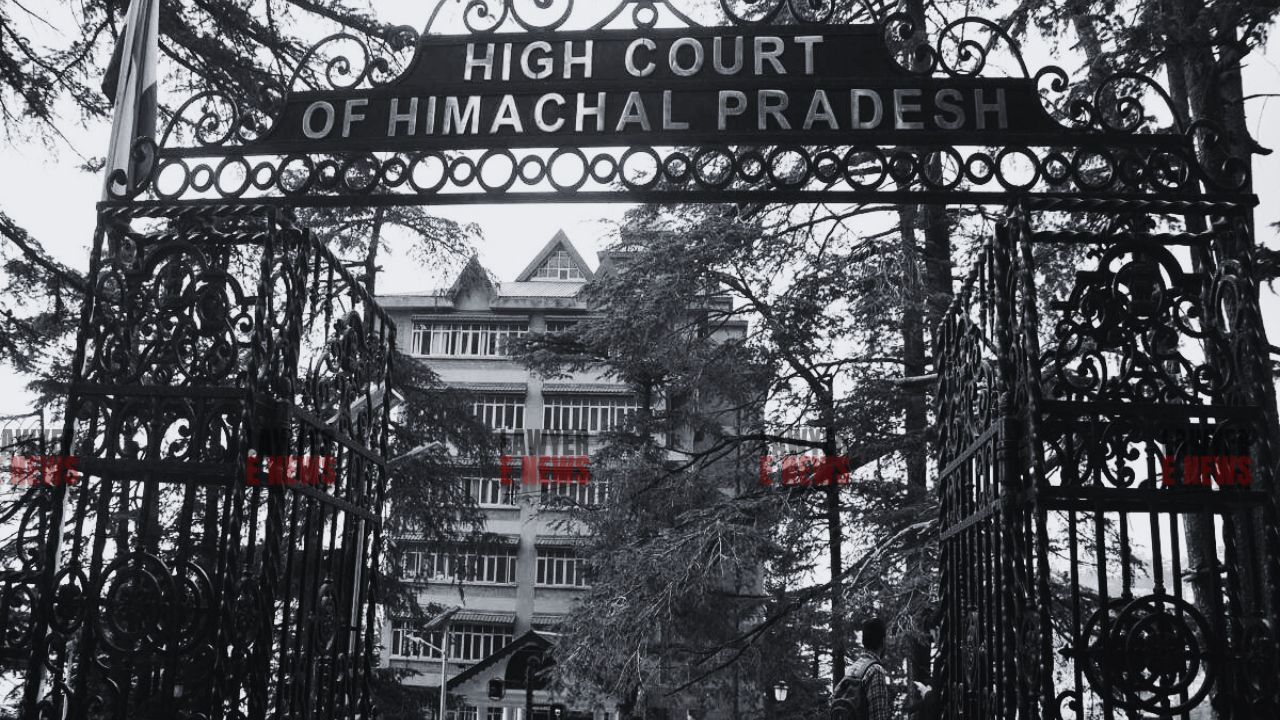
“Plaintiff Filed Suit Based on Assumptions Without Proof of Encroachment — Rejection of Injunction Suit Against Adjoining Landowner Upheld” - In a judgment recent Himachal Pradesh High Court dismissed a second appeal arising out of a suit for permanent prohibitory injunction and alternative possession, where the appellant alleged encroachment upon his land by an adjoining landowner. Justice Satyen Vaidya refused to interfere with the concurrent findings of fact recorded by both the trial court and first appellate court, holding that there was no perversity, illegality, or misreading of evidence to justify appellate intervention under Section 100 of the Code of Civil Procedure, 1908.
The Court concluded that the plaintiff's case was founded more on assumption than demonstrable encroachment, especially since multiple demarcation reports including one by a court-appointed Local Commissioner negated his claim and were never effectively challenged.
“Findings Based on Demarcation Reports Cannot Be Overturned Without Cross-Examination or Proof of Error” — Suit for Injunction Dismissed Based on Reliable Survey Evidence
This case revolved around a disputed strip of land situated between two constructed shops—one owned by the plaintiff in Khasra No. 721 and the other by the defendants in Khasra No. 722, in Mohal and Mauza Rey, Tehsil Fatehpur, District Kangra. The plaintiff, Sanjeevan Kumar, claimed that a 3-meter-wide vacant land existed between the two constructions and that 2 meters of this land fell within his khasra number, which the defendants had allegedly encroached upon.
However, his suit for permanent prohibitory injunction and alternate relief of possession by demolition was dismissed by the Civil Judge (Junior Division), Jawali, and this dismissal was affirmed by the Additional District Judge (II), Kangra at Dharamshala, Camp at Jawali, on 21.02.2015.
“Repeated Demarcations Showed No Encroachment — Plaintiff’s Own Admission Nullifies His Claim”
The High Court observed that the plaintiff had himself sought demarcation of the land three times before the institution of the suit, but remained dissatisfied each time. The Local Commissioner appointed during the trial also submitted a report confirming that no encroachment had taken place. The plaintiff’s own satisfaction with this demarcation was recorded by the Commissioner during the site inspection.
Significantly, the Court noted:
“The plaintiff had not called the Local Commissioner as a witness to cross-examine him on material aspects of the report submitted by him. The Local Commissioner had conducted the demarcation in presence of the plaintiff, and the statement of the plaintiff had also been recorded regarding satisfaction as to the demarcation.”
The Court viewed this as fatal to the plaintiff’s case, especially since his objections to the Commissioner’s report were rejected and no fresh evidence emerged during trial to support the claim of encroachment.
“Suit Based on Assumptions Cannot Sustain Where Evidence Is Repeatedly Found Against the Plaintiff”
The judgment noted a key factual flaw in the plaintiff’s case: the very demarcation upon which his claim was based had already been challenged and rejected by him before the revenue authorities even before filing the suit. Despite this, he went on to file a civil suit “on assumptions without there being any real apprehension of encroachment.”
The Court held:
“In the plaint itself, the plaintiff had averred that he had obtained the demarcation before filing of suit… It means that the plaintiff had filed the suit on assumptions.”
This, coupled with the fact that every authoritative demarcation conducted by independent agencies, including during the pendency of the suit, reaffirmed the absence of encroachment, rendered the entire claim unsustainable.
“Scope of Second Appeal Under Section 100 CPC Does Not Permit Reappreciation of Evidence or Re-Trial of Facts”
The High Court, while addressing the substantial question of law, observed that no misreading of pleadings or evidence had taken place and that both courts below had evaluated the facts accurately. The substantial question of law was framed as:
“Whether on account of misappreciation of the pleadings and law and also misreading of the oral as well as documentary evidence available on record, the findings recorded by Courts below are erroneous and, as such, the judgment and decree impugned in this appeal being perverse and vitiated is not legally sustainable?”
Justice Satyen Vaidya, after reviewing the complete trial and appellate record, answered the question against the appellant, holding that:
“I do not find any reason to interfere with the concurrent findings of fact recorded by both the Courts… I have not found any illegality, much less perversity in the impugned judgment and decree.”
The Court reminded that under Section 100 CPC, interference is permitted only when the findings are perverse or based on a complete misreading of material evidence—a threshold not met in this case.
Appeals Cannot Be Allowed to Become Forums for Repeating Failed Claims Without New Evidence
The High Court affirmed that plaintiffs cannot continue to litigate over issues where facts have been conclusively settled through fair and repeated official mechanisms such as revenue demarcations and commissioner reports. The plaintiff's failure to challenge those reports effectively, his own recorded admission of satisfaction, and the lack of any cross-examination of the Local Commissioner fatally undermined his case.
The Court concluded:
“In result, the appeal is dismissed. Judgment and decree dated 21.02.2015 passed by learned Additional District Judge (II), Kangra at Dharamshala, Camp at Jawali, in Civil Appeal No. 81-J/XIII/2012, is affirmed.”
The Verdict Reaffirms That Civil Courts Cannot Be Used to Challenge Repeatedly Rejected Land Claims Based on Mere Allegations of Encroachment
This decision reinforces the legal principle that revenue demarcations and Local Commissioner’s reports, especially when unchallenged, constitute strong evidence in land disputes. The Court reiterated the limitations imposed by Section 100 CPC, ensuring that second appeals do not devolve into a third trial on facts.
Date of Decision: 7 October 2025