
-
by sayum
03 October 2026 9:56 AM







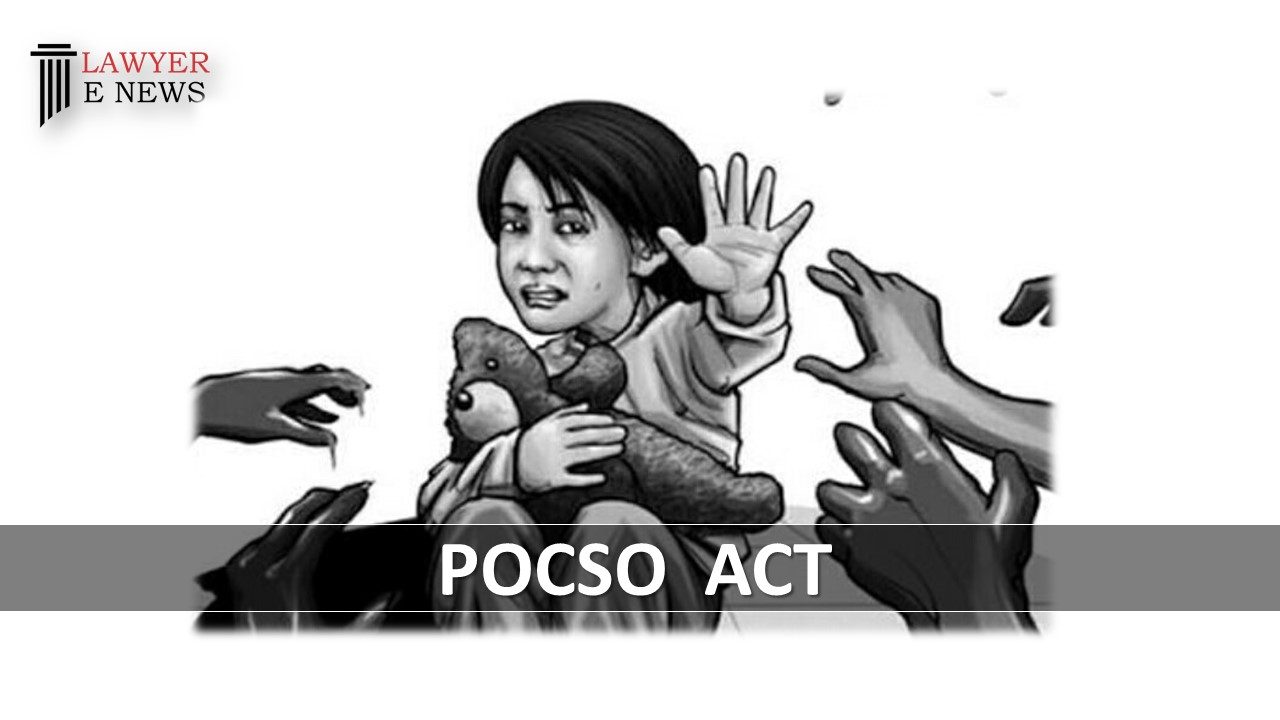
The Delhi High Court recently delivered a significant judgment in a writ petition filed by Independent Thought against the Union of India and another party. The court declared that the provisions of the Protection of Children from Sexual Offences Act, 2012 (POCSO Act) shall prevail over the restrictions imposed by the Code of Criminal Procedure, 1973 (Cr.P.C) in cases of child sexual abuse. The judgment also addressed the extension of the limitation period for minor victims of marital rape.
In the writ petition, Independent Thought sought a declaration that Section 198(6) of the Cr.P.C, which restricts the right of minor victims of marital rape to legal remedy, be declared unconstitutional. The petitioner argued that the growing trend of marrying young minor girls needed urgent attention. Referring to the National Crime Records Bureau (NCRB) data of 2016, the petitioner highlighted cases of abduction of girls for marriage, including girls below the age of six. The petitioner also pointed to census data showing girls below fifteen years of age giving birth to children.
The petitioner contended that the POCSO Act, being a special law specifically addressing sexual abuse and exploitation of children, should prevail over the general provisions of the Indian Penal Code (IPC). Additionally, the petitioner requested an extension of the limitation period for filing complaints by minor victims of marital rape until the age of twenty, in line with the Prohibition of Child Marriage Act, 2006 (PCM Act).
The Union of India, representing the respondents, argued that the Cr.P.C, POCSO Act, and the Juvenile Justice (Care and Protection of Children) Act, 2015 (JJ Act) each serve specific purposes. The respondents contended that if any inconsistency arises, the POCSO Act and JJ Act would override the Cr.P.C. They also submitted that Section 3(3) of the PCM Act, which deals with voidability of child marriage, does not extend the limitation period for filing complaints in cases of rape of minor children who are married.
After considering the arguments of both parties and examining the relevant legal provisions, the court observed that the POCSO Act is a special law dealing comprehensively with sexual abuse and exploitation of children. It emphasized the principle of harmonious construction, stating that when a general law and a special law cover the same subject matter, the special law prevails over the general law to the extent dealt with. The court referred to a previous Supreme Court judgment that reconciled the POCSO Act with the IPC and held that Exception 2 to Section 375 IPC should not apply to sexual acts with a wife under eighteen years of age.
Accordingly, the Delhi High Court declared that Section 19 read with Section 21 of the POCSO Act shall override the restrictions imposed by Section 198(1) read with Section 198(3) of the Cr.P.C. However, the court clarified that it did not address the larger issue of marital rape of adult women in this particular case. Regarding the extension of the limitation period, the court stated that the Cr.P.C empowers the courts to extend the period if necessary or if the delay has been properly explained.
High Court disposed of the writ petition, noting the declaration and observations mentioned above. This judgment underscores the importance of protecting child victims of sexual abuse and highlights the prevailing significance of the POCSO Act in such cases. The decision also recognizes the courts’ authority to extend the limitation period in appropriate cases involving minor victims of marital rape.
Date: 03.05.2023
Independent Thought VS Union of India & Anr.