-
by sayum
27 August 2026 3:32 PM







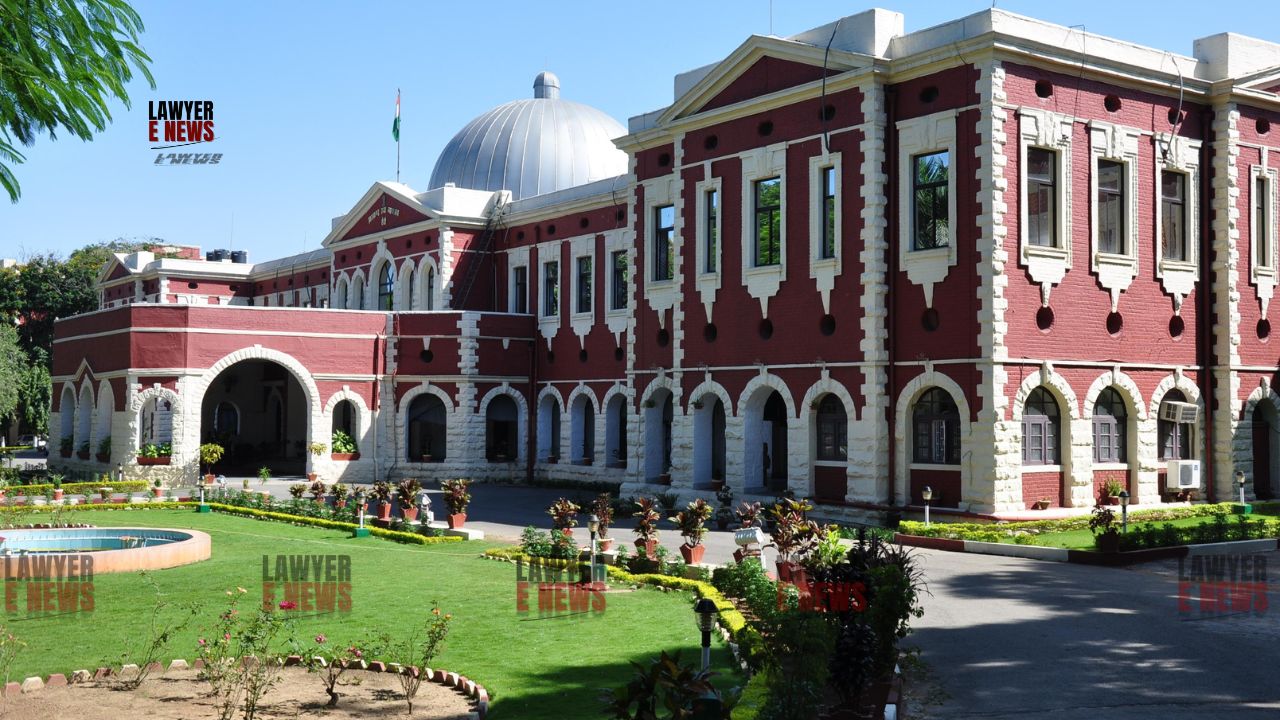
An employee who worked for 15 years in a man's dairy agency, dared to seek that agency in his own name, received threats, and was found murdered inside that very office. The Jharkhand High Court has now confirmed that this combination of motive, threat and recovery of the dead body from the accused's own premises is sufficient prima facie material to put the accused on trial for murder — and that no discharge can be granted merely because the police submitted a final form for lack of evidence.
Justice Sanjay Kumar Dwivedi, dismissing the criminal revision and vacating the interim stay that had been protecting the petitioner from trial since 2019, held that the trial court had acted entirely within law in differing from the police final form, taking cognizance, rejecting the discharge petition, and framing charge under Sections 302 and 34 of the Indian Penal Code.
Two questions fell for consideration: first, whether the trial court was justified in differing from the final form and taking cognizance; and second, whether the materials on record disclosed sufficient prima facie grounds to refuse discharge and frame charge under Sections 302 and 34 IPC.
On Differing From the Final Form — The Court's Independent Power
The petitioner's primary grievance was that the police had submitted a final form finding lack of evidence, and yet the trial court had taken cognizance. The High Court disposed of this argument succinctly. It is well settled that a Sessions Court is fully competent to differ from the final form submitted by the investigating agency and take independent cognizance of an offence on the basis of materials in the case diary. The only condition is that the order taking cognizance must be a reasoned one and prima facie materials must be reflected therein — it cannot be a mechanical or perfunctory exercise.
The High Court examined the cognizance order and found it to be elaborate and carefully reasoned. The trial court had gone through the case diary in detail and found, in paragraph nos. 21 and 22, the statement of a witness who was the brother of the deceased. This witness supported the motive squarely — that the deceased was working in the petitioner's Sudha Dairy office, that a dispute had arisen because the deceased wanted to take the Sudha Dairy agency tender in his own name, and that the petitioner had threatened the deceased with dire consequences on account of this rivalry. The trial court had also noted from paragraph 4 of the case diary the decisive circumstance — "the dead body of the deceased was found in the office of Sudha Dairy Collection Centre, near Howra Motors, which belongs to the accused." The High Court found no illegality in the cognizance order.
On Discharge Under Section 228 CrPC — Not a Mini-Trial
The petitioner's counsel contended that he had been implicated on mere suspicion without specific averments against him in the case record, and that the trial court had erred in not discharging him. The High Court rejected this entirely. The trial court had correctly applied the legal standard governing the consideration of discharge petitions. At the stage of Section 228 CrPC, the court is not sitting in judgment on the guilt of the accused. No elaborate inquiry into the merits is warranted, and the standard of proof required at trial is not the applicable test. "At this stage, neither the guilt of the accused has to be determined nor any elaborate inquiry has to be undertaken to go deep into the various aspects of the case — the standard of the test proof and the judgments are not required to be considered," the Court affirmed.
The question at the discharge stage is a narrower and more focused one: does the material on record, taken at its face value, disclose a prima facie case? If it does, and if there is a reasonable possibility that the accused may face trial on that material, the discharge petition cannot be entertained as a matter of routine. "It is well settled that if the prima facie case is made out and there is chance of facing trial, the discharge petition cannot be allowed in a routine manner," the Court held emphatically.
On these facts, the prima facie case was unmistakable. The deceased had worked in the petitioner's own establishment for 15 years. The motive — the deceased's attempt to wrest the Sudha Dairy agency from the petitioner's exclusive hold — was established through witness statements in the case diary. The threats attributed to the petitioner were spoken within days of the murder. And most compellingly, the dead body was found not in some distant location but within the four walls of the petitioner's own office premises. The convergence of motive, prior threat, and recovery of the body at the accused's own place of business constituted exactly the kind of prima facie material that closes the door on discharge.
The Court found the cognizance order, the rejection of the discharge petition, and the charge framing order to be entirely in accordance with law. "There is no illegality in the order taking cognizance, deciding the discharge petition and charge framing order," Justice Dwivedi held, dismissing the revision, vacating the interim stay that had kept the trial in suspended animation since 2019, and directing the trial court to proceed in accordance with law without further delay.
Date of Decision: 10.04.2026