-
by sayum
27 August 2026 7:40 AM







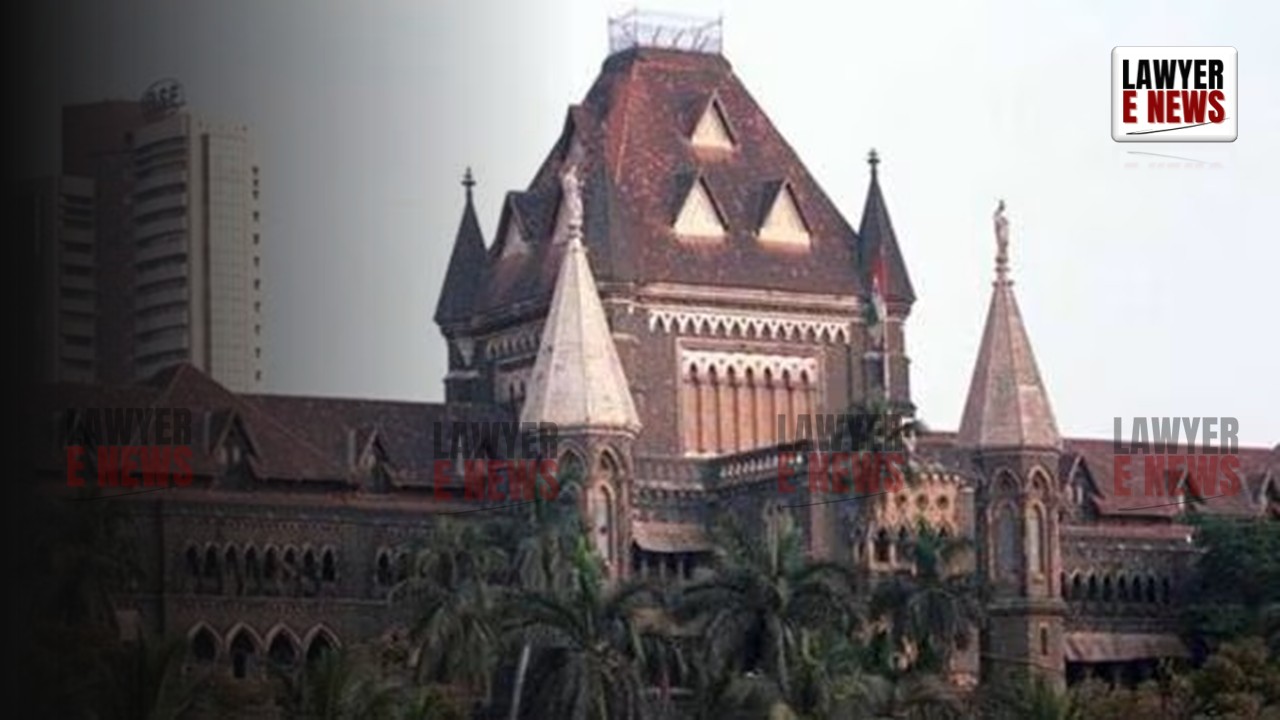
" Probate Petition Maintainable For Estate Of Undischarged Insolvent; Succession & Insolvency Acts Operate In Different Spheres," Bombay High Court, in a significant ruling dated April 6, 2026, held that a creditor of a deceased undischarged insolvent does not possess a "caveatable interest" to oppose the probate of the deceased's Will.
A bench of Justice Sharmila U. Deshmukh observed that the grant or refusal of a probate has zero impact on a creditor's right to recover dues, as the insolvent's estate legally vests in the Official Assignee who will adjudicate all debt claims independently in insolvency proceedings.
The testamentary proceedings arose when an executor sought probate of the Will of Harshad Harilal Choksi, who had passed away as an undischarged insolvent. The Caveator, claiming to be the legal heir of a judgment creditor of the deceased, opposed the probate petition on the suspicion that the Will was forged to defeat the creditors' interests. The Caveator filed the affidavit in support of his caveat after a delay of 133 days, but crucially, filed the application to condone this delay nearly four years later, prompting the executor to seek the dismissal of the caveat entirely.
The primary question before the court was whether a creditor of a deceased undischarged insolvent has a caveatable interest to object to the grant of probate. The court was also called upon to determine whether a testamentary petition for the probate of an undischarged insolvent's Will is legally maintainable.
Delay Application Barred By Limitation
The court first addressed the Caveator's application seeking to condone the 133-day delay in filing the affidavit in support of the caveat. The court noted that while the affidavit itself was filed in 2018, the actual application for condonation was filed in November 2022 without any prayer to condone the massive four-year gap. The bench ruled that under Article 137 of the Limitation Act, 1963, the limitation period commenced upon the delayed filing of the affidavit, making the application itself time-barred.
Negligence Defeats Legal Remedy
Observing the sheer lack of explanation for the subsequent four-year delay, the court refused to entertain the application. The bench emphasized that entertaining such delayed applications would allow parties to stall probate grants by deliberately acting passive. The court noted, "Law comes to the aid of the parties who are diligent in pursuing their remedies and not to the parties who have demonstrated negligence and inaction."
Probate Petition For Insolvent Is Maintainable
Rejecting the Caveator's contention that no legally inheritable estate exists for an undischarged insolvent due to its vesting in the Official Assignee, the High Court held the probate petition to be fully maintainable. The court relied on Section 76 of the Presidency Towns Insolvency Act, 1909, which entitles an insolvent to any surplus remaining after the full payment of creditors. This potential surplus constitutes the estate of the deceased capable of devolution.
"Surplus" Constitutes Assets Under Succession Act
The bench clarified that there is no embargo under the Indian Succession Act, 1925, against seeking probate of an undischarged insolvent's Will. The statutory mandate under Section 276(1)(c) of the Succession Act merely requires the petitioner to state the "assets likely to come to the petitioner’s hands." The court observed that the surplus remaining upon the satisfaction of debts qualifies perfectly as such an asset under the law.
No Repugnancy Between Insolvency And Succession Laws
The court drew a clear doctrinal distinction between the jurisdictions exercised by a Probate Court and an Insolvency Court. While the Insolvency Act provides the mechanism for realizing the estate and satisfying debts, the Probate Court is exclusively concerned with the validity and authenticity of the Will. The bench observed that the two legislations are not in conflict and operate in entirely different spheres.
Creditor Lacks Caveatable Interest
Addressing the core jurisdictional dispute, the High Court categorically ruled that the creditor of an insolvent does not possess a caveatable interest in probate proceedings. The court emphasized that the Caveator's proof of debt was lodged with the Official Assignee and would be adjudicated entirely within the insolvency proceedings. The bench noted that irrespective of the probate being granted or refused, the Caveator's right to debt recovery remains wholly unaffected.
"The estate of the deceased dying as undischarged insolvent vests in the official assignee and the grant of Probate or otherwise has zero impact on the Caveator’s right to receive due payment."
Stranger To Probate Proceedings
The court highlighted that to sustain a caveat, the opposer must show an interest derived from the deceased by succession or otherwise. Since the Caveator was disputing the very existence of the estate and the testator's legal capacity to bequeath property due to his insolvency, he had no locus. The court observed that such a person effectively becomes a stranger to the probate proceedings.
Probate Court Cannot Decide Title Disputes
The bench firmly reiterated that a probate proceeding cannot be allowed to morph into an unchartered title suit or a debt recovery platform. The opposition to a grant must be germane to the issue of the Will's execution. The court noted that asserting a right to recover debts is an alien issue in testamentary jurisdiction, and the Probate Court does not venture into disputes of title or the administration of the estate.
Consequently, the High Court dismissed the Caveator's application for condonation of delay as barred by limitation. The court allowed the executor's application, formally rejecting the caveat due to a complete lack of caveatable interest, thereby paving the way for the testamentary proceedings to continue unaffected by the creditor's claims.
Date of Decision: 06 April 2026