-
by sayum
26 August 2026 6:42 AM







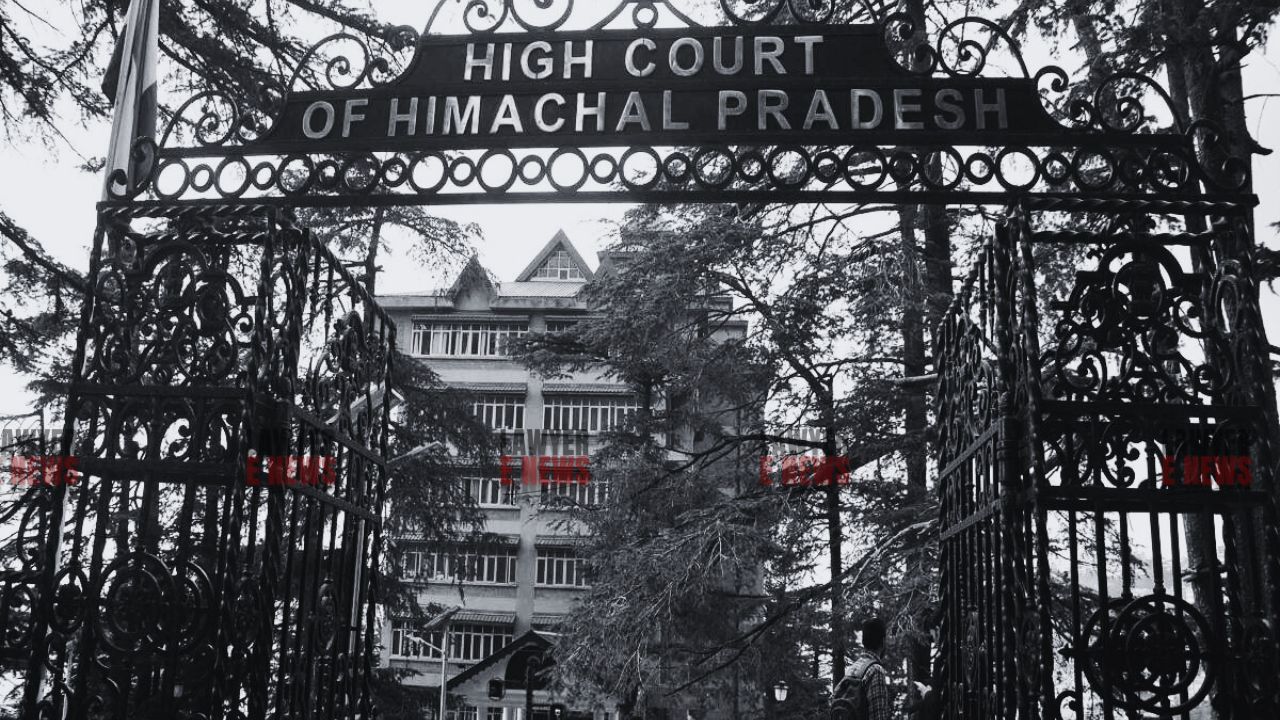
Himachal Pradesh High Court, in Santosh Kumar Mukherjee (Deceased) through LRs vs. Nand Lal (Deceased) through LRs, delivered a significant ruling addressing the appealability of counter-claims under the Code of Civil Procedure (CPC). Justice Virender Singh allowed the appellants' Regular Second Appeal, restoring the trial court’s judgment, which decreed the appellants' suit and dismissed the counter-claim. The High Court emphasized that both the dismissal of the main suit and the counter-claim required separate appeals, and failure to file separate appeals led to the application of res judicata.
The dispute originated from a civil suit filed by the appellants, who claimed ownership and sought a prohibitory injunction to prevent the respondents from interfering with their possession of certain lands in Solan, Himachal Pradesh. The respondents, in turn, filed a counter-claim challenging the plaintiffs' ownership and seeking correction of revenue entries, alleging that the land in dispute was improperly recorded in the appellants' name.
The trial court decreed the appellants' suit and dismissed the respondents' counter-claim. However, the First Appellate Court reversed this judgment, dismissing the appellants' suit and allowing the counter-claim, prompting the appellants to file this second appeal under Section 100 of the CPC.
The key legal issue involved whether the First Appellate Court could reverse the trial court’s decision on both the suit and the counter-claim without the respondents filing a separate appeal for the dismissed counter-claim.
The High Court examined the provisions of Order VIII Rule 6A to 6G of the CPC, which treat a counter-claim as a cross-suit. Citing Supreme Court judgments, including Jag Mohan Chawla vs. Dera Radha Swami Satsang (1996) and Satyender vs. Saroj (2022), the court reiterated that a counter-claim is to be treated as an independent suit, and any decision on the counter-claim must be challenged separately through an appeal. The court underscored that failure to file a separate appeal against the dismissal of the counter-claim would result in finality of the trial court’s decision on that point, applying the principle of res judicata.
Justice Virender Singh highlighted that the respondents, after their counter-claim was dismissed by the trial court, should have filed a separate appeal to challenge that dismissal. Instead, they only filed a single appeal challenging the dismissal of the main suit. The court held:
“When both the suit and the counter-claim are decided, separate appeals must be filed to challenge both. Failure to file separate appeals results in res judicata.” [Paras 24, 26]
Further, the court held that the First Appellate Court exceeded its jurisdiction by reversing the trial court's decision on the counter-claim without a separate appeal being filed by the respondents:
“The counter-claim is a separate legal issue requiring its own appeal, and the First Appellate Court erred in entertaining the counter-claim without such an appeal.” [Paras 36-37]
The court referred to previous rulings which confirm that a counter-claim is akin to a separate suit and must be adjudicated independently in any appeal process. Failure to do so bars further judicial interference under the doctrine of res judicata.
The Himachal Pradesh High Court allowed the appeal, setting aside the judgment of the First Appellate Court and restoring the trial court’s judgment, which decreed the appellants' suit and dismissed the respondents' counter-claim. The court affirmed that proper legal procedure requires separate appeals for the dismissal of both the main suit and the counter-claim.
Date of Decision: September 20, 2024
Santosh Kumar Mukherjee (Deceased) through LRs vs. Nand Lal (Deceased) through LRs





