
-
by sayum
25 August 2026 12:32 PM







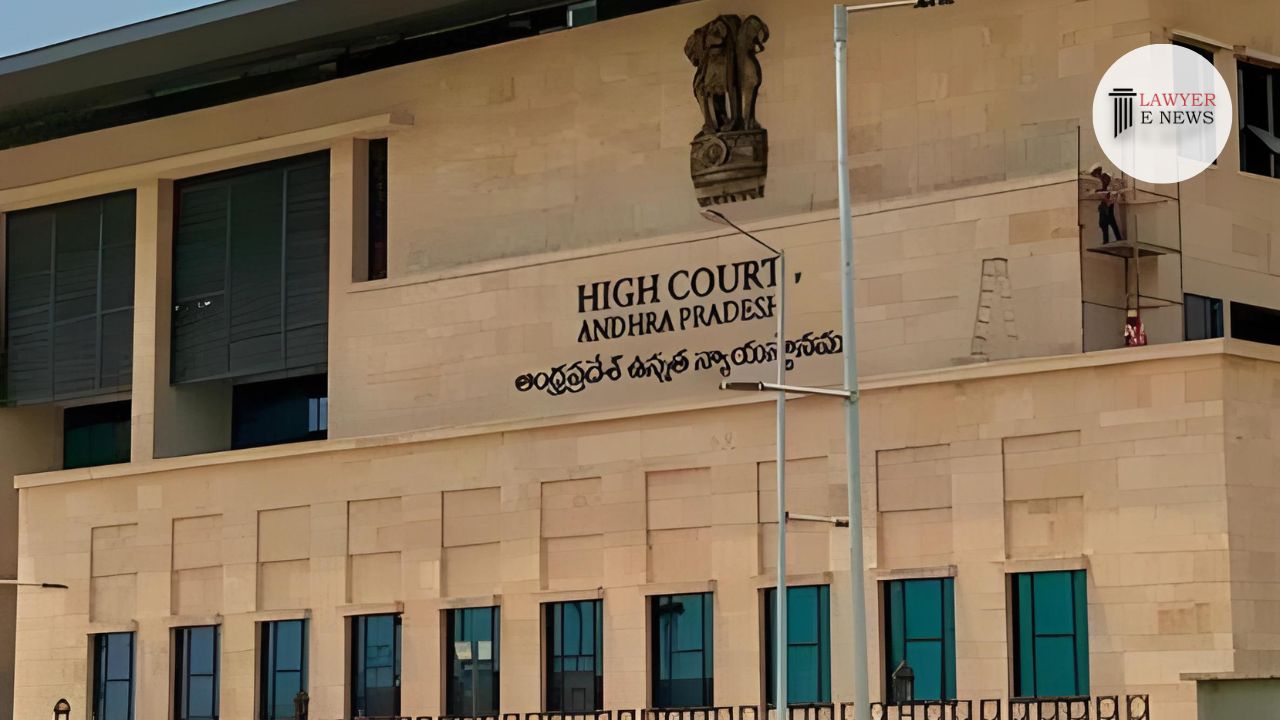
In a bail order, Andhra Pradesh High Court, in the case M.V.V. Satyanarayana and Others v. The State of Andhra Pradesh and Others (Criminal Petition Nos. 4287 and 4338 of 2024), granted anticipatory bail to three petitioners accused of conspiracy, forgery, and extortion related to disputed property transactions and the reconstitution of a partnership firm. Justice Dr. V.R.K. Krupa Sagar observed that the criminal allegations stemmed from a civil dispute over business dealings and that custodial interrogation was unnecessary.
The case originated from a business and property dispute between the petitioners, including M.V.V. Satyanarayana, a former Member of Parliament and a businessperson, and the de facto complainant, a civil engineer and builder. The de facto complainant alleged that the petitioners conspired to seize control of a partnership firm (Hayagreeva Farms & Developers) through coercion, forgery, and manipulation. It was further claimed that the petitioners forced the complainant to sign various documents, including an agreement for the sale of land and a deed of reconstitution of the partnership firm, under duress.
An FIR was lodged after a delay of more than three years, following a change in the political landscape in Andhra Pradesh. The petitioners sought anticipatory bail under Section 438 of the Criminal Procedure Code (now Section 482 of the Bharatiya Nagarik Suraksha Sanhita, 2023), contending that the dispute was civil in nature and the criminal proceedings were initiated with ulterior motives.
The primary legal issues were:
Whether the petitioners could be granted anticipatory bail in light of the allegations of conspiracy, forgery, and extortion.
Whether the facts of the case indicated that the dispute was primarily civil in nature, and thus, custodial interrogation was unwarranted.
Justice Dr. V.R.K. Krupa Sagar carefully analyzed the allegations, the FIR, and the circumstances surrounding the case. The Court noted several key points:
The Court observed that the dispute largely revolved around property transactions and the reconstitution of a partnership firm. Multiple civil suits and arbitration proceedings had already been initiated between the parties regarding the same transactions. The Court held that while the allegations involved criminal offenses such as forgery and extortion, they were closely intertwined with civil disputes that were pending in civil courts.
"A fact in dispute may give rise to consequences civil in nature as well as penal," the Court noted [Para 15].
The Court also emphasized the significant delay in lodging the FIR—more than three years after the alleged incidents occurred. The complainant explained the delay as a result of the petitioners' political influence, which, according to him, prevented him from taking legal action earlier. The Court, however, was not persuaded by this explanation, especially since civil litigation had been ongoing during this period.
"At a bail hearing, when the record discloses inordinate delay in lodging the F.I.R., it is certainly a matter that is relevant for consideration," the Court stated [Para 21].
The Court found no specific allegations of direct threats or coercion that would justify custodial interrogation of the petitioners. The petitioners were well-established in their professions, had no prior criminal history, and there was no indication that they would abscond or tamper with evidence.
"When the allegations made do not show any particular need for custodial interrogation and when the facts alleged by themselves do indicate that the crime had come to be registered on change of political establishment in the State, the prayer made by the petitioners need be granted," the Court ruled [Para 23].
The Andhra Pradesh High Court allowed both criminal petitions and granted anticipatory bail to the petitioners. The Court imposed certain conditions to ensure the petitioners' cooperation with the investigation, including the execution of personal bonds, marking attendance with the investigating officer, and refraining from influencing witnesses.
"In the result, both the Criminal Petitions are allowed. In the event of arrest of the petitioners herein/A.1, A.2 and A.3, they shall be enlarged on bail on each executing a personal bond for a sum of Rs.30,000/-...," the Court ordered [Para 24].
The Court's decision highlights the importance of distinguishing between civil and criminal disputes in matters involving business transactions. The case reaffirms that allegations of conspiracy, forgery, and extortion, if primarily arising from a civil dispute, do not necessarily warrant custodial interrogation. The Court also took into account the delay in lodging the FIR and the ongoing civil litigation, ultimately granting anticipatory bail to protect the petitioners' personal liberty.
Date of Decision: October 17, 2024
M.V.V. Satyanarayana and Others v. The State of Andhra Pradesh and Others





