-
by sayum
27 August 2026 3:32 PM







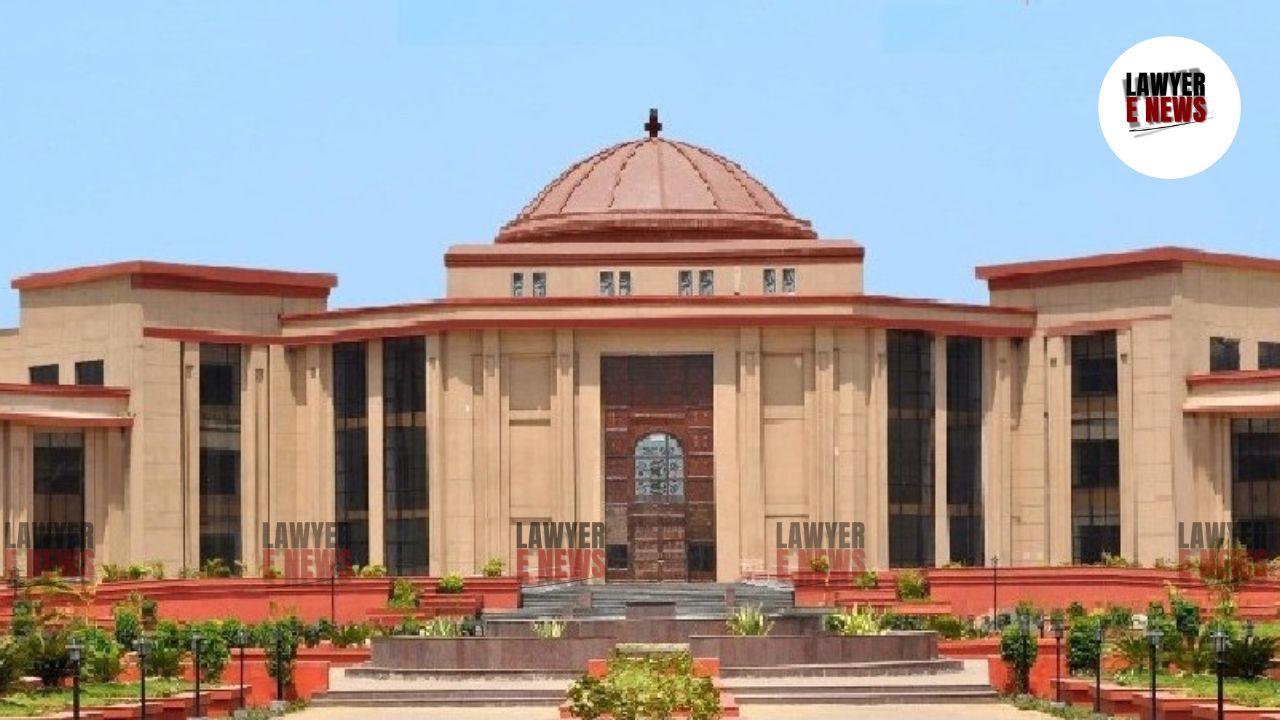
"For a transaction involving such a large amount, some documentary evidence would ordinarily be expected; however, no such evidence has been produced", Chhattisgarh High Court has dismissed acquittal appeals filed by a complainant in a Section 138 Negotiable Instruments Act case, affirming the acquittal of the accused after finding that the complainant — who claimed to have paid Rs. 35,00,000/- in cash as advance for land purchase — could not explain the source of the money, did not know basic details of the land in question, and admitted his annual income was a mere Rs. 3,50,000/-.
Justice Radhakishan Agrawal, upholding the Sessions Court's reversal of the trial court conviction, held that the statutory presumptions under Sections 118 and 139 of the NI Act stood successfully rebutted by the accused.
The Court examined whether the Sessions Court was justified in reversing the trial court's conviction, whether the complainant had discharged his initial burden of establishing the existence of a legal liability or debt, and whether the accused had successfully rebutted the statutory presumptions under Sections 118 and 139 of the NI Act.
Complainant's Own Admission Demolished the Case
The Court undertook a searching analysis of the complainant's testimony. In cross-examination, the complainant admitted that his annual income was approximately Rs. 3,50,000/- — yet he claimed to have paid Rs. 35,00,000/- in cash, which is ten times his annual income. He produced no income tax returns to explain the source of this amount despite claiming they existed. He admitted the complaint did not state when, where, or how the cash was paid. He admitted he never had Rs. 35,00,000/- in his Bank of Baroda account. He could not identify the land — not even its khasra number, rate per unit, or ownership details.
"The evidence of the complainant/appellant does not inspire confidence and fails to establish the existence of any legal liability."
The Court found this cumulative admission fatal to the complainant's case. A claim of Rs. 35 lakhs in cash, without a date, without a place, without a witness, without a written agreement, and without any document whatsoever, could not sustain a criminal prosecution.
Accused's Defence Was Probable and Documented
In contrast, the respondent-accused examined himself and categorically denied receiving any amount. He testified that the complainant had forcibly obtained the cheques from him during a land dispute over possession. Crucially, he proved documentary evidence — Exhibits D-1 to D-3 — showing that he had issued stop-payment instructions to his bank on 29.08.2012, well before any dispute crystallised into litigation. The Court found this documentary evidence to be a significant indicator that the cheques were not issued in discharge of any legal liability.
The Court noted that the accused's testimony was consistent in cross-examination and was supported by documents — precisely the kind of probable defence that the Supreme Court in Kamla S. v. Vidhyadharan M.J. (2007) recognised as sufficient to rebut the statutory presumption. The standard of proof required of an accused to rebut the presumption under Sections 118 and 139 is only preponderance of probability — not proof beyond reasonable doubt.
Standard of Presumption Rebuttal Clarified
The Court quoted the Supreme Court's ruling in Kamla S. at length, noting: "The standard of proof in discharge of the burden in terms of Section 139 of the Act being of preponderance of a probability, the inference therefor can be drawn not only from the materials brought on record but also from the reference to the circumstances upon which the accused relies upon."
Applying this standard, the Court held that where the complainant himself cannot establish the foundational facts of the alleged transaction — the date, place, mode, source, and basic terms of the alleged advance payment — the presumption in favour of the complainant is effectively hollow and the accused need not meet a high evidentiary burden to displace it.
Notice Held Validly Served Despite Non-Receipt
On the question of statutory notice, the Court noted that the notice was returned with the remark that the premises were locked and no one was available. However, since the notice was sent to the correct address as mentioned in the complaint, and since the accused failed to establish that he was not residing at that address or that the address was incorrect, the Court — relying on the Supreme Court's ruling in D. Vinod Shivappa v. Nanda Belliappa (2006) — held the notice to be validly served. The notice requirement under Section 138 NI Act was accordingly satisfied.
Appellate Interference in Acquittals Requires a High Threshold
The Court reiterated the governing principles on appeals against acquittal, drawing from the Supreme Court's ruling in Jafarudheen v. State of Kerala (2022) and Mallappa v. State of Karnataka (2024). An acquittal adds to the double presumption of innocence in favour of the accused. Reversal from acquittal to conviction demands demonstration of illegality, perversity, or an error of law or fact in the acquitting court's reasoning. Where two views are possible, the view favourable to the accused must ordinarily prevail.
"If the view of the Trial Court is a legally plausible view, mere possibility of a contrary view shall not justify the reversal of acquittal."
The Court found that the Sessions Court's appreciation of evidence was comprehensive, its finding that the complainant failed to prove legal liability was well-reasoned, and its view was entirely plausible. No illegality or perversity could be found warranting interference.
The Chhattisgarh High Court dismissed both acquittal appeals, confirming the acquittal of respondent Mahendra Singh Thakur under Section 138 NI Act. The Court held that the statutory presumptions under Sections 118 and 139 of the NI Act, though raised on admission of the cheques and signatures, were successfully rebutted by the accused through documentary proof of stop-payment instructions and a consistent denial supported by probable defence. The complainant's failure to explain the source of a Rs. 35 lakh cash payment, combined with his own admission of minimal income and absence of any documentary evidence, proved fatal to his case.
Date of Decision: 10th April, 2026