-
by sayum
27 August 2026 3:32 PM







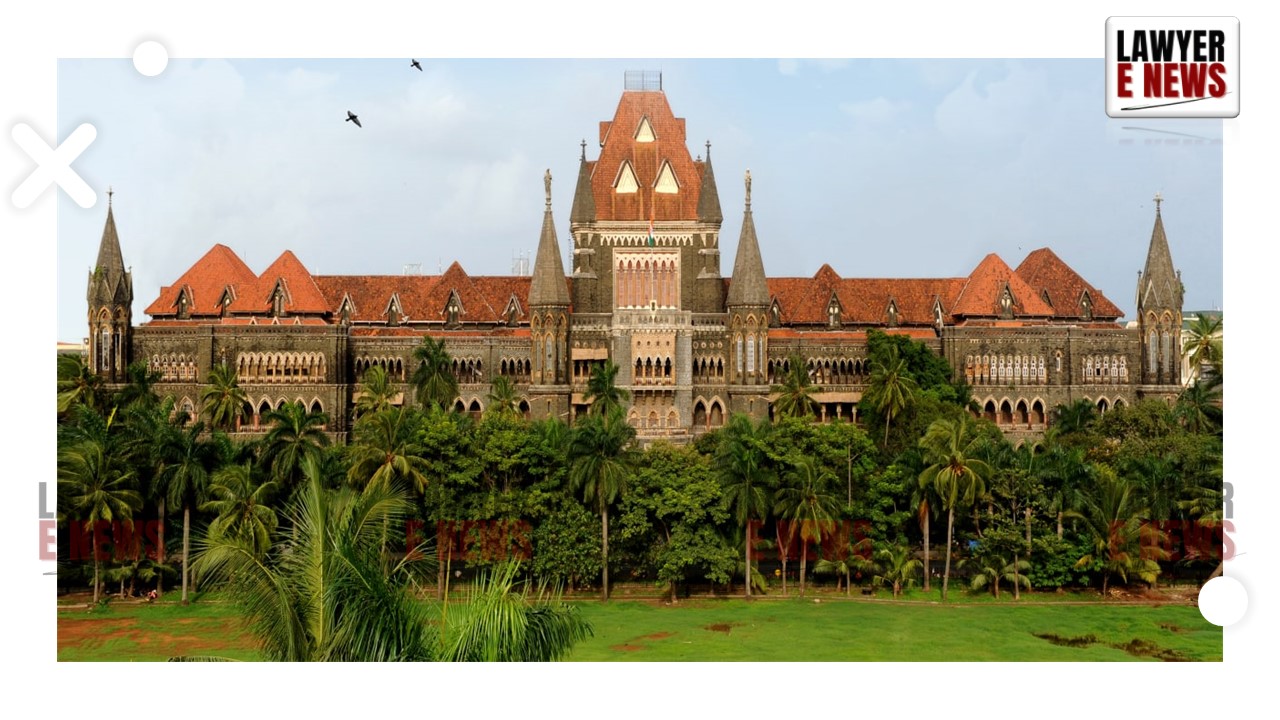
"After rejection of their Change Report on 6th August 2025, the Managing Committee had no legal right or authority to continue in management, more so when the tenure of the elected office bearers came to an end in September 2025. As a result, the Managing Committee could not have acted and functioned thereafter," Bombay High Court, in a significant ruling, held that the Charity Commissioner possesses the statutory authority to intervene in the management of a public trust and stay elections when the governing body continues to function beyond its legal tenure.
A single-judge bench of Justice Farhan P. Dubash observed that such intervention is necessary to prevent "patent illegality" and "manifest arbitrariness" in the administration of public charitable institutions.
The dispute concerned the Asiatic Society of Mumbai, a prestigious 200-year-old public research library. Following the rejection of a 2023 election change report and the expiration of the Managing Committee’s tenure in September 2025, the existing management continued to function and scheduled fresh elections for March 2026. However, following a State Legislative Assembly inquiry and an Inspector's report revealing 2,050 missing books and a drastically inflated voters' list, the Charity Commissioner stayed the elections and appointed an interim committee.
The primary questions before the court were whether the Charity Commissioner violated the principles of natural justice by passing the impugned orders without adequate notice. The court was also called upon to determine whether the Charity Commissioner had the statutory jurisdiction under the Maharashtra Public Trusts Act (MPT Act) to stay a trust's election and appoint a "fit person" to an interim management committee.
Natural Justice Requirements Met Through Prior Hearings
The Court rejected the petitioners' contention that the orders were passed in breach of natural justice. It noted that the Charity Commissioner had given adequate advance notice to the office bearers and conducted multiple hearings on March 5, 9, 11, and 12, 2026. The bench observed that the office bearers were not only personally present but were also represented by counsel, with their affidavits being considered before the order was passed.
Managing Committee Cannot Function After Expiry Of Tenure
The Court emphasized that once a Change Report is rejected and the elected tenure ends, a Managing Committee loses its legal mandate to govern. Referring to the MPT Act, the bench noted that the committee in this case continued to take significant decisions, such as admitting new members, which fell far outside the scope of day-to-day administration.
"The record reveals that it not only continued to function but has also taken decisions other than those that are required for the day-to-day administration... This is entirely impermissible."
Irregularities In Scrutinizing Committee Vitiate Voters' List
The Court highlighted a glaring discrepancy in the membership process, noting that the Scrutinizing Committee recommended 1,467 applications after its tenure ended, compared to only 349 during its official one-year term. The bench held that such suo motu continuation and the subsequent inclusion of these names in the voters' list without proper approval were irregularities that justified the Charity Commissioner’s intervention.
Court Validates Exercise Of Powers Under MPT Act
The Court found that the Charity Commissioner acted correctly by instituting Inquiry No. 3 of 2026 following legislative concerns regarding missing books and election postponements. The bench ruled that Sections 3, 36A, 47, and 69 of the MPT Act provide the Commissioner with sufficient power to issue directions for effective interim management and to ensure the trust is administered according to its rules.
"The Charity Commissioner has sufficient powers under Section 36A, Section 69 and Section 3 of the said Act to issue directions to ensure that the affairs of the Asiatic Society are administered in accordance with its Rules and Regulations."
Interim Arrangement Essential For Smooth Functioning
The bench maintained that the appointment of a committee comprising a "fit person" and five managing committee members was a valid interim arrangement under Section 47 of the MPT Act. Justice Dubash stated that the petitioners failed to demonstrate any patent illegality in the Commissioner's decision to stay the resolution of February 20, 2026, which sought to hold elections based on a disputed voters' list.
The High Court dismissed the writ petitions, upholding the Charity Commissioner’s orders to constitute an interim management committee and a sub-committee for preparing a fresh, valid voters' list. The court further rejected the petitioners' request for a stay on the operation of this judgment, emphasizing the need for the immediate restoration of legal order within the trust's administration.
Date of Decision: 23 April 2026