-
by sayum
27 August 2026 3:32 PM







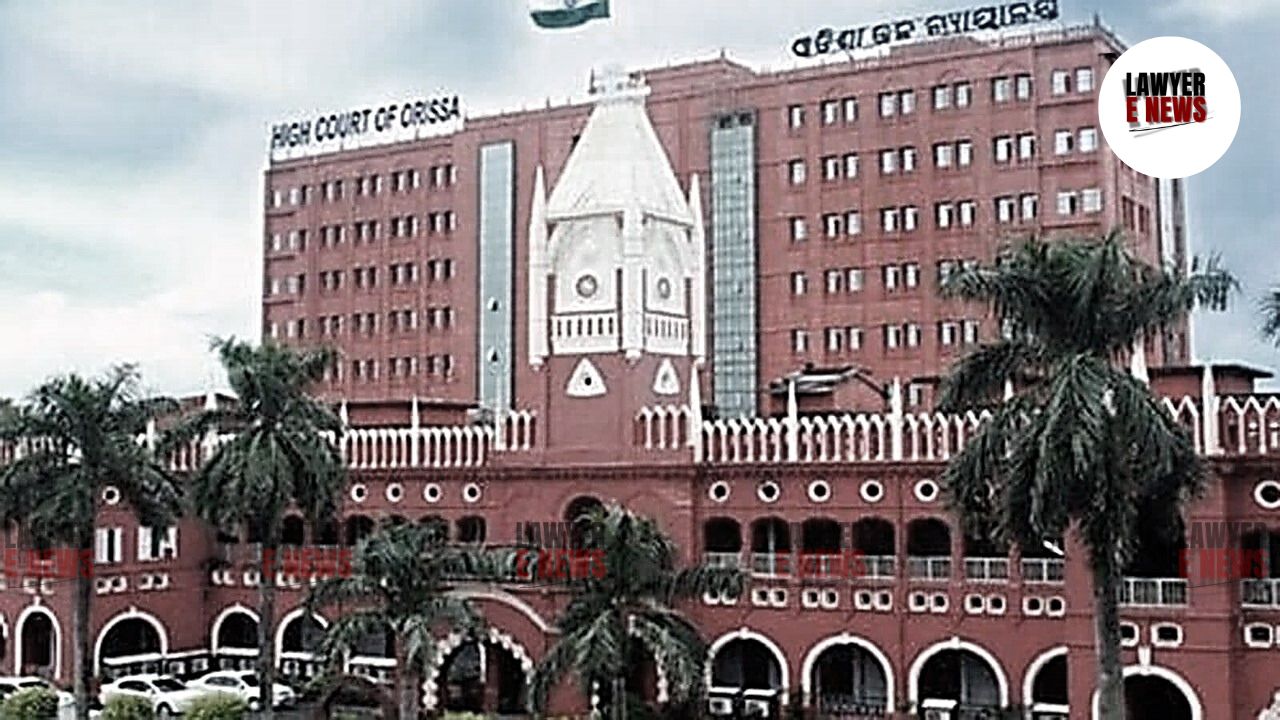
"Cancellation of results on the basis of inference, presumptions, conjectures and surmises without any direct evidence or material is not sustainable under law", Orissa High Court has quashed the cancellation of Class XII CBSE results of several students of Padampur Public School, Bargarh, holding that similarity of answers in multiple choice questions — without any report of malpractice from the principal, centre superintendent, invigilators, or flying squad — cannot constitute sufficient ground to cancel examination results.
Justice Ananda Chandra Behera directed all opposite parties jointly and severally to publish the results within one week and to communicate consequential certificates and mark sheets immediately thereafter.
Background of the Case
The petitioners were regular Class XII students of Padampur Public School, Bargarh District, who appeared in the CBSE Senior School Certificate Examination, 2025 at Odisha Adarsha Vidyalaya, Bandupali. When results were declared on 13.05.2025, the petitioners found their results withheld — their entries on the website showed "Result Later" with no marks awarded in any subject. On 26.05.2025, the CBSE Regional Office, Bhubaneswar issued an order cancelling their results entirely on the ground of Unfair Means (UFM), citing similarity of answers in some multiple choice questions in two to three subjects with adjacent students.
The petitioners had earlier filed WPC No. 34771 of 2025 before the same Court, which by judgment dated 08.12.2025 directed them to submit a representation before the CBSE Regional Office. Despite submitting a joint representation within the stipulated time, no response was forthcoming from CBSE. Left with no option, the petitioners filed the present writ petition.
Legal Issues
The core question before the Court was whether the impugned cancellation order — based solely on similarity of answers in MCQ-type questions with adjacent students, in the complete absence of any complaint from examination centre authorities, recovery of incriminating material, or report from any flying squad — was sustainable in law, particularly in light of Article 14 of the Constitution.
Court's Observations and Judgment
On the Undisputed Facts — No Report, No Recovery, No Complaint
The Court recorded, as undisputed facts, the following crucial circumstances: the examination centre itself was never "scratched" or subject to any inspection on grounds of malpractice; not a single authority at the centre — neither the principal, centre superintendent, nor any invigilator — had filed any complaint of malpractice against the petitioners; no flying squad had reported anything adverse; and no incriminating material whatsoever was recovered from the possession of the petitioners or from the examination hall.
In the face of this complete absence of ground-level evidence, the CBSE had nonetheless cancelled the petitioners' results entirely — while simultaneously publishing the results of all other students of the very same examination centre without any interference. "The result of all other students have been duly published. Much after the evaluation of the answer sheets of the petitioners, the final result of the petitioners were not published on the ground of UFM and their result was cancelled stating about the giving up of similar answers in some multiple choice questions in some subjects."
On Article 14 — Selective Cancellation Without Proof Violates Equality
The Court found CBSE's conduct to be discriminatory and violative of Article 14 of the Constitution of India. When the board published results of virtually all students of the same centre but selectively cancelled the results of only the petitioners and a few others — without any authentic or concrete proof of malpractice — it adopted a discriminatory attitude that struck at the constitutional guarantee of equal treatment.
"When the CBSE published the final result of all the students of the same examination centre except the petitioners and some other few students alleging malpractice against the petitioners, on the basis of inferences, surmises and conjectures without any direct evidence/material relating to the so-called malpractice adopting discriminatory attitude, then, the above conduct is ultimately affecting the right to equality of the petitioners guaranteed under Article 14 of the Constitution of India."
On Standard of Proof — Similarity of MCQ Answers Is Not Evidence of Copying
The Court applied a well-established line of precedent on the standard of proof required to establish malpractice in examinations. Relying on Board of Secondary Education, Orissa v. Gayatri Hota and Others (2001 (I) OLR 398), the Court held that where questions are objective in nature and short in form, there is an inherent possibility of similarity in answers among different examinees — without any copying having taken place. "On the basis of suspicion, a positive decision cannot be arrived at."
The Court also drew from the Allahabad High Court's ruling in Harish Chandra Tewari v. Board of H.S. (AIR 1981 All. 144), which had explicitly refused to accept the charge of copying solely on the ground that answers of examinees remarkably tallied with one another, in the absence of any direct evidence that the petitioner was observed using unfair means. The principle was clear: "similarity in some of the answers in the two answer books in question was not proper, there being no direct evidence that any one observed the petitioner using unfair means during the course of the examination."
The Court similarly relied on Basanta Kumar Pradhan v. State of Orissa (2011 (1) OJR 868), where the Orissa High Court had held that examination committees must have sufficient materials to conclude that malpractice occurred and cannot base their decisions on presumption, conjectures and surmises — particularly where no incriminating material was found from the student's possession or from the examination hall as per any flying squad report.
On the Primary Role of Examination Centre Authorities
The Court acknowledged the general principle, drawn from the Supreme Court's ruling in Chairman, J&K State Board of Education v. Feyaz Ahmed Malik (AIR 2000 SC 1039), that matters concerning campus discipline and conduct of examinations are primarily vested in the authorities in charge of the institution, and courts should ordinarily not substitute their views for those of examination authorities.
However, the Court found this principle to be of no assistance to CBSE in the present case — for the very authorities who were "in charge" and "vested with all powers and authorities to conduct the examination" had raised no complaint against the petitioners whatsoever. The absence of any adverse report from the examination centre's own authorities fatally undermined the cancellation. "When there was no allegation against the petitioners relating to the adoption of any malpractice by the in-charge of the examination centre, who was vested with all powers and authorities to conduct the examination, then, the cancellation of result on the basis of inference, presumptions, conjectures and surmises without any direct evidence or material is not sustainable under law."
The writ petition was allowed in part. The impugned order dated 26.05.2025 cancelling the results of the petitioners in the Senior School Certificate Examination, 2025 (Class XII) was quashed. All opposite parties were jointly and severally directed to publish the results of the petitioners within one week from the date of the judgment and to communicate the results, consequential certificates, and mark sheets as per rules immediately after publication.
Date of Decision: 10.04.2026