-
by sayum
27 August 2026 7:40 AM







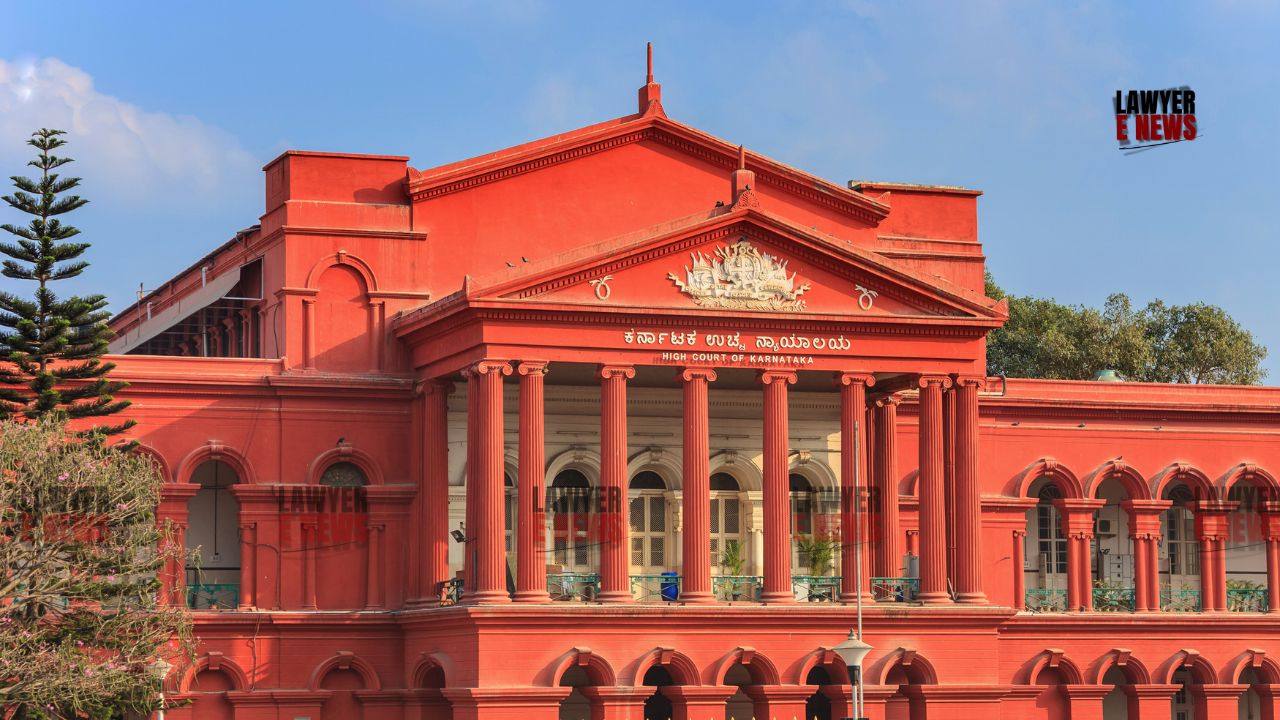
"Mere Knowledge That The Victim Belongs To A Scheduled Caste Is Not Sufficient; The Offence Must Have Been Committed On The Ground That Such Person Belongs To SC/ST", In a significant ruling that scrutinises the misuse of the SC/ST (Prevention of Atrocities) Act as a retaliatory weapon, the Karnataka High Court on April 10, 2026 granted anticipatory bail to three accused persons — including a 68-year-old agricultural labourer and his injured son — holding that the caste abuse complaint filed against them was a counter-blast to an earlier complaint of machete assault, and that no prima facie case of intentional caste-based humiliation was made out on the face of the FIR.
Justice M.G.S. Kamal set aside the Sessions Court's rejection of anticipatory bail and held that the absolute bar under Section 18 of the SC/ST (POA) Act does not operate where the first impression of the FIR itself fails to disclose a prima facie offence under Section 3 of the Act.
Background of the Case
On the night of January 15, 2026, a village jatra was being celebrated in the appellants' village of Madike Chiluru, Shivamogga district. A group from the neighbouring Hadona Halli village — including the complainant Yashavanth and his associates — were dancing in the front area during a DJ orchestra, obstructing the view of seated villagers. Appellant No. 1, Parameshwarappa, aged 68, asked the group to move to the side. The request escalated into a verbal altercation, and one of the group members, who had arrived with a machete, assaulted Appellant No. 2, Aruna — Parameshwarappa's son — striking him on the head and causing severe bleeding injuries. Aruna fell unconscious and was rushed to McGann District Government Hospital, Shivamogga. His assailants further incited others to "finish him off."
One Nagarajappa filed a complaint on behalf of the injured Aruna at 1:00 AM on January 16, 2026, which was registered as Crime No. 17/2026 under Sections 352, 118(1), 109 and 351(2) read with Section 3(5) of the Bharatiya Nyaya Sanhita, 2023. The complainant Yashavanth was named as Accused No. 8 in this case.
Two and a half hours later, at 3:30 AM on the same night, Yashavanth filed a counter-complaint alleging that the three appellants and eight to ten others had abused him and his associates in the name of their caste during the orchestra, and had pulled them away from the venue and assaulted them. This complaint was registered as Crime No. 18/2026 under Sections 115(2), 352 and 3(5) of the BNS, 2023 and Sections 3(1)(r), 3(1)(s) and 3(2)(va) of the SC/ST (POA) Act, 1989.
The appellants applied for anticipatory bail before the II Additional District and Sessions Judge, Shivamogga, which was rejected on February 3, 2026. They then approached the High Court.
Legal Issues
Two central questions arose. First, whether Section 18 of the SC/ST Act, which imposes an absolute bar on anticipatory bail, would prevent the Court from granting relief even where the FIR does not disclose a prima facie case under Section 3. Second, whether the allegations in the FIR satisfied the requirement of "intent to humiliate" on the ground of caste under Section 3(1)(r) of the SC/ST Act.
Court's Observations and Judgment
On the Counter-Blast Nature of the Complaint
Justice Kamal examined the sequence of events with care. The Court had directed the Government Pleader to ascertain from the hospital records the order in which the parties had been admitted to McGann District Government Hospital. The inquiry confirmed that Appellant No. 2, Aruna, was admitted and treated first — before Yashavanth and his associates. This corroborated the appellants' version and directly supported the conclusion that it was the complainant's group that had committed the first act of violence.
The Court noted that Crime No. 17/2026 was registered at 1:00 AM at the instance of the appellants' side — with Yashavanth as Accused No. 8 therein — and Crime No. 18/2026 alleging caste abuse was registered at 3:30 AM at Yashavanth's instance. The chronology spoke for itself. "The sequence of events noted above indicate that the complaint on behalf of the appellants herein was registered in Crime No.17/2026 at first instance and followed by the complaint by respondent No.2 herein."
The Court further observed that the entire incident appeared to have occurred in the spur of the moment, under grave provocation arising from the machete attack on Appellant No. 2. Reading the FIR in isolation from these surrounding circumstances, the Court warned, would lead to a misleading conclusion.
On the Improbability of the Caste Abuse Allegation
The allegation in Crime No. 18/2026 was that all three appellants and eight to ten others simultaneously abused the complainant in the name of his caste — while the DJ orchestra was playing at full volume. Justice Kamal found this claim inherently improbable. "In the sound decibel of DJ music, it was improbable and impossible for him to have heard all the three accused persons and eight to ten others at once abusing him." The allegation that a crowd of over ten people chorused caste-based abuses in unison, audible above blaring DJ music, strained credulity and suggested fabrication to implicate the appellants in a counter-case.
On the Legal Meaning of "Intent to Humiliate" Under Section 3(1)(r)
The Court drew on the Supreme Court's authoritative exposition in Shajan Skaria v. State of Kerala, 2024 SCC OnLine SC 2249, which had laid down the correct interpretation of the "intent to humiliate" requirement under Section 3(1)(r) of the SC/ST Act. The provision, the Supreme Court had held, is not attracted by every instance of insult or abuse — it must be construed in the context of caste identity and the concept of untouchability.
"Mere knowledge of the fact that the victim is a member of the Scheduled Caste or Scheduled Tribe is not sufficient to attract Section 3(1)(r) of the Act, 1989. The offence must have been committed against the person on the ground or for the reason that such person is a member of Scheduled Caste or Scheduled Tribe."
This position was reiterated by the Supreme Court in Keshaw Mahto v. State of Bihar, SLP (Crl.) No. 12144/2025 decided on 12.01.2026. Applying this settled legal standard to the facts, Justice Kamal found that the facts and circumstances — a provocation-driven altercation at a public event, a prior violent assault on the appellants' side, and implausible simultaneous caste abuse allegations — disclosed no prima facie material of caste-targeted humiliation as contemplated by the SC/ST Act.
On the Bar Under Section 18 and When It Yields
The Government Pleader pressed the absolute bar under Section 18 of the SC/ST Act, which expressly excludes the application of anticipatory bail provisions in cases involving accusations under the Act. The Court acknowledged the force of this argument but held that the bar is not truly absolute where the FIR itself fails to make out a prima facie case.
Relying on the Supreme Court's decision in Kiran v. Rajkumar Jivraj Jain, 2025 SCC OnLine SC 1886, the Court applied the principle that where the first reading of the FIR reveals that no offence under Section 3 of the SC/ST Act is made out, the court retains discretion to grant anticipatory bail — without conducting a mini-trial or adverting to evidence beyond the FIR. "Non-making of prima facie case about the commission of offence is perceived to be such a situation where the Court can arrive at such a conclusion in the first blush itself or by way of the first impression upon very reading of the averments in the FIR."
The Court also noted that Appellant No. 1 was 68 years old, Appellant No. 2 was the very person who had sustained grievous machete injuries, and the complainant's associates had themselves been granted bail in Crime No. 17/2026. In these circumstances, denying anticipatory bail would cause manifest injustice.
The criminal appeal was allowed. The Sessions Court's order dated February 3, 2026 was set aside. The appellants were directed to be released on anticipatory bail in Crime No. 18/2026 subject to conditions: execution of a personal bond of Rs. 1,00,000 each with two sureties; appearance before the jurisdictional court within 10 days; attendance at the jurisdictional police station on every alternate Sunday between 10:00 AM and 6:00 PM; no travel outside jurisdiction without permission; and no tampering with prosecution witnesses.
Date of Decision: April 10, 2026