
-
by sayum
27 August 2026 3:32 PM







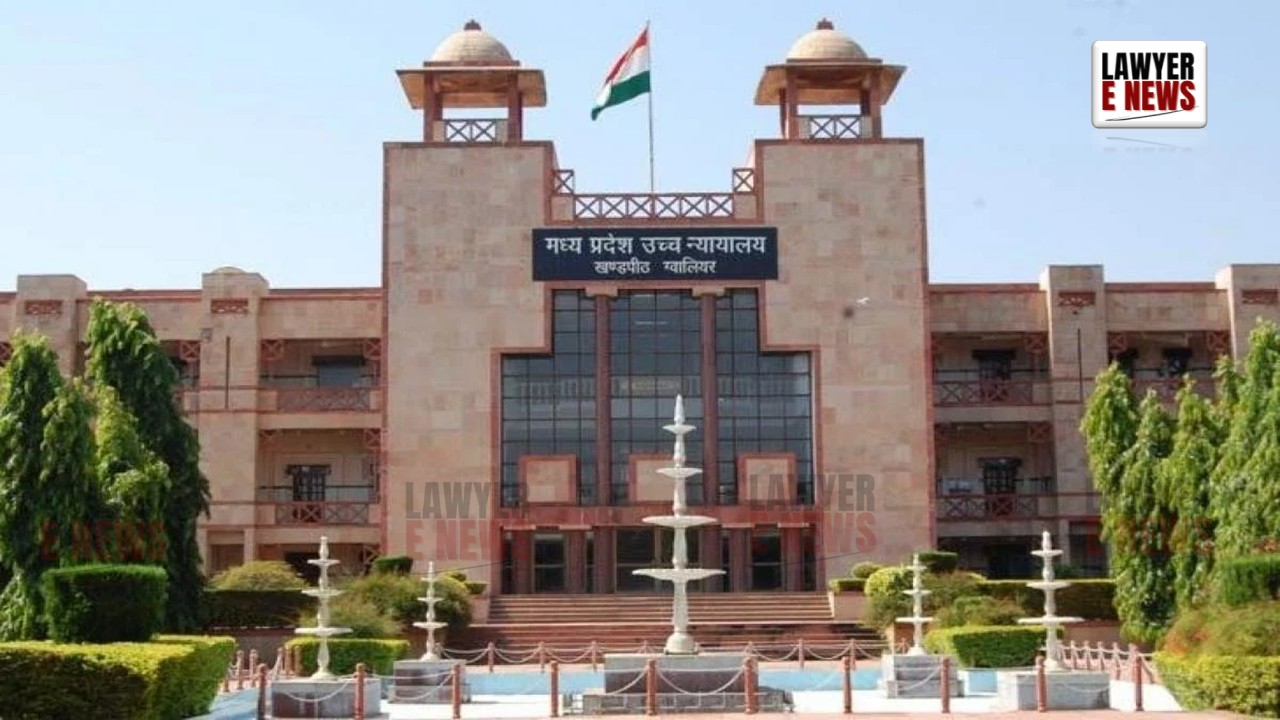
"Although there is no bar that in respect of a dispute regarding which a civil suit is filed, a criminal case can also be instituted, but the present is not the case where the complainant could avail both the remedies simultaneously." Madhya Pradesh High Court, in a significant ruling, held that a property purchaser who fails to pay the full sale consideration within the stipulated time cannot sustain criminal charges of cheating and breach of trust against the seller for subsequently transferring the property to a third party.
A single bench of Justice Subodh Abhyankar observed that such disputes are purely civil in nature, emphasizing that the absence of dishonest intent was clear since the seller had already handed over physical possession to the complainant.
A private complaint was filed by one Meena Agrawal alleging that despite executing an agreement to sell a flat and adjoining land for Rs. 9.21 lakhs and receiving partial payment, the owners sold the property to a third party, Dr. Sushila Verma. Based on an application under Section 156(3) of the CrPC, an FIR was registered under Sections 420, 406, and 120B of the IPC. The trial court framed charges against the original owners and the subsequent purchaser, which the Revisional Court later affirmed, prompting the accused to approach the High Court.
The primary question before the court was whether criminal charges for cheating and breach of trust could be sustained when the buyer had failed to fulfill the financial terms of the sale agreement. The court was also called upon to determine whether the High Court’s inherent powers to quash proceedings under Section 482 of the CrPC are restricted merely because the trial court had already commenced recording the complainant's evidence.
Breach Of Contract Is Not Automatically A Criminal Offence
The court noted that the complainant had failed to perform her part of the contract by not paying the full consideration of Rs. 9.21 lakhs within the stipulated eight-day period, paying only Rs. 4.76 lakhs after a month. Evaluating the allegations of criminal breach of trust under Section 406 of the IPC, the bench observed that the accused had already handed over possession of the property to the complainant. The court reasoned that this undisputed fact was "clearly an indication that it was not the intention of the petitioner right from the beginning to cheat the complainant in any manner."
Civil Remedies Oust Baseless Criminal Prosecution
Evaluating the dual remedies pursued by the complainant, the court highlighted that a civil suit for specific performance was already pending between the parties. While acknowledging that parallel civil and criminal proceedings are not absolutely barred in Indian jurisprudence, the bench ruled that the allegations at hand did not justify criminal prosecution. The court held that relegating the petitioners to face a criminal trial without the foundational ingredients of the alleged offences would be unjust.
Protection Of Bona Fide Purchasers
The court also granted relief to Dr. Sushila Verma, the subsequent purchaser, discharging her from the conspiracy and cheating charges under Sections 120B and 420 of the IPC. The bench noted that the sale deed in her favour was executed 47 days after the initial agreement, well beyond the eight-day payment deadline that the complainant had breached. The court concluded that she was a bona fide purchaser and could not be subjected to criminal litigation merely for buying the property after the original agreement conditions were violated.
"Legality of a criminal case cannot be put into a straitjacket formula to hold that one size fits all, hence legality of every case has to be tested on its own merits."
Subsequent Trial Evidence Does Not Fetter Section 482 Powers
Addressing the complainant's argument that the trial had already advanced and her examination-in-chief was recorded in January 2025, the court firmly rejected the contention that this barred the High Court from quashing the FIR. The court observed that the quashing petition had been pending for 15 years due to systemic delays, and the petitioners could not be penalized for the slow machinery. The bench emphasized that "it would be sheer unjust and unfair to hold that merely because now the evidence is also led by the parties, the petitioner has lost its right to invoke the inherent powers of this court."
The High Court allowed both petitions, ruling that allowing the trial court to proceed with the matter would amount to an abuse of the court's process. The court set aside the impugned orders of the Revisional Court and the trial court, completely discharging the original sellers and the subsequent purchaser from the offences under Sections 420, 406, and 120B of the IPC.
Date of Decision: 16 April 2026