-
by sayum
27 August 2026 7:40 AM







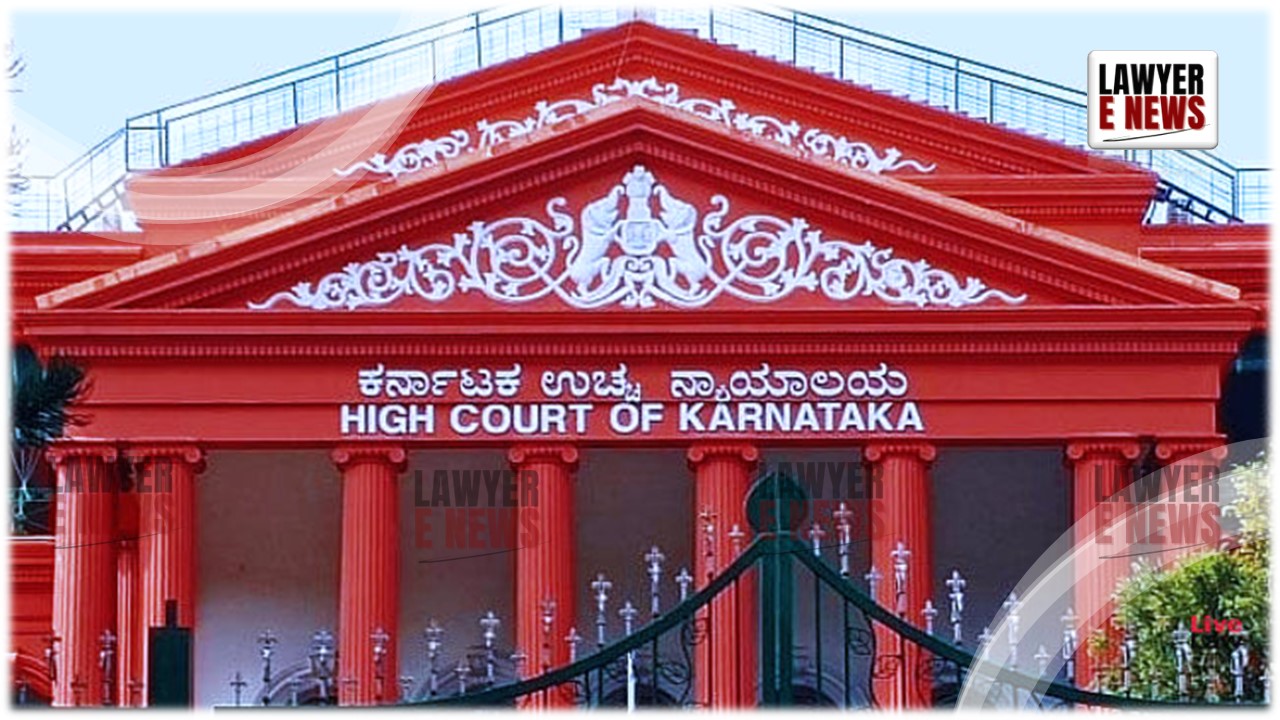
"A reading of the Affidavit... shows that the appellant has failed to furnish any cause whatsoever for condonation of delay, other than stating that the appellant was travelling out of station and was busy." Karnataka High Court, in a significant ruling dated April 7, 2026, held that a litigant's busy schedule and travel commitments do not constitute "sufficient cause" to condone delays in filing commercial appeals under Section 37 of the Arbitration and Conciliation Act, 1996.
A bench comprising Justice Anu Sivaraman and Justice Tara Vitasta Ganju observed that in commercial disputes, delay must be condoned strictly "by way of an exception and not a Rule." The court concurrently ruled on merits that judicial interference under Section 34 is impermissible when the Arbitral Tribunal's interpretation of a contract is plausible and not patently illegal.
The appellant and respondents executed a Share Purchase Agreement (SPA) in 2010, under which the appellant invested Rs. 10 lakhs for a 20% shareholding, with an exit option to reclaim Rs. 35 lakhs at the end of five years. The appellant exercised this option in 2018, well after the five-year validity of the SPA had expired, prompting the Arbitral Tribunal to dismiss his recovery claim. The appellant subsequently challenged this award under Section 34 of the Arbitration Act, which was dismissed by the Commercial Court, leading to the present appeal under Section 37.
The primary question before the court was whether a delay of 85 days in filing a commercial appeal could be condoned under Section 5 of the Limitation Act due to the appellant's busy schedule. On merits, the court was called upon to determine whether the Arbitral Tribunal's strict interpretation of the SPA's exit option constituted a patent illegality warranting interference under Section 34 of the Arbitration Act.
Strict Approach To Delay In Commercial Appeals
The court first addressed the application seeking condonation of an 85-day delay in filing the appeal. The appellant claimed the delay occurred because he had a busy schedule, was travelling out of station, and could not instruct his counsel. Examining these reasons, the bench referred to the Supreme Court's ruling in State of Maharashtra v. Borse Bros. Engineers and Contractors (P) Ltd. to emphasize the legislative intent behind the Commercial Courts Act, 2015 and the Arbitration Act.
"Sufficient Cause" Is Not An Elastic Concept
The bench noted that the objective of speedy resolution means that the phrase "sufficient cause" under Section 5 of the Limitation Act cannot be stretched to cover negligence or stale claims. The court observed that in appeals governed by Section 37 of the Arbitration Act, read with Articles 116 and 117 of the Limitation Act, delay is to be condoned merely by way of an exception and not as a general rule.
No Bonafide Cause Shown By Appellant
Rejecting the appellant's excuse, the court found that traveling and a busy schedule do not reflect a bonafide effort to pursue the litigation. The bench distinguished the Supreme Court's decision in Government of Odisha v. Gayatri Projects Limited, noting that while a 75-day delay was condoned in that case, it was only because the apex court was satisfied that actual sufficient cause had been demonstrated by the parties.
"The contentions which are reproduced in paragraph No.4 do not make out any cause for condonation of delay much less sufficient cause. The party cannot be said to have acted in a bonafide manner."
Scope Of Interference Under Section 34
Despite dismissing the appeal on the ground of limitation, the court proceeded to examine the merits of the contractual dispute. The appellant argued that the Arbitral Tribunal had wrongly interpreted the exit option clauses of the SPA. The bench reviewed the tribunal's finding that the exit option was a qualified one, which had to be exercised precisely at the end of the stipulated five-year period by transferring shares to the promoter group.
Arbitral Tribunal Is The Final Authority On Facts
Relying on the Supreme Court's judgment in Delhi Airport Metro Express (P) Ltd. v. DMRC, the High Court reiterated that there must be minimal judicial interference with an arbitral award. The bench noted that an erroneous application of law or a differing interpretation of a contract does not automatically amount to "patent illegality" under Section 34(2-A) of the Arbitration Act. Patent illegality must be an error that goes to the very root of the matter.
Contract Interpretation Belongs To The Arbitrator
The court highlighted that the SPA had a validity of five years and was admittedly never renewed by the parties. Because the appellant waited until 2018 to exercise an option that expired in 2015, the Arbitral Tribunal's rejection of the claim was based on a sound reading of the contract. Relying on Indian Oil Corporation Ltd. v. Shree Ganesh Petroleum, the bench stressed that courts do not sit in appeal over an arbitrator's interpretation.
No Re-Appreciation Of Evidence Permitted
The court concluded that the tribunal had thoroughly examined the contractual clauses and the oral evidence, including the appellant's own admissions during cross-examination that no addendum or corrigendum to the SPA existed. The bench firmly held that as long as the arbitrator takes a view that is plausible based on the evidence, the court is barred from interfering merely because it might prefer a different interpretation.
"The interpretation given by the learned Arbitral Tribunal in its interpretation of the SPA is neither patently illegal nor ignores the evidence produced by the parties... merely because another interpretation is possible, it is not a ground to set aside the award."
Ultimately, the High Court held that the appeal was devoid of merit and was also barred by limitation. Consequently, the court dismissed the commercial appeal and closed all pending applications, reinforcing the strict limitation standards and the narrow scope of judicial interference under the Arbitration Act.
Date of Decision: 07 April 2026