-
by sayum
11 August 2026 2:00 PM







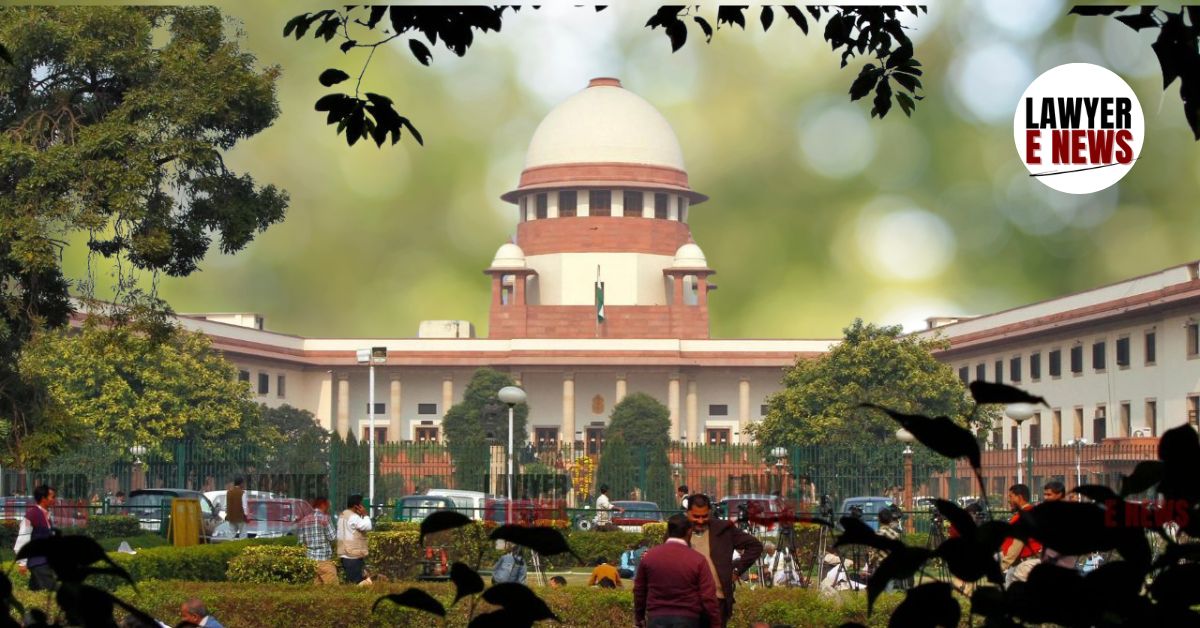
“Peaceful Protest and Public Criticism of Builder's Conduct Protected by Fundamental Right to Free Speech”, In a resounding affirmation of free speech and peaceful protest in the context of consumer rights, the Supreme Court of India quashed criminal defamation proceedings initiated by a builder against aggrieved flat owners who had put up a protest banner listing construction defects and grievances.
The Court declared: “The careful choice of the words, the conscious avoidance of intemperate, rude or abusive language and the peaceful manner of protest… all point to the fact that to protect their legitimate interests… the erection of the banner was done in good faith.”
The appellants—flat owners in a building constructed by A. Surti Developers—had erected a public banner on August 10, 2015, expressing discontent with the builder’s alleged failures, such as non-formation of society, poor lift maintenance, broken podium, leakage issues, and plumbing defects. The banner ended with a simple yet assertive message: “We protest for our rights.”
Feeling aggrieved, the builder filed a criminal defamation complaint under Section 500 read with Section 34 IPC, alleging damage to reputation and mental agony. The Magistrate issued summons, which were upheld by the High Court. The flat owners approached the Supreme Court seeking quashing of the complaint.
The principal legal issue was whether the publication of a banner listing grievances by homebuyers against a builder amounted to criminal defamation, or whether it was protected by the exceptions to Section 499 IPC, particularly the Ninth Exception, which covers good faith statements made for public good or in protection of one’s interests.
The Supreme Court held: “The banner sets out what they thought were their grievances against the respondent with whom they had a business relationship… Had the appellants exceeded their privilege in erecting the banner? We do not think so.”
On the Nature and Language of the Protest
The Court carefully examined the tone and content of the banner. It observed: “There is no foul or intemperate language employed… There is no reference to any expression like ‘fraud, cheating, or misappropriation’… In mild and temperate language, certain issues which the appellants perceived as their grievances have been aired.”
The Court further observed that the protest was not spontaneous but a last resort after persistent inaction from the builder: “It is only when it [the builder] failed to do so that they resorted to the protest by erecting the banner.”
Scope of the Ninth Exception to Section 499 IPC
Citing precedent, including Chaman Lal v. State of Punjab (1970) and Harbhajan Singh v. State of Punjab (1965), the Court reiterated that: “The interest of the person has to be real and legitimate… and truth is not an essential requirement under Exception 9, unlike the First Exception.”
Importantly, it emphasized that: “The right to protest peacefully without falling foul of the law is a corresponding right which the consumers ought to possess just as the seller enjoys his right to commercial speech.”
Relying on Subramanian Swamy v. Union of India (2016) and Javed Ahmad Hajam v. State of Maharashtra (2024), the Court underscored: “Voicing dissent or disagreement has to be respected and regarded and not to be scuttled as unpalatable criticism.”
In powerful affirmation of consumer rights and democratic principles, the Court added: “It will have the most dangerous effects, if the communications of business are to be beset with actions for defamation, without the necessary ingredients having been made out.”
Accordingly, the Supreme Court held that: “Their peaceful protest is protected by Article 19(1)(a), (b), and (c) of the Constitution of India. The criminal proceedings levelled against them, if allowed to continue, will be a clear abuse of process.”
The complaint and the order issuing summons were quashed, and the appeal was allowed.
Date of Decision: April 17, 2025