-
by sayum
28 August 2026 2:11 PM








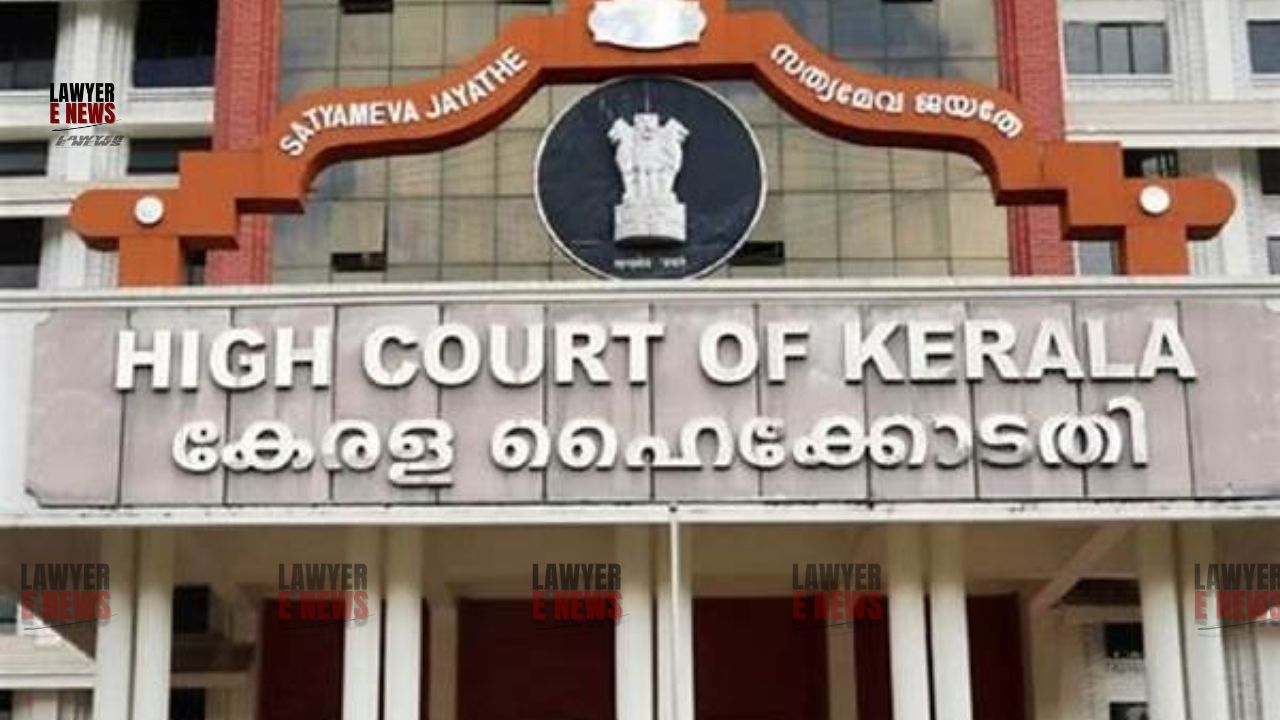
“Liberty Must Prevail Where There Is No Violation of Bail Conditions”: Supreme Court of India set aside a Kerala High Court order which had revoked bail granted to five accused in a politically motivated murder case, holding that mere procedural lapses in bail orders cannot justify cancellation where liberty has already been exercised for a significant period without violations.
The Court held that revocation of bail must be based on strong, compelling reasons—such as proven tampering with evidence, intimidation of witnesses, or flagrant violations—not merely because the initial bail order lacked detail or was poorly reasoned.
“Revocation of Bail Is Not to Be Used as a Corrective Mechanism for a Faulty Bail Order”: Apex Court Differentiates Between Improper Orders and Misuse of Liberty
The case arose from an FIR registered under Sections 143, 147, 148, 149, 324 and 302 IPC, alleging that a group of political activists, due to political enmity, murdered the victim in December 2021 in Kerala's Alappuzha district.
The accused (including Abhimanue, Vishnu, Athul, Sanand, and Dhaneesh) were arrested, and bail was granted by the Sessions Court in December 2022. However, in May 2024, the State filed petitions before the High Court seeking cancellation of bail. The High Court, terming the Sessions Court orders as “mechanical” and lacking consideration of material factors, cancelled bail citing the heinous nature of the offence and possibility of witness tampering.
The Supreme Court, while disagreeing with this approach, observed:
“Bail may be cancelled when the accused violates any of the conditions imposed. On the other hand, an order granting bail can be revoked if such an order is found to be perverse or illegal.”
The Court cited P v. State of Madhya Pradesh, (2022) 15 SCC 211, and Ranjit Singh v. State of M.P., affirming that mere delay in challenging a bail order or dissatisfaction with the reasoning of a lower court does not warrant revocation of bail after two years of liberty.
“Sessions Court May Have Erred, But Two Years of Liberty Without Violation Cannot Be Ignored”: SC Protects Personal Liberty in Absence of Misconduct
The bench, comprising Justice Dipankar Datta and Justice Augustine George Masih, critically noted that the accused had remained on bail for nearly two years without violating conditions, except one instance involving accused Vishnu.
However, even that incident, involving a fresh FIR registered after the SC had granted interim bail, was found insufficient to warrant revocation, particularly since the alleged victim later filed an affidavit disowning the allegation.
“There is much more than what meets the eyes… We are not prepared to accept the contention that the FIR lodged by Abhiram affords ground for cancellation of bail granted to Vishnu.”
“Antecedents Alone Are Not a Ground for Denial of Bail”: Court Reiterates that Past Record Must Be Read Alongside Present Conduct
The State had cited criminal antecedents of the accused. The Court firmly rejected this as a standalone ground for bail cancellation:
“Antecedents by themselves cannot constitute a ground for denial of bail… Depending upon the peculiar facts, the Court can grant bail notwithstanding the existence of antecedents.”
Quoting Ayub Khan v. State of Rajasthan, the Court emphasized that long incarceration and clean conduct while on bail can outweigh prior criminal records.
“Fault of the Prosecution Cannot Become the Basis for Curtailing Liberty”: SC Critiques State for Not Opposing Bail Earlier
It was noted that the Sessions Court had partly granted bail due to lack of opposition from the Public Prosecutor, and the Special Public Prosecutor was not even heard.
Yet, the Supreme Court held:
“Taking back the appellants in custody for no better reason than that the Sessions Court should not have been swayed by omission of the Public Prosecutor to raise any objection... should not operate to the appellants’ prejudice.”
The Court reiterated the golden principle of bail jurisprudence as laid down by Justice V.R. Krishna Iyer: “Bail is the rule, jail is the exception.”
Supreme Court Reinstates Bail with Stringent Conditions to Protect Trial Integrity
While restoring bail, the Supreme Court imposed several stringent conditions, including:
Prohibition from entering the district of Alappuzha, except for trial.
Regular reporting to local police stations.
Non-interference with prosecution evidence or witnesses.
No deferment of cross-examination of eye-witnesses.
Liberty to modify conditions after recording of all eye-witness testimonies.
The Court directed both the State and trial court to expedite the trial, noting that over 141 witnesses are to be examined, including at least five eye-witnesses.
In a significant reaffirmation of liberty jurisprudence, the Supreme Court held that bail cannot be revoked casually, especially after prolonged liberty and absence of violations, even in heinous offences.
“We prefer to lean in favour of liberty rather than its curtailment.”
The ruling sends a strong message that judicial errors in bail orders cannot be used as retroactive justifications to imprison accused persons, unless genuine risks to justice exist. Courts must tread cautiously when revisiting bail orders to avoid prejudicing personal liberty.
Date of Decision: September 22, 2025