-
by sayum
25 August 2026 8:14 AM








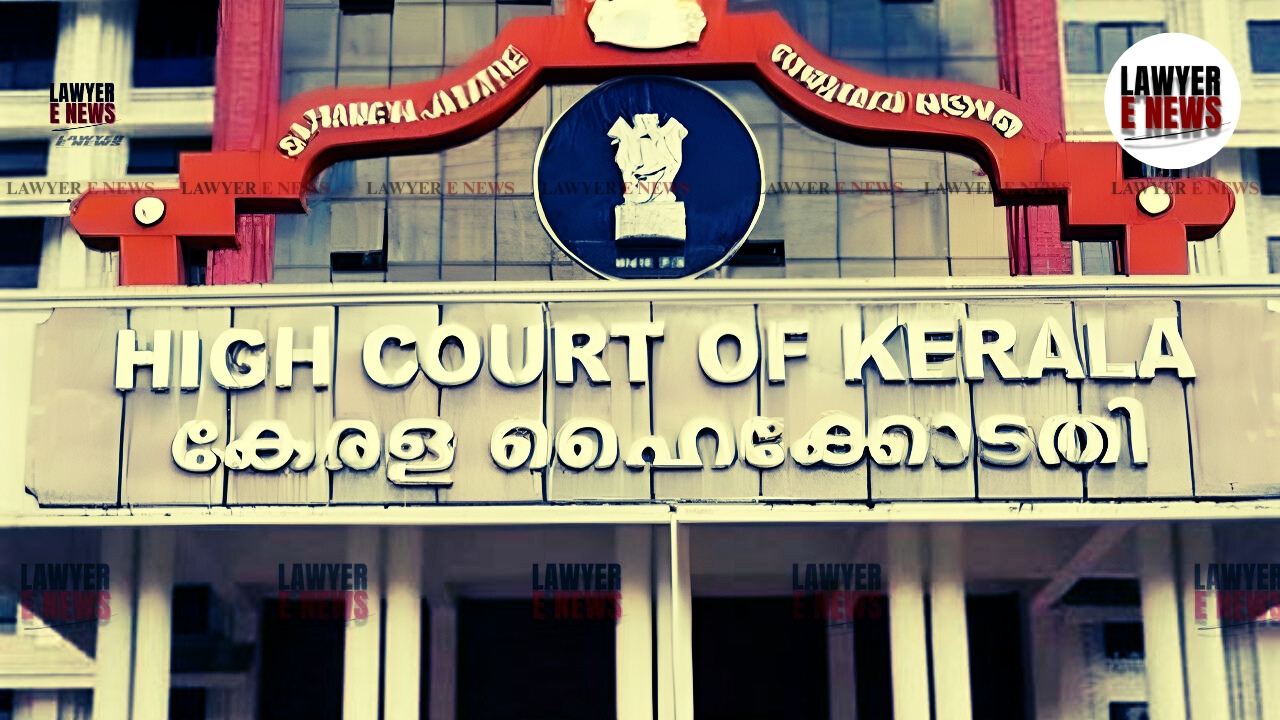
“Prima Facie Cheating, Forgery, and Falsification Made Out Against Co-operative Society Office Bearers” – In a strong reaffirmation of the limited scope of revisional jurisdiction at the discharge stage in criminal trials, the Kerala High Court on 30 January 2026 refused to interfere with the order of the Additional Chief Judicial Magistrate (Economic Offences), Ernakulam, which declined to discharge two senior office-bearers of a Co-operative Society accused of large-scale financial fraud.
Court held that “serious allegations of suppression of consideration, misappropriation of funds, and fraudulent documentation establish a clear prima facie case under Sections 420, 468 and 477A IPC,” and declined to interfere under Section 397 CrPC.
Cheating by Concealment of True Consideration: “Dishonest Concealment is Deception”
The case arose out of allegations that the petitioners, who were President and Secretary of the Cochin Shipyard Staff Co-operative Housing Construction Society during 2004–2009, dishonestly entered into an agreement with a builder, Jain Housing Construction Company, for conveyance of a 9-meter-wide road belonging to the Society.
Though the actual consideration paid was ₹1.70 crores, the petitioners allegedly concealed this fact and recorded only ₹35 lakhs in the Society’s documents, misleading the General Body and Director Board.
Citing Section 415 IPC, the Court observed: “A dishonest concealment of facts is a deception within the meaning of this section.”
Justice G. Girish concluded: “The accused dishonestly induced the Society to deliver its property by grossly undervaluing the consideration received. This caused wrongful loss to the Society and unjust enrichment to the accused. Section 420 IPC is squarely attracted.”
False Agreement and Forged Records: Prima Facie Offence Under Section 468 IPC
The Court further analysed whether the transaction amounted to forgery. The agreement with the builder, showing a consideration of ₹35 lakhs instead of the ₹1.70 crores allegedly received, was found to be a false document executed without true authority of the Society.
Quoting Section 464 IPC, the Court observed: “A person who dishonestly or fraudulently executes a document, intending it to appear as having been made by the authority of a person who did not so authorise it, commits forgery.”
Justice Girish held: “If the allegations are true, the petitioners misrepresented the true terms of the transaction and misled the Society. The execution of such a document for the purpose of cheating clearly attracts Section 468 IPC.”
Fabrication of Minutes and Registers: Section 477A Attracted
Noting that false entries were allegedly made in the Society’s Minutes Book and registers, the Court upheld the invocation of Section 477A IPC. The petitioners, being officers of the Society, were said to have fabricated records to reflect only ₹35 lakhs as the consideration received.
The Court stated: “Making false entries with intent to defraud the Society, which is the employer in this context, clearly falls under the definition of falsification of accounts under Section 477A IPC.”
Criminal Breach of Trust Not Made Out – But No Ground for Discharge
Interestingly, the Court agreed with the petitioners that the offence under Section 406 IPC (criminal breach of trust) may not be sustainable as “entrustment,” a core element of the offence, was not clearly established.
However, the Court clarified: “Even if one charge is unsustainable, it is not a reason to discharge the accused when other offences are prima facie made out.”
The Court also rejected the petitioners’ argument that the allegations may constitute only offences under the Prevention of Corruption Act:
“Even if the acts attract the Prevention of Corruption Act, that does not preclude prosecution under Sections 420, 468 and 477A IPC.”
Income Tax Records, Witness Statements Not to Be Evaluated at Discharge Stage
The petitioners challenged the credibility of evidence from Income Tax officials and broker-witnesses, arguing that these could not be relied upon to proceed with prosecution.
However, the Court reminded: “The probative value and admissibility of such evidence is for the Trial Court to assess. At the discharge stage, courts only examine if the materials prima facie support the charges.”
Justice Girish refused to entertain arguments seeking to assess the veracity of these witnesses or the legality of tax-related evidence at the revision stage.
Revisional Court Cannot Substitute Trial Court’s Discretion at Threshold Stage
Reiterating the limited role of the revisional jurisdiction under Section 397 CrPC, the Court found no illegality, perversity, or miscarriage of justice in the Trial Court’s refusal to discharge:
“The learned Magistrate cannot be said to be at fault for disallowing the prayer of discharge of the petitioners.”
Thus, the criminal revision petition was dismissed, and prosecution was allowed to continue.
This judgment provides vital clarity on the threshold for discharge in economic offences involving cooperative societies. The Kerala High Court has reaffirmed that serious financial irregularities involving misrepresentation, false records, and concealment of material facts can and should proceed to trial, provided that prima facie material exists.
It also clarifies that supervisory jurisdiction under Section 397 CrPC cannot be used to conduct a mini-trial or reassess evidence that is yet to be tested.
Date of Decision: 30.01.2026