-
by sayum
25 August 2026 12:32 PM







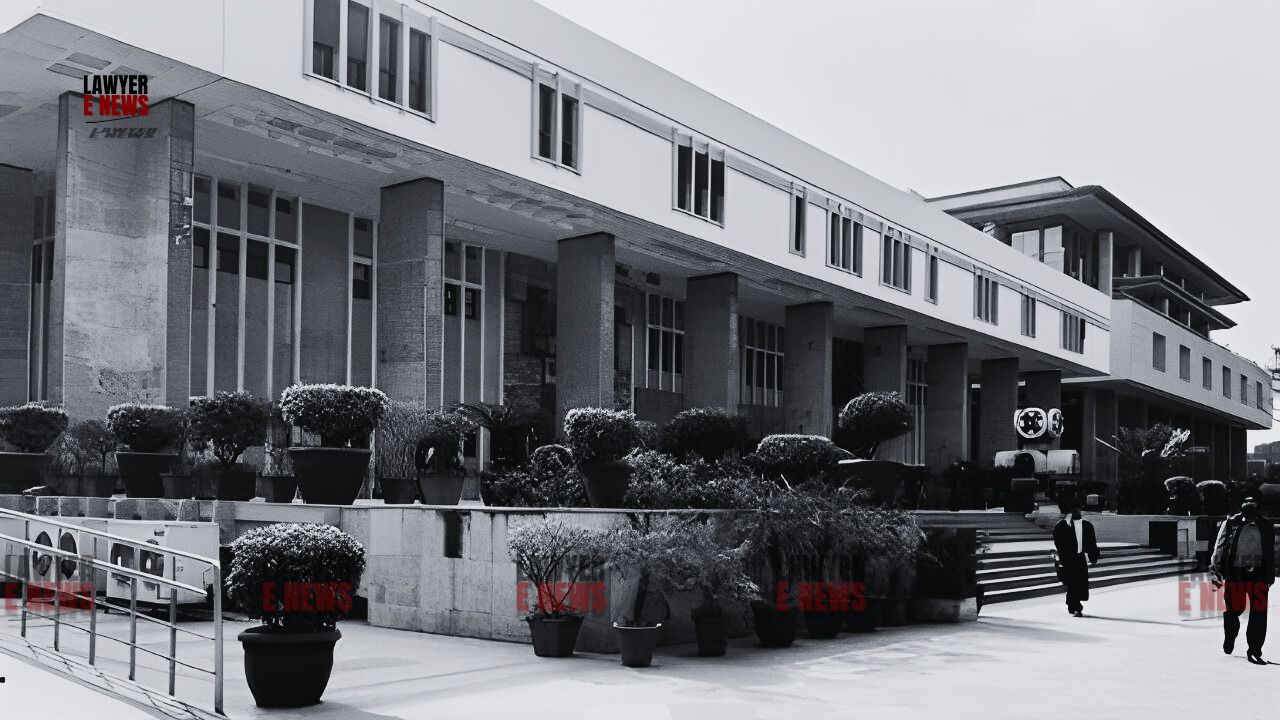
“It is settled law that the assessee need not to prove the 'source of source’” – Delhi High Court, in a detailed and well-reasoned judgment, dismissed the Income Tax Department’s appeal under Section 260A of the Income Tax Act, 1961. The Revenue had challenged the order of the Income Tax Appellate Tribunal (ITAT) which upheld deletion of an addition of ₹10 crore and corresponding interest under Section 68 related to an unsecured loan received by the respondent from Shashi Foods India Pvt. Ltd.
This judgment is particularly significant as it clarifies that the Finance Act, 2022’s amendment to Section 68 requiring proof of “source of source” is prospective and does not apply to assessment years prior to 2022, like the one in question—AY 2014–15.
“All Ingredients of Section 68 Duly Satisfied: Identity, Creditworthiness & Genuineness Established”
The court emphasized:
“The loan advanced was received through banking channels, repaid with interest, and was duly confirmed by the lender—creditworthiness and genuineness are thus beyond doubt.”
This case revolves around a core question of unexplained cash credit under Section 68—whether an assessee receiving an unsecured loan must also establish the genuineness of the creditor's creditors (i.e., “source of source”) in a pre-amendment year.
The High Court categorically held No, rejecting the Revenue’s attempt to cast further burden on the assessee to trace upstream funding and alleged linkages with third-party firms.
A search and seizure operation under Section 132 was conducted on KRBL Group on March 30, 2016. Pursuant to that, the Assessing Officer issued notice under Section 153A, and an assessment order dated December 31, 2017, was passed under Sections 153A and 143(3), making additions of ₹10 crore as alleged bogus unsecured loan and disallowing ₹1.03 crore as interest.
The lender, Shashi Foods India Pvt. Ltd., had advanced ₹10 crore to KRBL Infrastructure Ltd. in FY 2013-14, duly confirmed in a statement during survey and in reply to notice under Section 133(6). However, the AO disputed the creditworthiness of Shashi Foods, citing findings that its creditors could not be traced or had allegedly issued bogus purchase bills.
The CIT(A) deleted the addition, and the ITAT upheld the deletion. The Revenue challenged the same before the High Court under Section 260A, raising two substantial questions of law.
Whether the assessee discharged the burden under Section 68?
The Court affirmed that all three conditions under Section 68—identity, creditworthiness, and genuineness—were duly met.
“The identity of the creditor has been proved by documentary evidence and also through the statement of the Director of Shashi Foods recorded during the survey proceedings,” the Court noted.
Additionally, the Court observed:
“The loan was received through banking channels and repaid with interest in the next financial year. The Revenue has not shown any material proving that the funds were not available in the bank account of Shashi Foods at the relevant time.”
Is the assessee obligated to prove the “source of the source” for loans received in AY 2014–15?
No, held the Court emphatically.
“The law with regard to this is no more res integra… It is settled law that the assessee need not to prove the ‘source of source,’” the Court held, citing Dwarkadhish Investment (P) Ltd. (330 ITR 298) and Rohini Builders (256 ITR 360).
The requirement to prove “source of source” was only introduced prospectively via the Finance Act, 2022. The Court reaffirmed its earlier decision in Sheela Overseas Pvt. Ltd. v. PCIT, holding:
“The requirement of explaining the source of the source of funds credited as unsecured loans in the books of accounts was introduced by virtue of the Finance Act, 2022. The same was not applicable during the relevant assessment year.”
Thus, the Revenue's attempt to question Shashi Foods’ suppliers and trace upstream funds was impermissible for AY 2014–15.
Rejecting the AO’s conclusions, the Court held:
“The Assessing Officer has not brought on record any incriminating material relating to the loan transaction…The assessments cannot go into the genuineness of purchases made by the lender in absence of any material connecting those to the assessee.”
Addressing the Revenue’s reliance on downstream fund trail and alleged “rotation” of money involving Dinesh Jain and Gautam Techagro, the Court observed:
“Such a finding relating to FY 2015-16 cannot form basis for additions in AY 2014-15. The genuineness of the transaction in 2013-14 was rightly upheld by the CIT(A) and ITAT.”
Rejection of Revenue's Case under Abhisar Buildwell
On the second substantial question—whether the addition was sustainable in light of SC’s ruling in Abhisar Buildwell Pvt. Ltd.—the Court clarified:
“The AO in his order has not made any reference to any incriminating material… Therefore, Abhisar Buildwell does not assist the Revenue.”
Moreover, the Court noted that even on merits, the addition was rightly deleted.
The Delhi High Court concluded that the assessee had fully discharged its burden under Section 68 by proving the identity, creditworthiness, and genuineness of the loan transaction. The Court reiterated that the law prior to the Finance Act, 2022, did not require assessees to prove the source of source, and accordingly, dismissed the Revenue’s appeal.
“Both the substantial questions of law are answered in favour of the respondent/assessee and against the appellant/Revenue.”
Date of Decision: November 13, 2025